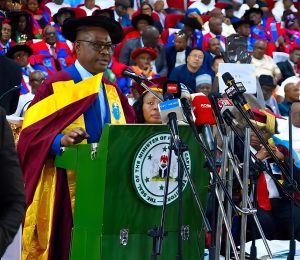
A Professor of Home Economics at the University of Jos (UNIJOS), Larai A. Keswet, has identified Home Economics as a critical tool for addressing food insecurity, poor nutrition and household resilience in Nigeria, urging greater investment in food literacy and sustainable food systems.
Keswet made the call while delivering the 121st inaugural lecture of the University of Jos titled “Home Economics: From Farm to Spoon — Nourishing Hope.”
She explained that the discipline provides practical solutions that connect agricultural production to household consumption, thereby improving nutrition outcomes.
According to her, the “farm to spoon” framework highlights the interconnected processes of agricultural production, processing, distribution, storage, preparation and consumption, noting that challenges at any stage could affect food availability and affordability.
She said, “Food literacy is a collection of knowledge, skills and behaviours that enable individuals and families to plan, manage, select, prepare and eat food in ways that meet their needs. When households understand nutrition and make informed food choices, we strengthen food security from the grassroots.”
Keswet expressed concern over declining cooking skills, increased dependence on convenience foods and reduced time for meal preparation, warning that such trends contribute to poor nutrition and diet-related diseases.
“Today we want everything fast. We eat fast food and we also experience fast consequences. Home Economics must help families build practical skills that encourage healthier food choices,” she added.
She also highlighted the scale of food waste in the country, citing data from the United Nations Environment Programme which showed that Nigerian households waste about 113 kilograms of food per capita annually, amounting to roughly 24.79 million tonnes of household food waste**. She noted that reducing food waste through better planning, storage and consumption practices could significantly improve food availability and household nutrition.
The professor further emphasized the importance of using indigenous food resources, referencing research that demonstrated the nutritional benefits of locally available plants and grains. She explained that such findings could help communities improve nutrition using affordable and accessible food sources.
“A well-nourished population is a hopeful one, and hopeful people are capable of progress. Each meal prepared from fresh ingredients represents a small step toward healthier families and stronger communities,” she said.
Keswet added that educating households on food preparation and consumption was key to bridging the gap between food production and nutritional outcomes.
“Between production and consumption lies knowledge. The choices people make depend not only on what is available but on their understanding of nutrition. Home Economics equips individuals with the skills to make the most of available resources,” she stated.
The don called for the integration of Home Economics education at all levels of schooling and increased collaboration among stakeholders to promote nutrition literacy, particularly in rural communities.
She maintained that strengthening Home Economics would enhance household food management, reduce malnutrition and contribute to national development.
The Vice-Chancellor of the University of Jos, represented by Rejoice Songden, described the lecture as enlightening and transformative, noting that it broadened understanding of Home Economics beyond its traditional perception. She said the presentation highlighted the discipline’s scientific foundation and its relevance in addressing contemporary food and nutrition challenges.
Songden also called for stronger collaboration across academic units, including the Faculty of Agriculture and food security–related research centres, stressing that interdisciplinary cooperation was essential to tackling food insecurity and improving sustainable nutrition outcomes.
Keswet concluded that “nourishing hope” was not about eliminating all challenges but about empowering individuals and families to live healthier and more satisfying lives through practical knowledge and sustainable food practices.