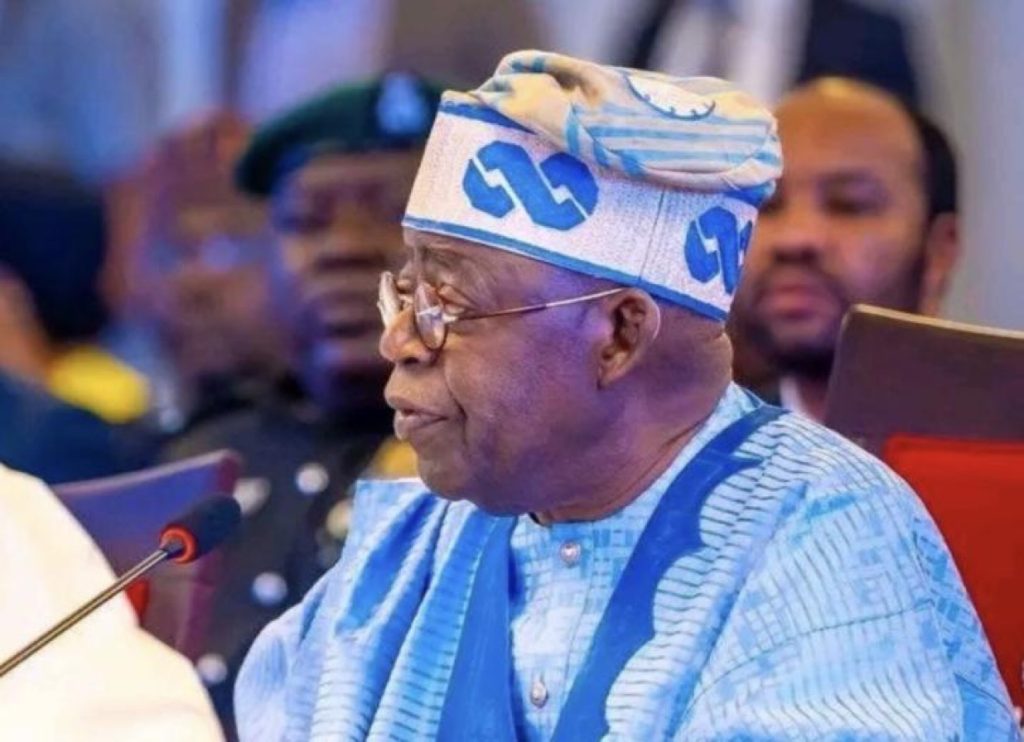
President Bola Tinubu
The Independent Media and Policy Initiative (IMPI) has defended President Bola Tinubu’s debt-for-infrastructure policy, insisting that strategic borrowing remains critical to addressing Nigeria’s huge infrastructure deficit and stimulating long-term economic growth.
In a policy statement issued by its Chairman, Dr. Omoniyi Akinsiju, the group argued that criticisms against the Federal Government’s borrowing plan were largely politically motivated and failed to provide realistic alternatives for financing critical national infrastructure.
According to the policy group, Nigeria’s weak infrastructure base continues to limit productivity, increase business costs and slow economic development across several sectors.
“The nation’s policy space is once again inundated with claustrophobic imputations by politically minded individuals and advocacy groups that stridently demonise the federal administration’s infrastructure policy debts, with a devious objective to disorient the masses against the administration,” Akinsiju stated.
The group explained that Nigeria’s infrastructure challenge remains severe, noting that over 70 per cent of the country’s estimated 195,000-kilometre road network is in poor condition, thereby increasing transportation costs and affecting access to markets.
It also highlighted deficiencies in rail transportation and electricity supply, noting that despite recent investments, Nigeria currently operates only about 3,500 kilometres of rail tracks for a population exceeding 220 million people.
On electricity, IMPI stated that although Nigeria has an installed generation capacity of 12,500 megawatts, actual output averages about 4,000 megawatts, leaving businesses heavily dependent on alternative power sources.
“Businesses spend an estimated $29 billion annually on backup energy sources, including diesel generators. This infrastructural insufficiency was attributed to the exit of companies such as GSK and P&G, among others, over the years,” the statement added.
The group reviewed several international estimates of Nigeria’s infrastructure deficit, including projections by the World Bank, African Development Bank (AfDB), International Finance Corporation (IFC) and KPMG.
While the World Bank estimated that Nigeria would require about $3 trillion over 30 years to bridge the infrastructure gap, IMPI said KPMG’s projection of $142 billion over 10 years appeared more realistic within Nigeria’s fiscal realities.
“Among all the estimates, KPMG’s $142 billion estimate aligned more closely with the Nigerian situation,” Akinsiju said.
The statement noted that consistent annual investment of about $14.2 billion in transportation, power and digital infrastructure could significantly modernise the economy, create jobs and reduce unemployment.
IMPI further argued that historical budget performance showed successive administrations struggled to meet major infrastructure funding targets despite periods of high oil revenue.
According to the group, no Nigerian government had budgeted more than $14 billion annually for capital projects over the last 25 years until the current administration.
It, however, commended the Tinubu administration for what it described as a “record-breaking fiscal milestone” following the approval of a 2026 budget that allocates about $23 billion to infrastructure and capital expenditure.
“Based on the approved 2026 Appropriation Act, the Nigerian government significantly expanded its fiscal framework, with the total budget breaking records. Remarkably, the budget allocated $23 billion (roughly half the total budget) to infrastructure and other capital expenditures,” the statement noted.
IMPI acknowledged concerns over rising public debt but maintained that the removal of fuel subsidy alone could not generate enough resources to fund the country’s infrastructure requirements.
“Our retort, however, is that the $10 billion annual fuel subsidy was mostly funded by debt and did not account for the bulk of the financing required for capital spending at that time or now,” Akinsiju stated.
The policy group also dismissed arguments that Public-Private Partnerships (PPP) should replace government borrowing, saying PPP arrangements in Nigeria have faced major setbacks, including high transaction costs, legal bottlenecks, political instability and poor institutional capacity.
It added that private investors are often reluctant to commit to infrastructure projects in countries where governments show limited direct investment commitment.
“A substantive indicator of the private sector’s reluctance to enthusiastically embrace the infrastructure PPP in Nigeria is that institutional assets, including pension and insurance funds, have exceeded $100 billion, yet less than 5% is invested in infrastructure, compared to 15% in South Africa,” the statement said.
The group further pointed to improving investor confidence in Nigeria’s debt instruments, citing the recent decline in Nigeria’s sovereign Eurobond yield from 8 per cent to 6.89 per cent.
According to IMPI, this development reflects growing confidence in Nigeria’s economic reforms and macroeconomic stability.
The statement concluded that the Tinubu administration had already begun implementing major infrastructure projects across transportation, roads, ports and power sectors.
These projects include rail developments in Lagos, Kano and Kaduna, road and bridge projects valued at over ₦7 trillion nationwide, reconstruction of major seaports and over ₦1 trillion allocated to power sector capital projects.
“We are seeing clear signs of a rejuvenated Nigerian infrastructure,” Akinsiju added.