Minister of Labour and Employment, Dr. Muhammadu Dingyadi, has hailed the sweeping reforms at the Nigeria Social Insurance Trust Fund (NSITF), saying the agency’s transformation has significantly improved the delivery of the Employees’ Compensation Scheme.
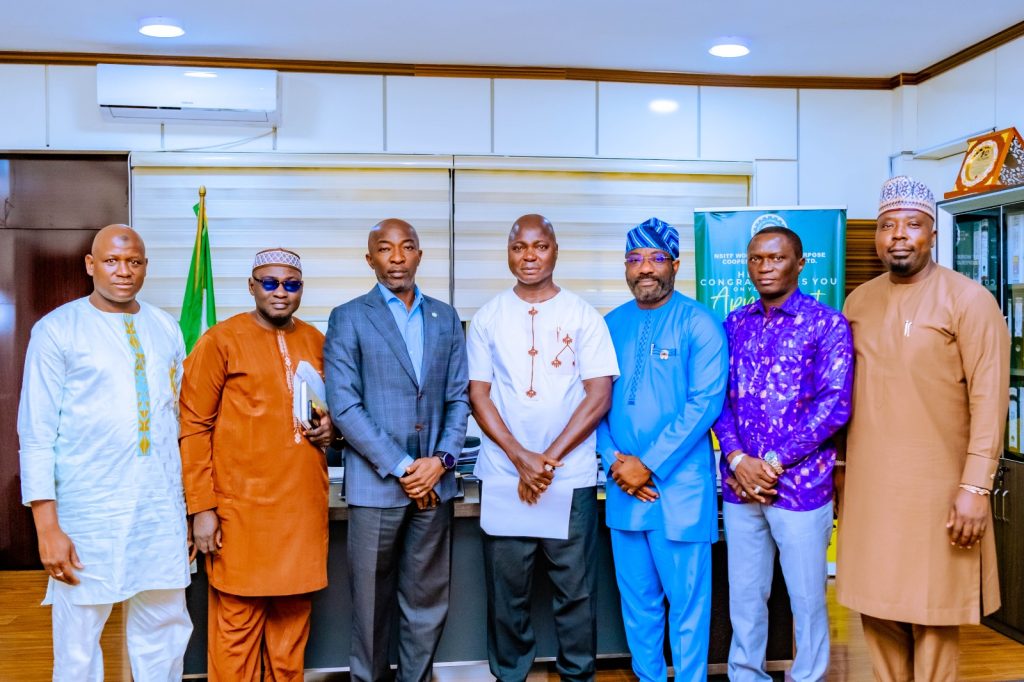
Dingyadi gave the commendation on Monday when the Managing Director and Chief Executive of NSITF, Barr. Oluwaseun Faleye, led a delegation from the Board of the Industrial Injuries Compensation Fund of The Gambia’s Social Security and Housing Finance Corporation (SSHFC) on a courtesy visit to the ministry in Abuja.
Represented by the Permanent Secretary in the ministry, Dr. Kamil Shoretire, the minister said he was pleased that the Gambian delegation chose Nigeria to understudy the country’s social insurance system, saying the visit reflected growing confidence in the Fund’s reforms.
He said the Fund had improved its compensation mechanism through reforms and digital innovation, making it easier and faster for workers to access benefits under the Employees’ Compensation Scheme.
“Our compensation mechanism has improved, and a lot of digitisation is happening now to ensure that claims are attended to as soon as possible,” he said, adding that the transformation at NSITF was helping to reposition the agency.
The minister stressed that cooperation between Nigeria and The Gambia would benefit both countries, noting that sharing ideas and best practices would strengthen institutions responsible for protecting workers from occupational injuries and other workplace risks.
“It is very important that the two countries exchange ideas on how to improve the lives of their citizens, particularly the working population that these agencies support,” Dingyadi said.
He added that while Nigeria had made considerable progress, there was still room for improvement.
“Our own is an ongoing process. We have not reached where we want to be. We also want to see what Gambia has been able to do so that our fund can scale up the best practices they will share with us,” he said.
Responding, NSITF Managing Director, Barr. Oluwaseun Faleye, thanked the minister for receiving the delegation and described the engagement as another milestone in the long-standing relationship between Nigeria and The Gambia.
He said the study tour followed discussions held during the International Social Security Association (ISSA) workshop hosted by NSITF in April, where representatives from several West African countries, including The Gambia, Senegal, Cape Verde and Côte d’Ivoire, participated.
According to Faleye, both countries share similar labour market realities and social security challenges, making collaboration essential.
“We accepted the request because our demographics and labour dynamics are similar. Even if our institutions differ, the challenges we face are largely the same, and learning
from one another is critical,” he said.
He disclosed that officials from both organisations had already begun technical sessions focusing on the day-to-day implementation of employees’ compensation services, adding that the exchange would benefit both sides.
“We don’t see this as learning from us alone. Our discussions have also exposed us to the peculiarities of their own system and how we can improve ours,” Faleye said.
Leader of the Gambian delegation, Pierre Gomez, said his team had been impressed by the level of transformation at NSITF since his last visit to Nigeria about a decade ago.
Describing Nigeria as The Gambia’s “big brother”, Gomez said the delegation returned to strengthen cooperation and acquire practical knowledge that would improve workers’ compensation administration in his country.
“This is not our first time coming to NSITF. Nigeria is our big brother, and that is why we have come back for knowledge sharing. I was here about a decade ago, and I have seen a lot of changes. It is important for us to take that knowledge back home and share it with our colleagues,” he said.
Earlier, while receiving the delegation at the Fund’s headquarters, Faleye reaffirmed NSITF’s commitment to closer collaboration with its Gambian counterpart.
He said sustained collaboration between the two institutions would strengthen workplace safety systems, improve compensation administration and deepen social security protection for workers in both countries.