By CHRISTIANA LOT, Jos –
Malnutrition is a condition that occurs when a person’s diet lacks the essential nutrients required for growth, immunity, and healthy development. It is not just about hunger but also about poor feeding practices, lack of dietary diversity, and inadequate maternal care, especially in early childhood.
Malnutrition remains one of the silent crises threatening the future of Nigerian children. In Plateau State, the challenge is particularly stark. Nearly half of children under five are stunted. The 2023 Multiple Indicator Cluster Survey (MICS) puts the figure at 46.4 percent, while 4.8 percent are wasted and 22 percent are anaemic. These numbers reflect children already facing impaired growth, poor immunity, and reduced life potential, often before their second birthday.
In 2024, the Plateau State Government, under the leadership of Barrister Caleb Mutfwang, moved to tackle the crisis by contributing 200,000 US dollars to the Child Nutrition Fund (CNF), a sum matched by UNICEF. With this step, Plateau became one of the first states in Nigeria to join the global co-financing platform. The fund will support the purchase of Small Quantity Lipid-Based Nutrient Supplements (SQ-LNS), targeted at children aged six to 23 months. This is the period where poor nutrition causes the most damage but where interventions can still reverse harm.
SQ-LNS are peanut-based pastes enriched with essential vitamins, minerals, protein, and healthy fats. They are given to children in that critical age group to fill nutrient gaps in their diets during the most crucial period of growth.
According to the University of California, Davis, a leading institution in global nutrition research, SQ-LNS are small but powerful food supplements that support healthy growth and brain development. Plateau State is adopting this approach not just to treat malnutrition but to prevent it. Studies reviewed by UC Davis show SQ-LNS can significantly reduce stunting, wasting, and iron-deficiency anaemia.
Research covering more than 37,000 children globally has shown that SQ-LNS reduces severe wasting by 31 percent, stunting by 17 percent, and iron-deficiency anaemia by 64 percent. Plateau’s commitment was further reinforced with a ₦300 million co-funded investment into primary healthcare to strengthen nutrition counselling, maternal care, and health education.
But experts and officials at a two-day media dialogue held in Jos emphasized that funding and policy alone are not enough. For real change, communities must be aware. Behaviour must shift, and engagement must deepen. And here, the media and community health workers have a critical role to play.
“Nutrition is not a side issue. It’s foundational. Without proper nutrition in the first 1,000 days of life, a child is set up for lifelong disadvantage. Poor school performance, increased illness, and limited productivity in adulthood,” said the UNICEF Nutrition Specialist for the Bauchi Field Office, Philomena Irene.
“It costs about ₦21,000 to prevent malnutrition in a child. But treating one case of severe acute malnutrition can be as high as ₦198,000. Early investment saves lives, and when the media tells that story consistently and accurately, you are saving lives too.”
She also addressed how misinformation and harmful traditional practices contribute to the problem.
“We have seen children from food-rich homes still malnourished because parents don’t know how to combine foods. We have seen caregivers giving water or herbs to infants before six months. These practices matter. The media must educate, not just report,” she added.
Nutrition Officer at the Plateau State Primary Health Care Development Board, Mr. Silas Nansel, said the government’s intervention is already yielding results in tackling malnutrition across the state.
“The burden of malnutrition in the state is getting higher, but with the support and intervention of the government, today it’s reducing, it’s drastically reduced. So the government were able to train staff, facility staff, to take care of the malnourished children at that level,” he said.
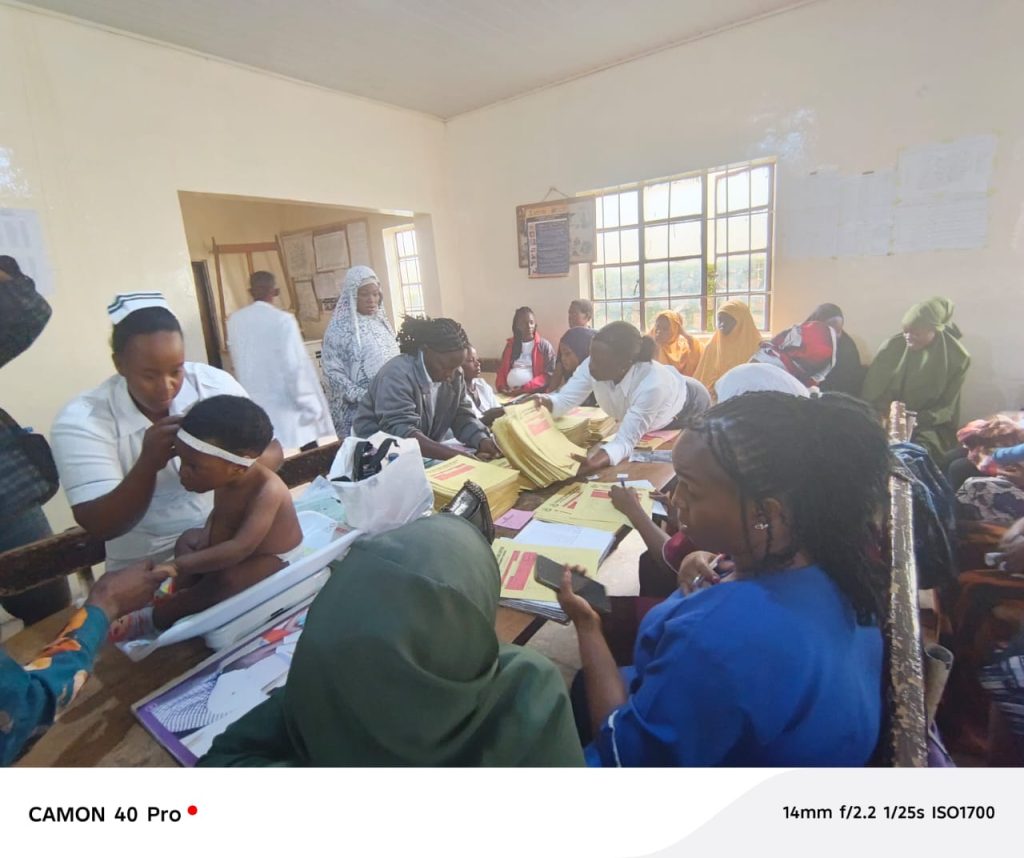
As part of the training, journalists visited health facilities to see how health workers are creating awareness on the right nutrition for babies. They also engaged with mothers to understand their challenges and how they implement what they have learnt.
At the Township Primary Health Centre in Jos North, the acting officer-in-charge, Halima Chantu, spoke about the role of health workers in improving maternal and child nutrition.
“We give health talks every day, during immunisation, antenatal care, and other clinic visits. We teach mothers and fathers about breastfeeding, complementary feeding, and how to use local foods. Most of these foods are right around them, like spinach, sweet potatoes, and groundnuts. They just need to know how to use them,” she said.
Health workers there also monitor babies’ growth, check for warning signs of malnutrition, and carry out follow-ups for at-risk children.
At the Bukuru Express Primary Health Centre Gyel A, Jos South, a young father, Mr. Eric Jimwan, shared how much he’s learned from the centre.
“I make sure she follows the health workers’ advice. I even learned that giving water before six months is wrong. That was new to me. I see the results in our baby’s health,” he said.
Caregivers at the facility said they were now enriching pap with affordable local ingredients like soya beans, millet, groundnut, and fish. While high food prices remain a concern, mothers said they’ve learned to use what is available.
At Riyom Primary Health Centre, fathers and mothers alike said they were adopting healthier feeding practices. Health workers there also emphasized hygiene and proper food handling as essential in the fight against malnutrition.
For the journalists who participated, these encounters left a lasting impression.
“It’s one thing to read that 46 percent of Plateau’s children are stunted. It’s another to sit with a mother feeding millet pap because she can’t afford formula, and see how she’s doing her best with what she has. That changes how you write,” said Mr. Dauda Agada.
With the rollout of SQ-LNS on the horizon, Plateau State is taking a bold, evidence-based step toward reversing its child malnutrition burden. While community awareness and behaviour change remain essential, the introduction of these small but powerful supplements could reshape the nutrition landscape. One sachet, one child at a time.
In this fight, every mother’s effort, every health worker’s advice, and every informed story told can help restore the promise of a healthy start for Plateau’s youngest generation.