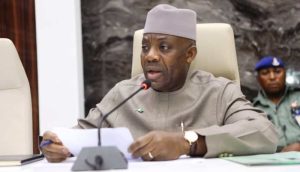
Amb Tim Ihemadu
A civic group based in Nigeria’s South East region, Oganihu Imo, has submitted a detailed memorandum to the National Assembly’s Constitution Review Committee, calling for sweeping amendments aimed at promoting equity, security, and good governance across the country.
In the document dated July 18, the group proposed constitutional changes that include reserved legislative seats for women, the creation of state police, and a referendum process, among others. “This submission is borne out of a desire to build a more inclusive, secure, and democratically responsive nation,” the memorandum read.
The presentation was made by the National Secretary of Oganihu Imo, Amb. Timothy Ihemadu, at the South East Zone B public hearing of the House of Representatives Constitutional Review Committee, chaired by Rt. Benjamin O. Kalu in Owerri.
One of the group’s boldest proposals is the creation of an additional state for the South-East geopolitical zone, which currently has the fewest number of states among Nigeria’s six zones. “This structural imbalance perpetuates a sense of marginalization,” the group argued, adding that an additional state would enhance federal representation and national integration for the region’s predominantly Igbo population.
The memorandum also called for an amendment to Sections 48, 49, and 91 of the Constitution to establish reserved seats for women in the Senate, House of Representatives, and State Assemblies. “Despite constituting roughly half of the population, women occupy less than 10% of legislative seats,” it noted, describing gender quotas as a temporary but effective measure to fast-track inclusion.
On security, Oganihu Imo urged lawmakers to remove “Police” from the Exclusive Legislative List, thereby enabling the creation of State Police Services. “The current centralized police structure has proven inadequate,” they wrote, arguing that local police units would improve response times and community trust in law enforcement.
The group also proposed making basic education a justiciable right by moving it from Chapter II to Chapter IV of the Constitution. “Education is the bedrock of national development,” the memo stated, adding that enforceable rights would compel governments to prioritize funding and delivery.
To enhance government efficiency, Oganihu Imo recommended strict timelines for inaugurating legislative houses and appointing ministers or commissioners. “Delays create a vacuum in governance… and project an image of indecisiveness,” the group warned.
Finally, the group pushed for all general elections in Nigeria to be held on the same day, citing cost-saving, voter fatigue, and the political “bandwagon effect” as reasons. “Conducting elections on different dates is enormously expensive and keeps the nation in a perpetual state of political tension,” the memorandum concluded.