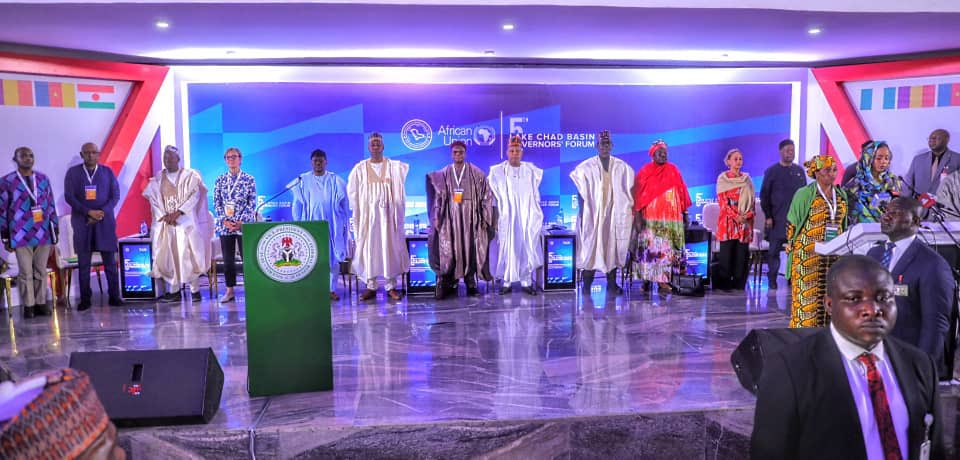
Lake Chad Governors Forum meeting
By SADIQ ABUBAKAR, Maiduguri –
The city of Maiduguri played host to the highly anticipated 5th Edition of the Lake Chad Basin Governors’ Forum Meeting, convened from January 29th to 31st, 2025.
Organised by the Yobe State Government, the forum brought together governors and representatives from countries surrounding the Lake Chad Basin, including Nigeria, Chad, Cameroon and Niger Republic.
This meeting served as a vital platform for regional leaders to discuss pressing issues, foster collaboration, and strategize on sustainable solutions aimed at revitalizing the Lake Chad region.
The gathering brought together governors from the member states, representatives of regional and international organizations, and key stakeholders to discuss pressing issues affecting the lake and its surrounding communities.
The forum underscored the collaborative commitment needed to tackle the multidimensional challenges facing the Lake Chad Basin, including security, environmental sustainability, and economic development.
Maiduguri, often referred to as the epicenter of humanitarian crises in northeastern Nigeria, provided a poignant backdrop for discussions about resilience and collective action.
The choice of location was symbolic, highlighting the urgent need for renewed commitment in the face of ongoing challenges ranging from climate change to the activities of terrorist groups that have disrupted livelihoods and economies in the region.
Governor Mai Mala Buni of Yobe State welcomed delegates with an impassioned speech emphasizing the need for unity and collaboration among the states sharing the lake.
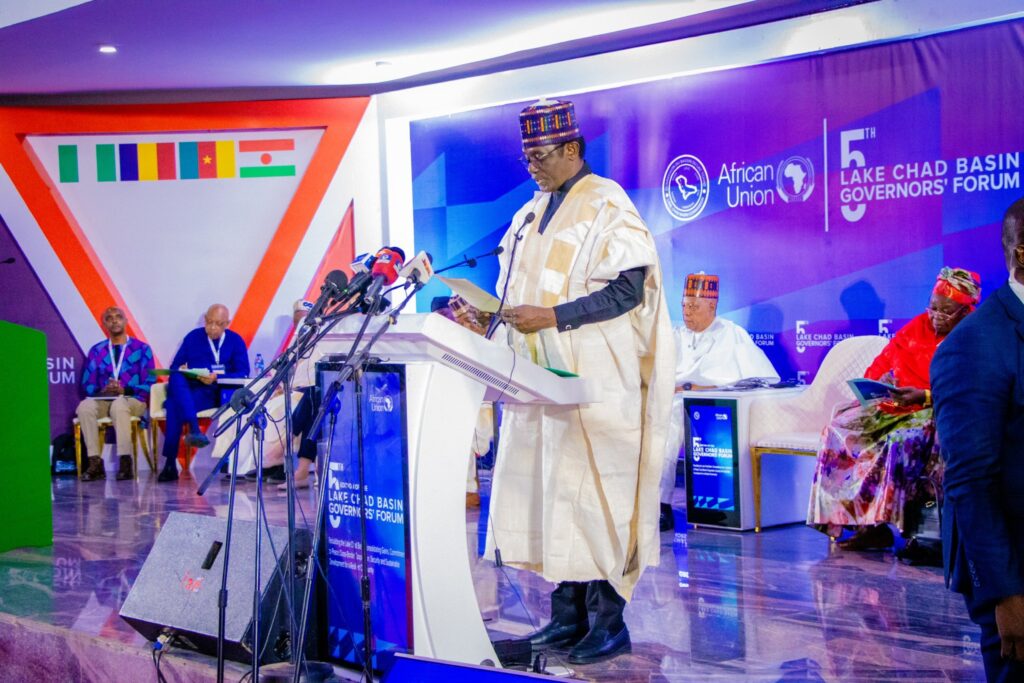
“Lake Chad is not just a body of water; it is a lifeline for millions. Our pursuit of sustainable solutions necessitates a cooperative approach,” he said.
The agenda for the three-day meeting focused on a range of critical issues: like security concerns with the ongoing fight against insurgency and extremism in the region, security was a prominent theme.
The governors discussed strategies for improving inter-state cooperation and intelligence sharing, recognizing that regional stability is crucial for effective governance and development.
Environmental sustainability was a crucial topic due to the shrinking of Lake Chad over the decades that has had severe implications for the environment and local communities.
Experts and professionals made presentations on climate change’s impact on water resources and agricultural productivity, prompting robust discussions on sustainable land management practices and the need for urgent interventions.
Economic development issues discussed recognizing the lake’s potential as an economic resources where the forum explored ways to enhance livelihoods through sustainable fishing, agriculture.

During the LCBGF meeting, the serene yet resilient landscapes of Maiduguri city, the capital of Borno State in Nigeria was transformed into a vibrant hub of regional diplomacy as it hosted the 5th Edition of the Lake Chad Basin Governors’ Forum (LCBGF) from January 29 to 31, 2025 with participants from far and near both within and outside the country, Nigeria
Indeed, the gathering of the governors, traditional rulers and representatives from member states within the Lake Chad Basin region centered on addressing pressing challenges and foster collective solutions at a time when the region is facing heightened environmental and socio-economic pressures according to both the APC National Chairman and former Executive Secretary of the LCBC, Dr. Abdullahi Umar Ganduje and incumbent Executive Secretary of the LCBC, Mamman Nuhu.
It would be recalled that the LCBGF, which serves as a platform for dialogue and action of the he LCBGF is an initiative designed to bring together the leaders of the Chad Basin countries, Nigeria, Niger Republic, Chad, and Cameroon to share insights, collaborate on common issues, and strategize on effective governance and management of shared resources.
While the theme for this year’s forum, “Resilience and Sustainability in the Lake Chad Basin,” underscored the need for innovative approaches to the challenges posed by climate change, insecurity, and economic instability.
Governor Mai Mala Buni of Yobe State, the host of this year’s meeting, delivered a welcoming address that highlighted the importance of regional cooperation in achieving peace and development.
“We are united not just by our geography but by common goals. Our ability to work together is essential for the survival and prosperity of our people,” Mala said.
He emphasized on commitment to collaborative governance in the face of ongoing conflicts and ecological crises in tackling the crisis of Lake Chad Basin region as one of the most pressing issues discussed including the severe shrinkage of Lake Chad, which is once one of Africa’s largest freshwater bodies.
However, representatives voiced concerns over the drastic reduction in water levels down by approximately 90% since the 1960s which has had dire consequences on agriculture, fishing, and livelihoods in the surrounding communities.
The forum further featured sessions dedicated to exploring sustainable water management practices and the need for a coordinated effort to rehabilitate the lake.
The governors invited experts and environmentalists who provided insights on innovative water conservation techniques, financing sustainable projects, and engaging local experts and professionals through the collaborative efforts and support of the CSOs across the Lake Chad
Because Lake Chad, which is once one of Africa’s largest freshwater lakes, has diminished drastically in size due to climate change, over exploitation of resources, and increasing demands from agriculture and population growth.
The forum governor’s observed this decline has exacerbated security challenges, economic instability, and humanitarian crises in the region which informed both the traditional rulers forum and the governors’ forum to establish platform to facilitate dialogue and create a collaborative framework for addressing these interconnected issues.
The three-day event centered on key the themes and discussions that are critical including economic resilience, environmental sustainability, and security cooperation. Notable sessions addressed themes like Water Resource Management given the lake’s shrinking footprint,.
Discussions emphasized the need for sustainable water governance. Governors deliberated on innovative approaches to manage water resources, ensuring fair allocation among communities and fostering cooperative transboundary water management strategies.
Economic diversification and resilience were discussed with frequent droughts and resource scarcity, the need for economic diversification was paramount alongside agricultural initiatives aimed at improving food security as well as investments in alternative livelihoods, were highlighted as necessary measures to enhance resilience against climate shocks.
On Security challenges and collaboration, the governors and traditional rulers fora provided a platform for regional leaders to address pervasive security threats posed by extremist groups and local militias.
Collaborations with security agencies to strengthen intelligence sharing and cooperative security frameworks were also discussed as essential strategies for ensuring stability in the Lake Chad region.
The Youth and Women Empowerment discussions and solutions recognized the significance of involving marginalized groups in decision-making, leadership and good governance of the region as a New dawn for the Lake Chad Basin as Insights from the 5th Edition of the Lake Chad Basin Governors’ Forum.
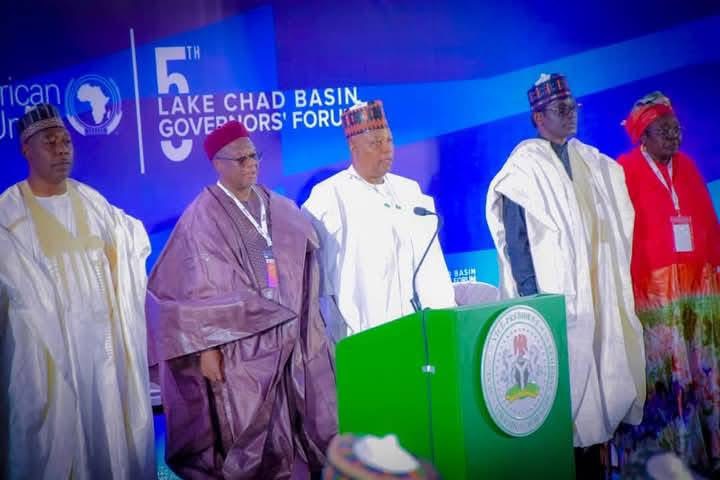
This pivotal meeting brought together governors, traditional rulers, policy makers, and stakeholders from countries bordering Lake Cha including Nigeria, Chad, Cameroon, and Niger amidst and against the backdrop of the increasing challenges and shrinking water resources.
Hence the Lake Chad Basin has faced extensive environmental degradation and socio-political turmoil in recent years being once one of the Africa’s largest fresh water Lakes, where Lake Chad has shrunk by over 90% since the 1960s due to climate change, unsustainable agricultural practices, and demographic pressures.
The state of crisis has not only impacted the ecological balance but has also exacerbated poverty, insecurity, and conflicts within the region where the Forum aimed to address these multifaceted challenges through collaborative governance and sustainable solutions.
Opening remarks at the forum were made by Yobe State Governor Mai Mala Buni, who emphasized the need for a collective approach to manage resources and security.
“The Lake Chad Basin region is more than a geographical area; it is our shared heritage and the lifeline for millions of people. We must work together to ensure its survival,” Buni said.
His words resonated with the assembled dignitaries, setting the tone for a series of informative discussions. Hence discussions during the forum meeting included topics such as cross border , trans-boundary water management, sustainable agricultural practices, and regional security issues linked to the activities of extremist groups.
In light of the ongoing humanitarian crisis, the governors reaffirmed their commitment to fostering peace and stability in the region. Collaborative initiatives aimed at promoting socio-economic development were a focal point, showcasing the potential for enhancing livelihoods through better resource management.
The forum shared certain strategies for sustainable development as one of the highlights of the forum was the presentation of successful local initiatives. For instance, discussions included innovative agricultural techniques being implemented in Yobe State, which focus on drought-resistant crops and improved irrigation systems
The meeting was primarily focused on fostering collaboration to tackle the multifaceted challenges facing the Lake Chad basin, which is marked by environmental degradation, security threats, and socio-economic turmoil.
The opening ceremony was graced by dignitaries, including governors from the member states, representatives from the African Union (AU), the Economic Community of West African States (ECOWAS), and various development partners as a convergence of leaders.
Where Yobe State Governor, Mai Mala Buni, who acted as the host, expressed optimism about regional collaboration, emphasizing that the forum’s decisions would significantly impact the region’s future.

Governors such as Babagana Zulum of Borno State and Ahmed Fintiri of Adamawa State underscored the urgent need for joint strategies to combat the lingering Boko Haram insurgency and terrorism that has plagued the region, particularly , from extremist groups of I SWAP, Islamic Militias and ethnic groups among others.
Additionally, security discussions were paramount, with governors discussing innovative ways to fortify peace and stability within their territories while environmental sustainability takes the center stage as one of the most pressing issues that was discussed next to the alarming shrinkage of Lake Chad, which has decreased by over 90% since the 1960s due to climate change, over-exploitation, and poor resource management.
The impact this has had on local livelihoods, particularly for fishing and farming communities, cannot be overstated while e forum set forth an ambitious agenda to revive the lake’s ecosystem, emphasizing sustainable fishing practices and the need for collaborative water management policies
Renewing collaborative effort was necessary for the 5th Edition of the Lake Chad Basin Governors’ Forum Meeting where the governors and traditional rulers from the Lake Chad Basin Commission (LCBC) member states convened to address pressing challenges facing the basin and chart a new course for its revitalization.
The Lake Chad Basin, which is a critical resource for millions in Nigeria, Niger, Chad, and Cameroon and has for long been at the mercy of climatic changes, population growth, and regional insecurity, Governor Buni opened the session with a warm welcome, emphasizing the importance of unity among member states in tackling the multifaceted crises plaguing the basin.
“Our collaboration is vital for ensuring the sustainable use of Lake Chad’s resources and improving the livelihoods of our communities,” Buni said
He noted that key challenges and discussions should be central for the forum meeting as the critical state of Lake Chad has shrunk to a mere 10% of its size in the 1960s, threatening regional ecosystems and the livelihoods of over 30 million people dependent on its waters.
Actually, during the three-day LCBGF forum meeting, governors and traditional rulers have shared insights and data on the challenges faced by their respective regions, including desertification, water scarcity, and the conflict-driven displacement of communities.
The LCBGF forum sought to create a comprehensive strategy to revive Lake Chad through improved water management practices and investment in renewable energy and agriculture including innovative solutions and collaborations.
As one of the highlights of the meeting was the introduction of innovative technologies aimed at enhancing water management. Discussions revolved around implementing the communique drafted to foster peace building, Cross border and bilateral cooperation, enhanced security, socio economic and sustainable development among others.