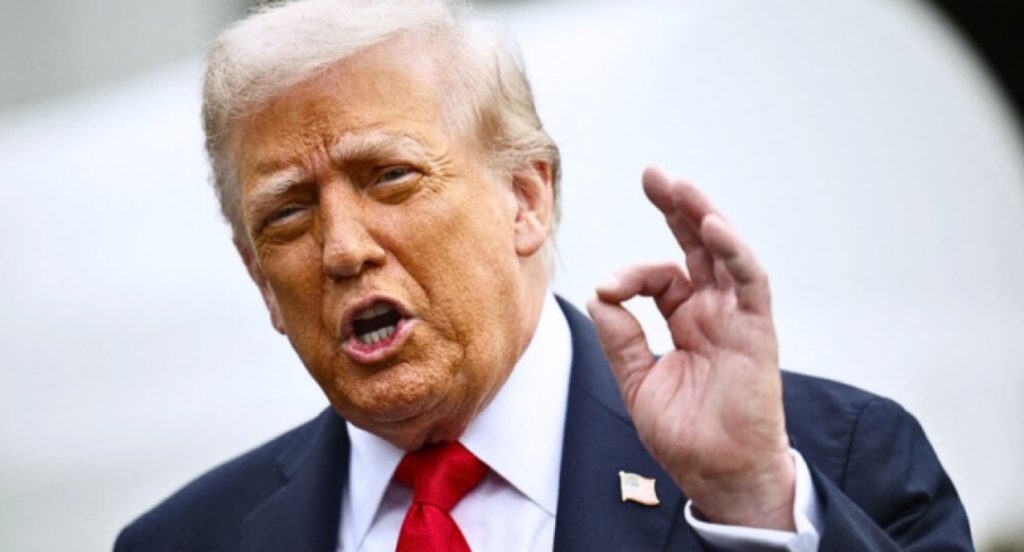
US President, Donald Trump
United States (US) has unveiled a new wave of visa restrictions targeting anyone involved in the persecution of Christians in Nigeria, a move Washington says is part of a broader push to defend global religious freedom.
U.S. Secretary of State Marco Rubio announced the measure on Wednesday in a post on X, stressing that the action is aimed squarely at individuals who “direct, authorize, fund, support, or carry out violations of religious freedom.”
“United States is taking decisive action in response to the atrocities and violence against Christians in Nigeria and around the world,” Rubio wrote. “The @StateDept will restrict U.S. visas for those who knowingly direct, authorize, fund, support, or carry out violations of religious freedom. This visa policy applies to Nigeria and other governments or individuals that persecute people for their religious beliefs.”
The new restrictions come on the heels of former President Donald Trump’s recent designation of Nigeria as a Country of Particular Concern, a classification he justified by alleging what he called a “genocide against Christians.”
On October 30, Trump shared the announcement on Truth Social before delivering a national address.
“Christianity is facing an existential threat in Nigeria,” he wrote. “Thousands of Christians are being killed. Radical Islamists are responsible for this mass slaughter. I am hereby making Nigeria a ‘COUNTRY OF PARTICULAR CONCERN’ — But that is the least of it.”
Trump added that he had instructed Rep. Riley Moore (R-W.Va), Rep. Tom Cole (R-Okla.) and members of the House Appropriations Committee to investigate the situation and provide recommendations.
“The United States cannot stand by while such atrocities are happening in Nigeria, and numerous other Countries,” he said. “We stand ready, willing, and able to save our Great Christian population around the World!”
His remarks triggered a wave of responses from U.S. lawmakers, many of whom echoed concerns about religiously motivated violence.
Rep. Riley Moore condemned the recent kidnapping of pupils and teachers from St. Mary Catholic School in Niger State, describing it as another grim reminder of the dangers facing Christians.
“I stand with the U.S. State Department in condemning the horrific abduction of children and teachers from a Catholic school in Nigeria,” he said.
Moore urged heightened global attention, insisting, “We cannot turn a blind eye to our brothers and sisters in Christ in Nigeria who are persecuted daily. No one should be targeted for their faith in our Lord and Savior Jesus Christ.”
At a joint congressional briefing hosted by the House Appropriations Committee, lawmakers warned that Washington may need to ramp up pressure on Abuja. Several argued that Nigerian authorities were failing to protect vulnerable communities amid spiraling insecurity.
Congressman Chris Smith, who chairs the House Foreign Affairs Africa Subcommittee, said the Nigerian government was shirking its responsibilities.
“The Nigerian government has a fundamental, constitutional obligation to protect its citizens; however, the perpetrators of this persecution operate with complete impunity,” he declared.
Smith accused officials of intentionally dragging their feet on critical reforms and vowed that the U.S. would intensify scrutiny.
According to him, Washington would not allow Nigerian leaders to “evade responsibility” for the worsening violence.
With both the U.S. government and lawmakers sharpening their rhetoric, the new visa restrictions signal a growing willingness in Washington to confront what it views as a deepening crisis—and to hold accountable those believed to be fueling religious persecution in Nigeria.