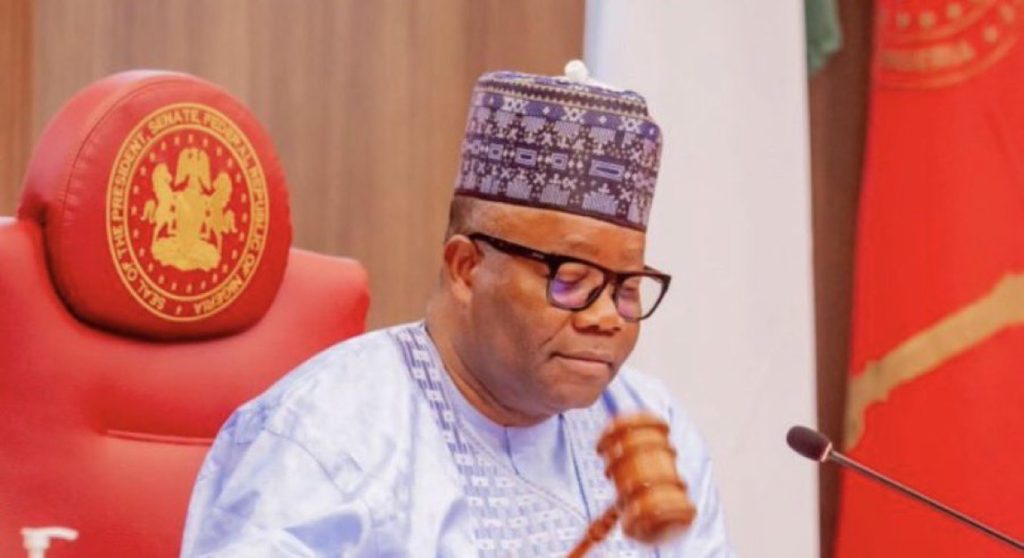
Senate President Godswill Akpabio
Senate has set March 17, 2026, as the tentative date for the final consideration and passage of the ₦58.472 trillion 2026 budget.
The timeline was disclosed by the Senate Committee on Appropriations after a special session held on Friday, during which February 2 to 13, 2026, was approved for the consideration of budget estimates at the committee level.
As part of the process, the committee also fixed Monday, February 9, 2026, for a public hearing on the 2026 budget proposal.
Chairman of the committee, Senator Solomon Olamilekan Adeola, said Thursday, March 5, 2026, has been scheduled for an interactive session between members of the Appropriations Committee and key economic managers of the Federal Government. Those expected at the session include the Minister of Finance and Coordinating Minister of the Economy, Wale Edun, and the Minister of Budget and National Planning, Atiku Bagudu.
According to Adeola, February 16 to 23, 2026, has been earmarked for the submission of reports on budget defence by various Senate standing committee chairmen, ahead of the presentation of the Appropriations Committee’s report to the full Senate on March 17.
He disclosed that although the Senate leadership initially preferred that the budget be passed by March 12, 2026, he appealed for an extra week to allow lawmakers conduct more detailed scrutiny of the estimates.
To facilitate a thorough review, Adeola said hard copies of the 2026 budget have been printed and distributed to chairmen and members of the Senate’s standing committees.
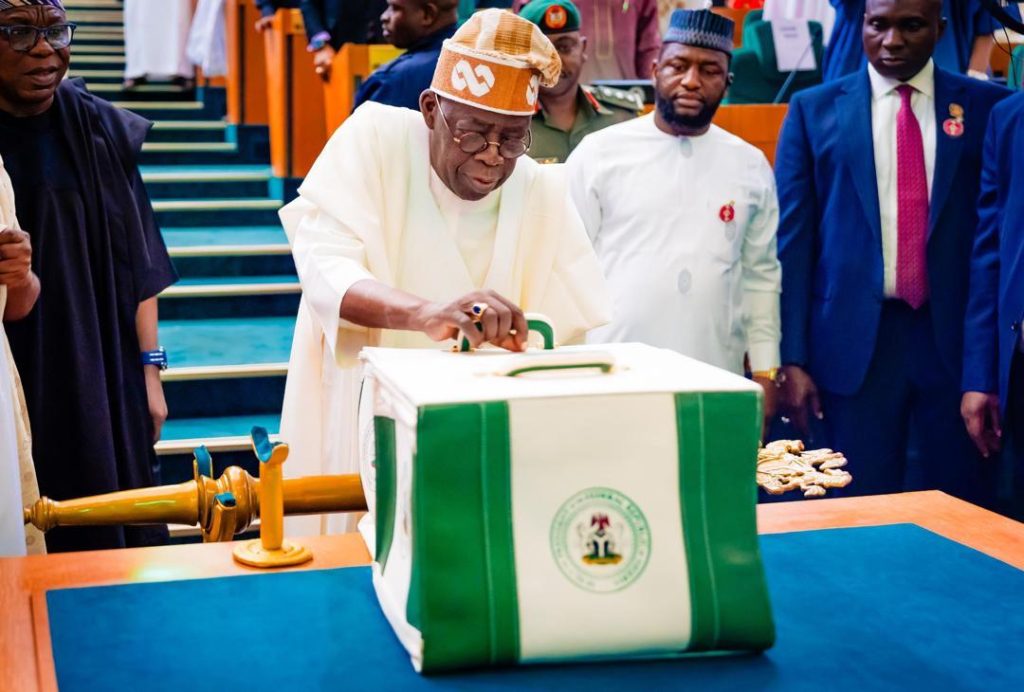
President Bola Tinubu had last month presented the 2026 budget proposal of ₦58.18 trillion to a joint session of the National Assembly. He described the proposal as a “Budget of Consolidation, Renewed Resilience and Shared Prosperity.”
Tinubu pegged capital expenditure at ₦26.08 trillion, with a crude oil benchmark of US$64.85 per barrel. The expected total revenue stands at ₦34.33 trillion, while ₦15.52 trillion was set aside for debt servicing.
He told lawmakers that the proposed budget deficit is ₦23.85 trillion, representing 4.28 per cent of Gross Domestic Product, and anchored the proposal on crude oil production of 1.84 million barrels per day. The exchange rate for the 2026 fiscal year was fixed at ₦1,400 to the US dollar.
A breakdown of the proposal showed that defence received the largest allocation of ₦5.41 trillion, followed by infrastructure with ₦3.56 trillion. Education was allocated ₦3.52 trillion, while the health sector got ₦2.48 trillion.
“We will invest in security with clear accountability for outcomes—because security spending must deliver security results,” Tinubu said.
“To secure our country, our priority will remain on increasing the fighting capability of our armed forces and other security agencies by boosting personnel and procuring cutting-edge platforms and other hardware.”