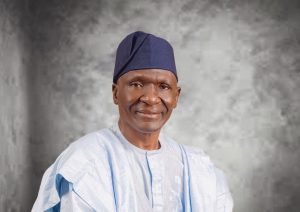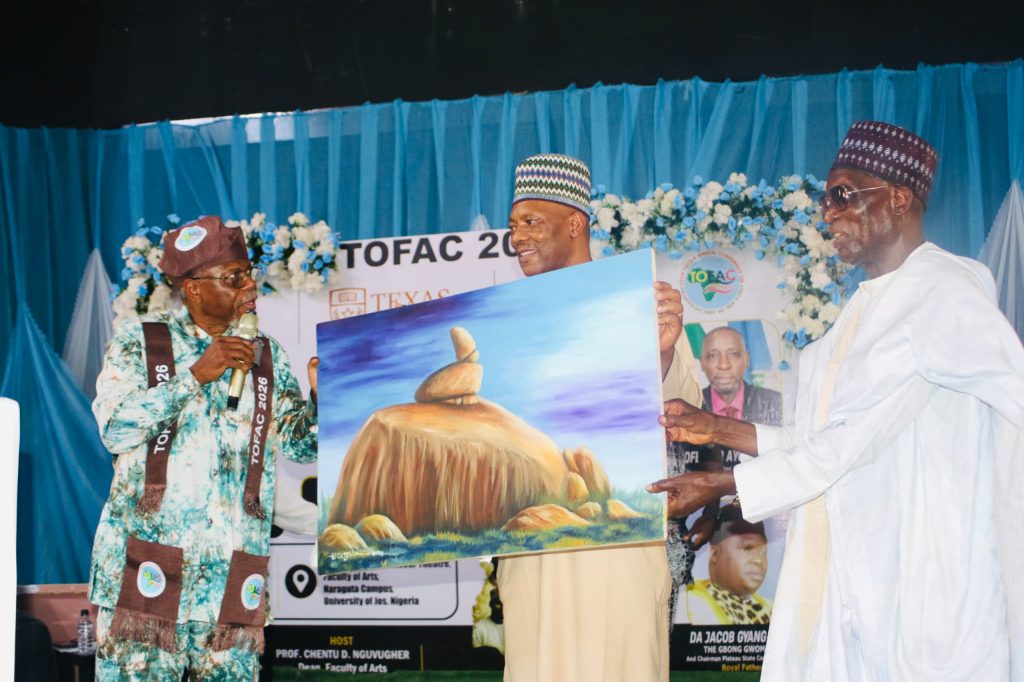
The University of Jos has appointed renowned Nigerian historian and Africanist, Prof. Toyin Falola, as Honorary Elizabeth Isichei Professor of African History, describing the appointment as a recognition of his exceptional contributions to African scholarship and a step towards strengthening the institution’s global academic partnerships.
Vice-Chancellor of the university, Prof. Tanko Ishaya, announced the appointment on Wednesday during the opening ceremony of the 15th Toyin Falola Annual Conference on Africa and the African Diaspora (TOFAC), held at the Aliyu Akwe Doma Indoor Theatre, Naraguta Campus.
According to the Vice-Chancellor, the appointment, approved by the university’s Governing Council and Senate, takes effect from August 1, 2026, for an initial five-year tenure.
He said the honour recognises Falola’s outstanding achievements in research, teaching, mentorship and his enduring contributions to African history and global scholarship.
Widely regarded as one of Africa’s foremost historians, Falola is the Jacob and Sanger Mossiker Chair in the Humanities at the University of Texas at Austin. He has authored and edited more than 200 books and hundreds of scholarly articles on African history, politics, religion, culture and the African diaspora, influencing generations of scholars across Africa and beyond.
Under the appointment, Falola will deliver public lectures and seminars, mentor academic staff and postgraduate students, participate in collaborative research, support curriculum development and represent the University of Jos in academic and professional engagements.
Ishaya said the honorary professorship also celebrates the enduring legacy of renowned historian, Prof. Elizabeth Isichei, whose pioneering works on Nigerian history, the Igbo people and Christianity in Africa remain influential in African historiography.
Describing Falola as “one of Africa’s most celebrated historians,” the Vice-Chancellor said the annual conference named in his honour had evolved into one of the continent’s foremost intellectual gatherings.
“TOFAC is more than a celebration of an individual; it is a celebration of ideas, academic freedom, rigorous scholarship and the transformative power of knowledge. It has evolved into one of Africa’s foremost intellectual gatherings, providing a platform for critical engagement on issues of continental and global significance,” Ishaya said.
He disclosed that the University of Jos secured the hosting rights for the 2026 conference through a competitive bidding process among African institutions, describing the feat as another milestone in the university’s drive towards internationalisation.
According to him, hosting the conference will expand opportunities for research collaboration, strengthen the university’s international visibility, expose staff and students to global best practices and facilitate new academic networks.
Speaking on the conference theme, “Identities in Nigeria,” Ishaya said the gathering was particularly significant given Nigeria’s diversity and the country’s search for national cohesion.
“With over 250 ethnic groups and varying religious affiliations, the tension between regional loyalty and national unity remains a prominent issue. We must design actionable policies and frameworks that bridge ethnic and religious divides while fostering a strong Nigerian identity without erasing our rich cultural heritage,” he said.
Delivering the keynote address, former Independent National Electoral Commission (INEC) Chairman, Prof. Attahiru Jega, echoed the need for stronger democratic institutions, warning that Nigeria’s diversity had increasingly been manipulated for political advantage.
“Multi-ethnic composition and diversity in themselves are not necessarily a problem. The challenge arises when elites mobilise and weaponise these identities in reckless pursuit of self-serving objectives,” Jega said.
He argued that good democratic governance, electoral integrity, transparency, accountability and issue-based politics remain essential to transforming Nigeria’s diversity into a source of national development rather than conflict.
The conference, jointly organised by the University of Jos, the Jos History and Culture Society and the University of Texas at Austin, attracted scholars, researchers and policymakers from Nigeria and abroad to examine questions of identity, citizenship, governance and nation-building.