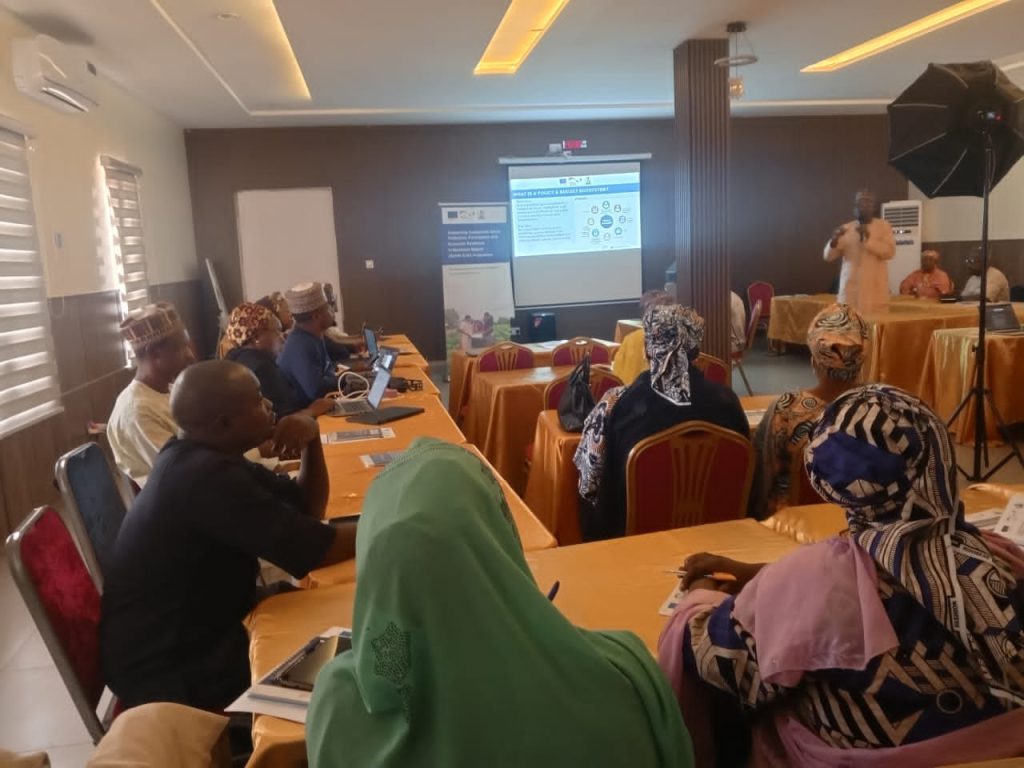
In a bid to strengthen media representation of women in politics, the European Union (EU), with support from the Government of Germany, has organized a four-day capacity-building workshop for journalists in Maiduguri, Borno State.
The training, implemented by GIZ in collaboration with the Development Research and Projects Centre (dRPC), brought together about 50 media practitioners drawn from print, broadcast, online, and social media platforms, as well as academic institutions.
The workshop, which ran from Tuesday to Friday, follows findings by the Prof. Woke Soyinka International Investigative Institute in 2024 that revealed a low percentage of news coverage on female political actors and influential activists in Nigeria.
Facilitators from the dRPC and the Department of Mass Communication, University of Maiduguri, called on journalists to amplify stories about female political leaders and change the prevailing narrative surrounding women contesting elective positions at all levels of government.
They emphasized the pivotal role of the media as shapers of public opinion, promoters of peace and democracy, and influencers of policymaking.
The facilitators urged journalists to highlight the competence, intelligence, and leadership capacity of women in politics, particularly at the grassroots level, through inclusive and gender-responsive reporting that promotes transparency and accountability in governance.
According to the facilitators, women have consistently demonstrated excellence and resilience in various leadership roles — from councillors and legislators to administrators and deputy governors.
They called for greater support from male counterparts, the media, and families to ensure women continue to contribute meaningfully to governance and national development.
The workshop reaffirmed the media’s responsibility in promoting gender balance and fostering an enabling environment for women’s political participation and leadership across Nigeria.