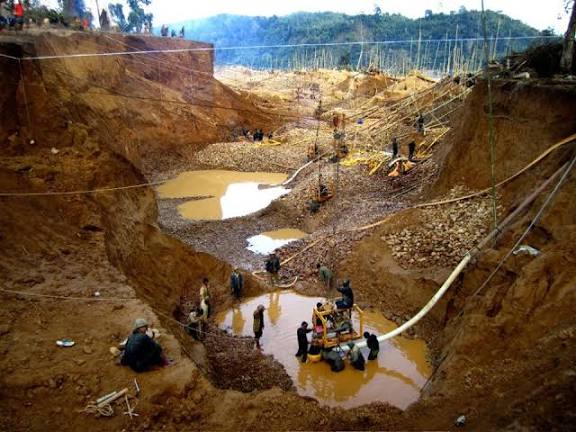
Illegal mining site in Nigeria
A Professor of Economic Geology and Environmental Geochemistry at the University of Jos (UNIJOS), Raymond Ishaya Daspan, has warned that unregulated mining and mineral processing activities on the Jos Plateau may be exposing residents, particularly children and workers, to dangerous levels of toxic heavy metals.
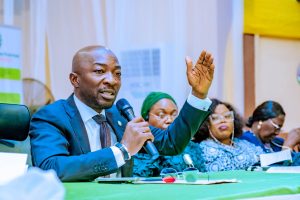
Daspan gave the warning on Tuesday while delivering the University of Jos’ 117th Inaugural Lecture titled, “ _Rocks, Resources, Risk: Geochemical Pathways of Mineral Exploration, Environmental Sustainability and Climate Resilience,”_ at the Aliyu Akwe Doma Indoor Theatre, Naraguta Campus.
Presenting findings from years of research on mill dust, quarry sites and mineral deposits around Jos, the professor said analyses revealed elevated concentrations of elements such as lead, uranium and arsenic in certain locations.
According to him, these substances pose serious health threats when exposure occurs over long periods.
Daspan explained that prolonged exposure to heavy metals could result in kidney damage, neurological disorders, cardiovascular complications and increased cancer risk. He stressed that children and mining workers are especially vulnerable because of their constant exposure in and around processing environments.
“We may be living in a danger zone.These elements do not disappear. They move through air, water and soil. They can be inhaled as dust, ingested through contaminated water or absorbed over time.”
He further cautioned that while mineral resources remain vital to economic development, exploitation without proper scientific guidance can create long-term environmental and public health consequences.
“Mineral resources are a blessing, but if we exploit them without responsibility, they can become a curse.Minerals are not random. They follow geochemical patterns, yet many people mine without proper exploration, without data and without responsibility.”He stated.
The geologist expressed concern over what he described as limited scientific oversight in mineral extraction activities across the country.
He emphasized that environmental monitoring systems must be strengthened to prevent irreversible ecological damage and safeguard host communities.
Daspan also decried Nigeria’s continued reliance on foreign laboratories for advanced mineral analysis, despite the presence of equipment in some local institutions. He argued that strengthening domestic research capacity would enhance the country’s ability to understand and manage its mineral wealth.
“Why must we export our samples to understand our own soil? If we do not understand what we have, others will. Technology defines demand, and what was once considered waste may now be strategic.” he added.
He called for the establishment of functional regional geochemical and environmental laboratories, alongside the creation of a national geochemical database to monitor soil, water and dust quality across mining regions.
Daspan urged collaboration among universities, research institutions, environmental agencies and policymakers to promote sustainable mineral governance and protect public health.
In his remarks, the Vice-Chancellor of the University of Jos, Professor Tanko Ishaya, commended the lecturer for what he described as a timely and impactful presentation.
He noted that the issues raised underscored the urgent need for stronger research capacity and more responsible mineral resource management in Nigeria.