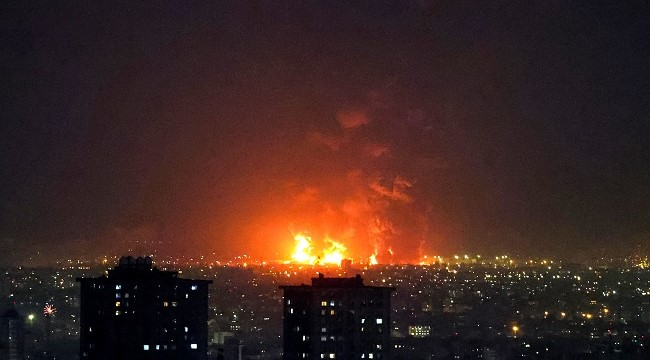
Explosions erupt following strikes at Tehran Oil Refinery in Tehran on March 7, 2026. The United States and Israel launched strikes against Iran on February 28, sparking swift retaliation by the Islamic republic which responded with missile attacks across the region. The war has dragged in global powers, upended the world’s energy and transport sectors, and brought chaos to even usually peaceful areas of the volatile region. (Photo by ATTA KENARE / AFP)
Tensions across the Middle East deepened on Sunday after overnight air strikes by the United States and Israel targeted key oil facilities in Iran, while Tehran responded by attacking infrastructure in several Gulf states.
Iranian authorities confirmed that five oil-related facilities in and around Tehran were struck during the night, leaving four people dead and causing significant damage.
The Chief Executive Officer of the National Iranian Oil Products Distribution Company, Keramat Veyskarami, said the attacks targeted oil depots and a petroleum transport centre in Tehran and nearby Alborz province.
“Last night, four oil depots and a petroleum products transport centre in Tehran and the Alborz were attacked by enemy aircraft,” Veyskarami told state television.
He confirmed that four workers lost their lives in the strike.
“Four of our personnel, including two oil tanker drivers, were killed in the incident,” he said, adding that the facilities “were damaged” but that the resulting blaze had been contained.
Residents of the Iranian capital reported thick smoke hanging over parts of the city at daybreak, with the smell of burning fuel lingering in the air.
Despite the damage, Veyskarami assured the public that fuel supplies remain stable, stating that Iran’s oil depots have “sufficient gasoline reserves”.
The latest strikes come amid a rapidly escalating regional conflict that began after the United States and Israel carried out a major attack on Iran on February 28, which killed Iran’s supreme leader, Ali Khamenei.
The killing triggered a broader war across the region, with Iran launching waves of drone and missile strikes targeting Israel and American interests in the Middle East.
*Iran Expands Retaliation Across Gulf*
On Sunday, Iran widened its response, targeting key infrastructure in Gulf countries hosting United States military bases.
Authorities confirmed that fuel tanks at Kuwait International Airport were struck in a drone attack. Kuwait’s military said a fire at the airport facility was quickly brought under control.
The official Kuwait News Agency reported that there were no “significant injuries” from the incident.
Kuwait’s Interior Ministry also announced that two border guards were killed “while performing their national duty,” though it did not provide further details about the circumstances.
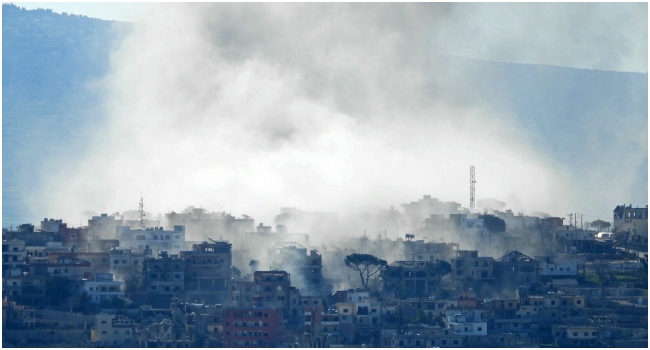
In Bahrain, a desalination plant was damaged in another strike, raising concerns about water supply infrastructure in the island nation.
Explosions were also reported in several cities across the Gulf, including Dubai in the United Arab Emirates and Manama in Bahrain.
According to an AFP tally, at least 16 people — including eight civilians — have been killed in Gulf states since the conflict erupted.
*Iran Issues Warning to Neighbours*
Iran’s president, Massoud Pezeshkian, warned on Sunday that Tehran could expand its attacks if neighbouring countries continue to allow their territory to be used by the United States or Israel.
The Islamic Republic “will be forced to respond” if such cooperation continues, he said.
However, the Iranian leader had earlier attempted to soften tensions with regional governments. Speaking a day earlier, Pezeshkian apologised to neighbouring countries hosting US military bases for attacks carried out on their territory.
Saudi Arabia, Qatar, the United Arab Emirates and Kuwait all reported fresh security incidents over the weekend as the conflict enters its second week, raising fears of a wider regional war that could disrupt global energy supplies and destabilise the Gulf.