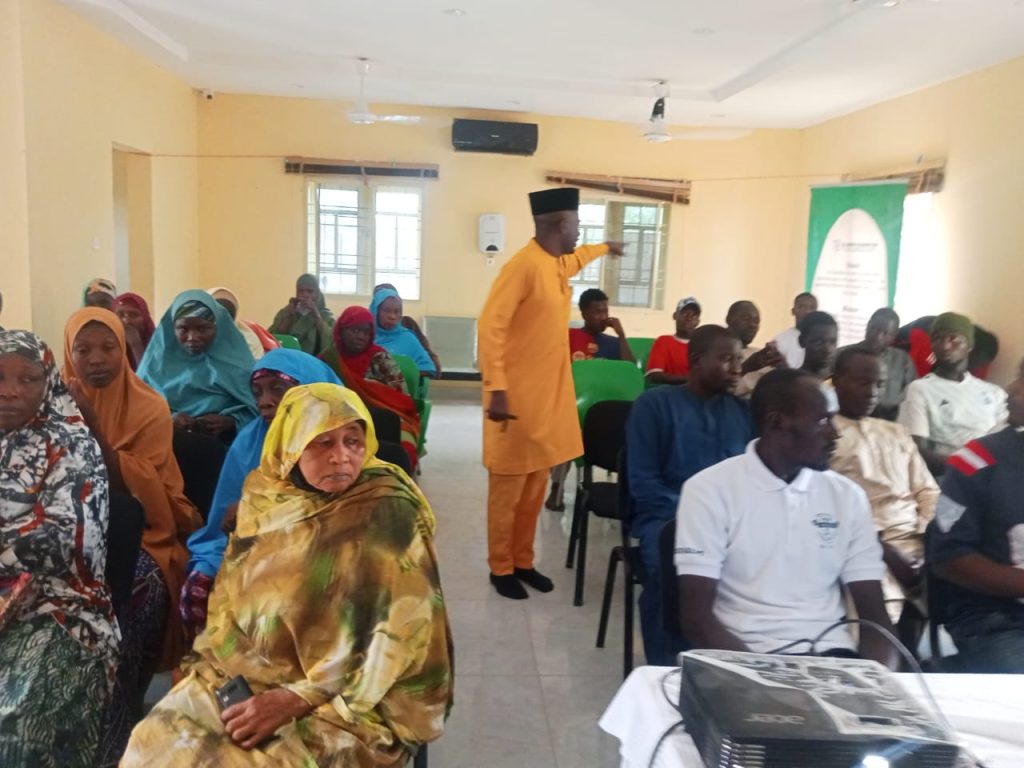
A humanitarian and human rights organization, the Allamin Foundation for Peace and Development, has trained 40 members of its Jire Dole Network on community outreach and human rights advocacy in Maiduguri, Borno State.
The training, held on Saturday at Hajja Mangal Memorial Banquet Hall, Giwa Barrack Area, brought together 15 male and 25 female participants aimed at strengthening grassroots engagement on human rights issues.
Leader of the Jire Dole Network, Comrade Hajiya Gana Suleiman, urged participants to take the training seriously and apply the knowledge gained in their communities.
She also encouraged them to remain disciplined, morally upright, and committed, describing them as future leaders and ambassadors of both the network and the Allamin Foundation.
According to her, participants must conduct themselves responsibly while promoting peace, justice, and human rights awareness within their communities.
The resource person and facilitator, Dr. Muhammad Abdullah of the University of Maiduguri, explained that the training was designed to help participants understand the meaning and importance of community outreach and advocacy, particularly in documenting human rights issues.
Dr. Abdullah said the workshop aimed to enable participants identify key human rights concerns within their communities, plan outreach programmes, and develop effective advocacy strategies.
He further noted that the training exposed participants to the concept and context of community outreach, advocacy, and documentation, while highlighting their roles and key messages necessary for successful engagement.
According to him, participants were expected to gain practical knowledge on engaging community members, sharing information, raising awareness, building trust, and encouraging positive behavioural change.
He stressed that advocacy involves speaking up for the rights of others and influencing decisions that promote justice and accountability.
Dr. Abdullah also highlighted the importance of outreach and advocacy, noting that such efforts help prevent human rights violations, empower communities with knowledge, encourage reporting of abuses, and promote peaceful coexistence.
He added that documentation alone is insufficient unless it leads to awareness, prevention, and response, emphasizing that community advocates serve as a vital link between communities and organizations.
“As trusted community actors, your roles as educators, advocates and connectors require you to see yourselves as leaders in promoting change,” he told participants.
The training also covered identifying target audiences such as government officials, security agencies, and community leaders, as well as strategies for planning outreach activities, using documentation for advocacy, and managing resistance.
The Allamin Foundation noted that the initiative forms part of its broader commitment to strengthening grassroots human rights advocacy and promoting peace and development across communities in Borno State.