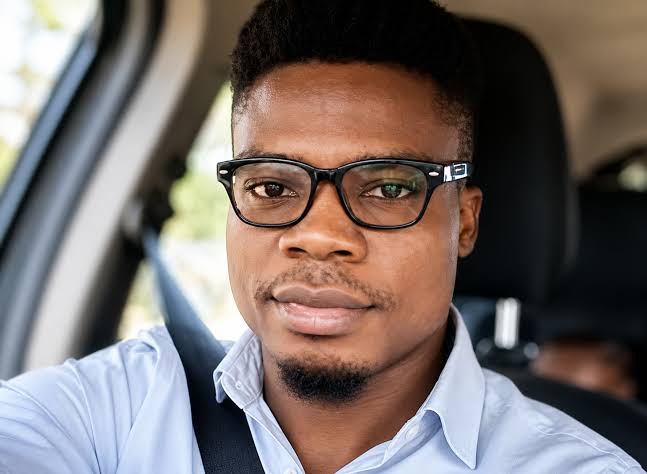
Nigerian social media Influencer, Chidiebere Justice Mark, also known as Justice Crack
INTRODUCTION: NATION AT WAR CANNOT AFFORD A SECOND FRONT
Nigeria is not at peace. Across the North East, North West, and North Central, our armed forces are locked in daily combat against terrorists and bandits. Thousands of soldiers are deployed forward, often without rotation, facing an enemy that watches every word on social media. In this environment, the difference between “free speech” and “subversive act” is not academic – it is life and death.
The Nigerian Army recently arrested a social media influencer, Justice Mark Chidiebere (known as “Justice Crack”), and handed him to civil authorities. His crime: systematically spreading content designed to turn soldiers against their commanders over welfare issues – beyond legitimate criticism into active incitement of insubordination. Public outcry has followed, with many calling the Army a silencer of whistleblowers. This statement argues the opposite: the Army acted lawfully, proportionately, and in the highest interest of national security.
WHAT JUSTICE CRACK ACTUALLY DID
On 2 May 2026, the Army announced the arrest of Justice Crack alongside several soldiers. Investigations showed he had built direct communication lines with frontline troops. He did not merely amplify complaints about rations or equipment – he actively urged soldiers to question their commanders’ legitimacy, refuse orders, and post videos attacking military hierarchy. Some soldiers admitted receiving small payments to share internal grievances that should have gone through proper channels.
Crucially, the Army did not court‑martial the influencer. He was handed over to civilian police for normal criminal prosecution. That is not military dictatorship; that is constitutional democracy where no one – influencer or general – is above the law.
WHY THE CRITICISM IS MISPLACED AND DANGEROUS
First, critics confuse “whistleblowing” with “subversion.” A real whistleblower reports specific, verifiable wrongdoing to lawful authorities – Defence Headquarters, Human Rights Commission, or the media with evidence. Justice Crack did none of that. He broadcast unverified, one‑sided narratives meant to make soldiers feel abandoned. In a war zone, that is not transparency; it is psychological warfare.
Second, timing is everything. Isolated welfare lapses exist in every army – including the US, UK, and Russia. But during war, amplifying those lapses in real time to combat units hands the enemy a propaganda tool. Terrorist groups already use such posts to claim “the Nigerian Army is starving” or “commanders don’t care,” lowering troop morale and encouraging desertion.
Third, the Army acted with restraint. No soldier was shot. No journalist was jailed. The influencer was detained, investigated, and transferred to civilian police – exactly the same process for any civilian who incites factory workers to sabotage production during wartime. Why should the military be held to a lower standard?
Fourth, the slippery slope argument cuts both ways. Critics fear any arrest will clamp down on dissent. But the greater risk is inaction: if the military does nothing while influencers systematically undermine command authority, the result will be crumbling discipline, friendly fire, and avoidable deaths. Which is more humane – arresting one influencer for investigation, or allowing a thousand soldiers to die because they lost faith in their leaders?
THE HARSH REALITY OF WARTIME MORALE
Military psychology is clear: a soldier who believes his nation has abandoned him hesitates. In counter‑insurgency, hesitation kills. The difference between a successful ambush and a fatal one is often split seconds. When a frontline soldier spends his rest time watching a viral video accusing his commander of stealing his meal allowance, trust in the chain of command erodes.
I used to think we have really bright talents in Nigeria but I now know they’re not up to the global standards — Moniepoint CEO, Eniolorunda, laments
Founder of Moniepoint, Tosin Eniolorunda, has sparked conversation online after opening up about the company’s struggle to find qualified Nigerian talent despite hundreds of job openings. Speaking candidly, Eniolorunda revealed that the fintech made a bold move in 2024 to hire only Nigerians, but the outcome has been tough.
“In 2024, we made a decision that we will no longer hire from any other place than Nigeria. And we chopped the cane in 2025,” he said. According to him, the company currently has about 500 vacancies but is struggling to fill them.
“Not only could we not find people at the quality and the quantity we needed them, the few people that we found were not up to the global standards,” he added. The tech boss stressed that the challenge goes beyond local competition, noting: “I’m competing globally, my biggest competition, they are from China.”
Eniolorunda didn’t hold back in pointing fingers at systemic issues, particularly Nigeria’s education system and shifting social values. “I used to feel like Nigerians are really, really bright, but I am honestly beginning to feel like we need to do something to prevent the general IQ of this country from going lower,” he said, expressing deep concern.
He also blamed rising social media influence and trends like “Yahoo Yahoo” and “h@okup culture” for shaping the mindset of young people. “The level that people are reasoning in this country is not as high as it used to be,” he lamented.
Despite the criticism, Eniolorunda maintained that Nigerians still have potential, urging a reset in values and investment in human capital. “We have it in us, all we just need to do is develop our human capital and change this mentality,” he said, while also pointing to brain drain as a major challenge.