Abu Inu-Umoru
There are two broad categories of success in this country. The first announces itself long before it arrives. It travels with noise, dresses in spectacle, and insists, sometimes rather impatiently, that you take notice. The second is quieter, almost reluctant to be seen. It builds, it steadies, it gives, and if you are not paying attention, you might miss it entirely until you begin to notice that things are working where they once did not.
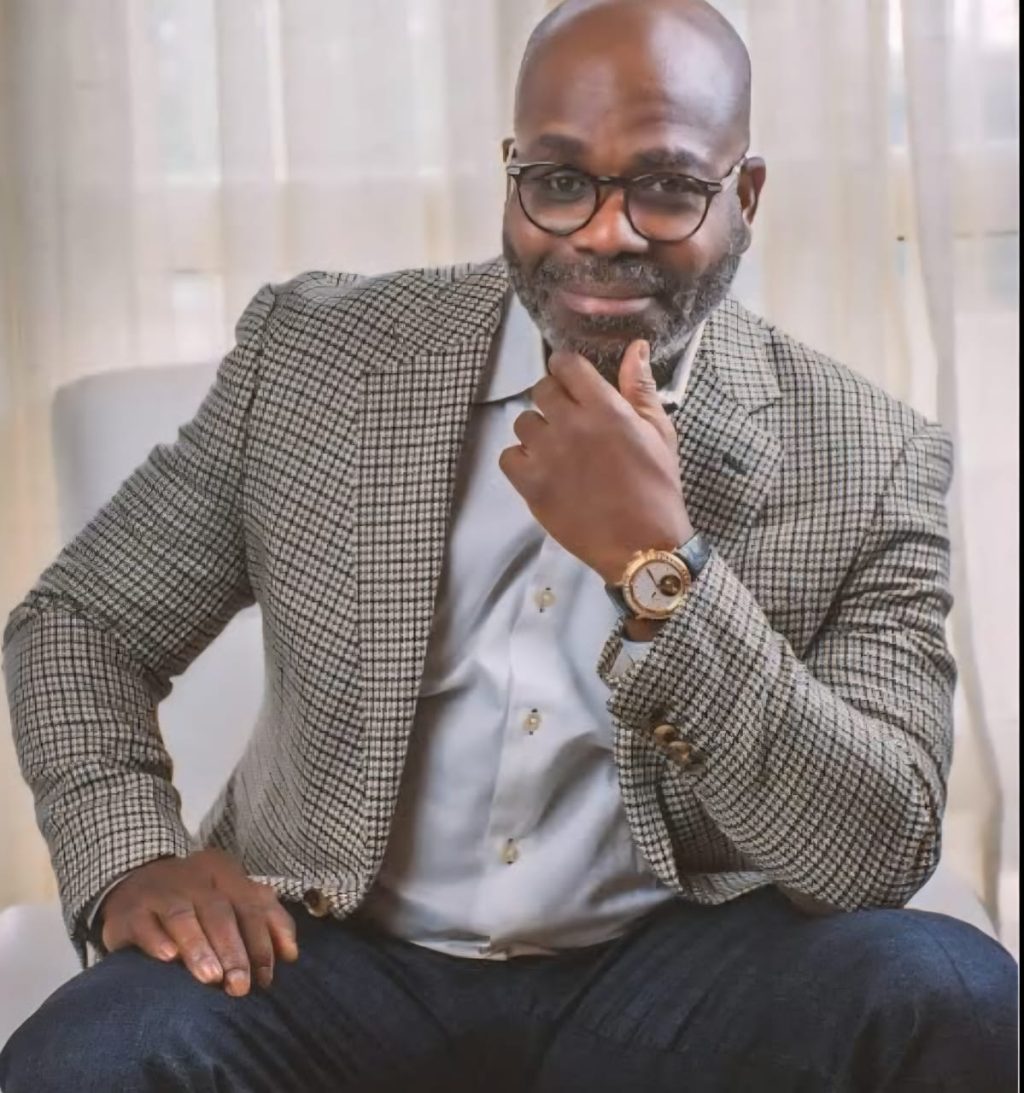
Chief (Dr.) Abu Inu-Umoru belongs, without argument, to the second tradition.
On May 9, 2026, he turns 63. If he had his way, the date would pass like any other. No orchestration. No choreographed goodwill messages. No carefully staged reminders of relevance. Just another day to get on with the business of building, solving, and quietly carrying responsibilities that would weigh heavily on louder men.
That, precisely, is why the moment demands to be marked.
For in a time and place where noise has become a kind of currency, silence backed by substance deserves its own form of recognition.
His story, like many consequential Nigerian stories, begins in inheritance but refuses to end there. Born on May 9, 1963, in Warrake, Owan East Local Government Area of Edo State, he arrived into the orbit of the late Alhaji Inu Umoru, a man of means and reach. But inheritance, as experience repeatedly teaches, is only a beginning. It can produce complacency just as easily as it can inspire discipline.
In Abu Inu-Umoru’s case, it did the latter.
He left Nigeria in 1984, not for leisure but for preparation. At the College of Alameda in California, he earned an Associate’s degree in 1986. By 1989, he had obtained a Bachelor’s degree in Business Administration from Central Connecticut State University. Years later, he would return to the classroom at Harvard Business School, completing the Owner President Management programme, not for ornament but for refinement.
To be clear, these were not certificates to be framed and admired. They were tools to be used. And use them he did.
The defining test of those tools came not in comfort, but in crisis.
When Setraco Nigeria Limited, one of the flagship companies founded by his late father, became entangled in a debt burden reportedly in the region of ₦17 billion, the easier path would have been distance. Many in similar circumstances have perfected the art of strategic absence when the numbers begin to turn unfriendly.
He chose presence.
Stepping into the storm, he applied corporate discipline with a clarity that can only come from both training and temperament. Financial leakages were identified and blocked. Dubious practices were confronted. Systems that had been bent were straightened. It was painstaking work, the sort that attracts little applause because it lacks glamour.
Within two years, the debt was cleared.
Today, Setraco stands as something of an anomaly in the Nigerian business environment: a major construction company with no bank debt. That outcome is not a matter of chance. It is the result of deliberate stewardship, sustained attention, and a refusal to indulge the small compromises that often grow into large crises.
Yet, if you ask around, you will find that the balance sheet is not what people mention first.
They speak, instead, of choices.
One story, now widely circulated in informed circles, captures the man more effectively than any financial report. At a moment when he had the ear of government and could have reasonably asked for the settlement of obligations owed to his company or the facilitation of new business opportunities, Abu Inu-Umoru made a different request.
He asked for a road.
Not a road to his house. Not a project designed to carry his name in bold lettering. A road for his community. The Warrake-Iyakhara-Egono axis, long neglected, needed intervention. That was his priority.
It is the kind of decision that does not trend. It does not lend itself to dramatic headlines. But it shows, with unusual clarity, the internal ordering of a man’s values.
In a society where access is often monetised and influence is treated as a private asset, choosing collective benefit over personal advantage is not merely admirable. It is instructive.
Those who have encountered him at close quarters tend to return to the same theme: a humility that is neither rehearsed nor strategic. It is simply there.
There is the now familiar anecdote of a dinner where, upon being approached by a guest while eating, he rose to his feet to receive him. Not a nod across the table. Not a distracted acknowledgment. He stood, engaged fully, and even took the time to commend the guest’s work.
It is a small gesture. But character, as it turns out, is often a collection of such small gestures, consistently applied.
His birthdays tell a similar story. The 58th passed with barely a ripple. The 60th, a milestone that many would convert into a festival of self-advertisement, required persuasion from those around him before any form of acknowledgment could be extracted. This is not the carefully curated modesty of public figures who secretly enjoy the performance of restraint. It is something more genuine, and occasionally inconvenient for those who sincerely wish to celebrate him for the great human being that he is.
Meanwhile, despite his reticence, traditional authority has since recognised what public noise often overlooks. The Otaru of Auchi conferred on him the title of Kauthar, a recognition that speaks to abundance and multiplicity. It is an apt title, not simply because of material success but also of impact. The abundance is visible in enterprises that employ, in communities that benefit, and in relationships sustained over time.
Beyond Setraco, his business interests extend across sectors. Petra Quarries Limited, Aerotek Agro-Allied Company Limited, Beer Barn Limited, and Presto Hotels Limited all sit within a portfolio that reflects both diversification and discipline. Hartland Engineering and Construction Company stands as evidence of initiative, built from the ground up alongside the family enterprise.
Yet, to interact with him without prior knowledge is to encounter none of this as performance. There is no burdened display of achievement, no insistence on recognition. He moves with a certain lightness, leaving behind tangible outcomes rather than managed impressions.
This, perhaps, is where the deeper lesson lies.
Nigeria, in its current phase, often appears to reward volume. The loudest voices dominate the conversation. Visibility is frequently mistaken for value. In such an environment, the temptation to equate noise with effectiveness becomes almost irresistible.
And then comes a life like Abu Inu-Umoru’s, quietly making the counter argument.
It suggests that it is still possible to build enduring institutions without constant self-announcement. That leadership can be exercised without theatrics. That generosity does not require viral validation to be meaningful. That influence, properly understood, is a tool for widening opportunity rather than narrowing it.
At 63, there is a certain maturity to this example. The years have added depth, but they have not altered the essential disposition. The same restraint. The same focus. The same commitment to using position as an instrument rather than a pedestal.
He will, in all likelihood, treat this birthday as he has treated the others. With a shrug, perhaps even mild discomfort at the attention. Work will continue. Decisions will be made. Lives will be affected, often without the beneficiaries knowing the full story behind their improved circumstances.
But for those who have observed closely, who have benefited directly or indirectly, and who understand the rarity of this particular combination of capacity and character, silence would be an error.
So this tribute insists, gently but firmly.
It insists that Nigeria still produces men who build without bragging, who give without recording, and who, when presented with the opportunity to serve themselves, choose instead to serve others. It insists that such examples, far from being outdated, may well hold the key to a more stable and grounded public culture.
Happy 63rd birthday to the Kauthar of Auchi, a man whose greatest statements are made not in words but in works.
May the years ahead bring continued strength for the tasks he carries with such quiet competence. And may his type, still far too small for a country of this size and ambition, find reason to grow.
■ Sufuyan Ojeifo is the publisher/editor-in-chief of THE CONCLAVE online newspaper. www.theconclaveng.com