Rabiu
Founder and chairman of BUA Group, Alhaji Abdul Samad Rabiu, has called on African governments and private sector leaders to forge a united path toward industrialisation, urging the continent to break free from its long-standing dependence on raw commodity exports and embrace large-scale manufacturing and value-added production as the key to Africa’s economic transformation.
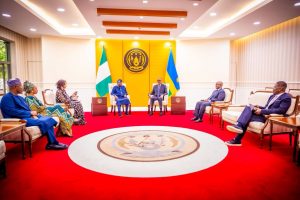
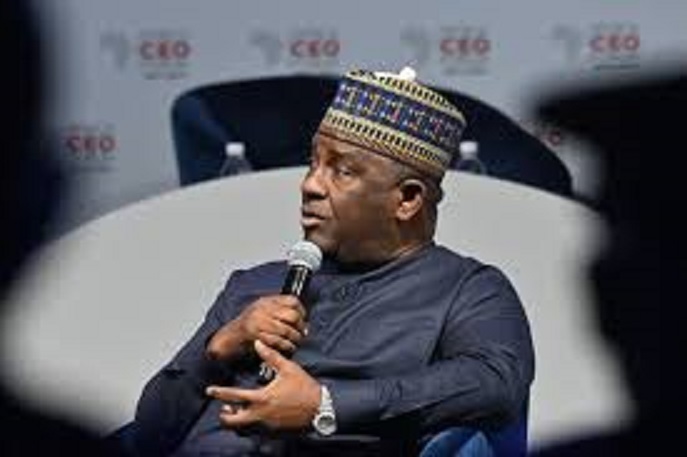
Speaking at the Africa CEO Forum in Kigali, Rabiu said the continent must urgently reposition itself within the changing global economic order by building integrated production systems rather than continuing to depend on the export of unprocessed minerals and raw materials.
According to him, geopolitical tensions, shifting alliances and the restructuring of global supply chains have created a defining moment for Africa to rethink its economic model.
“We meet at a time when the global economic order is being reshaped in real time,” Rabiu said.
“Geopolitical tensions, shifting alliances and reconfigured supply chains are redefining how the world produces and trades. This is not only about growth, it is about resilience.”
The billionaire industrialist lamented that although Africa possesses more than 30 per cent of the world’s mineral resources, the continent continues to derive limited value because most of the raw materials are exported without processing or industrial transformation.
“Africa has over 30% of the world’s minerals but adds little value. So, when raw materials leave without transformation, value leaves with them,” he said.
He stressed that Africa’s future growth would depend on its ability to build integrated industrial value chains capable of converting local resources into finished products within the continent.
“So, if Africa is to grow and scale, it must shift from commodity export to integrated industrial value chains,” he added.
Rabiu also pointed to what he described as weak implementation of existing African integration frameworks, particularly in relation to free trade and movement across the continent.
He expressed frustration over visa restrictions faced by Africans travelling within Africa while visitors from other continents often enjoy easier access.
“Being in Africa turned away because I do not have a visa and foreigners from other continents coming in without a visa. This must change,” he said.
The BUA chairman argued that Africa’s biggest challenge was no longer a lack of ambition but the absence of coordinated execution among governments, institutions and businesses.
“Your excellencies, Africa does not lack ambition, what it has lacked is coordinated execution at scale,” he declared.
Rabiu said the continent would ultimately be judged not by speeches or declarations but by the systems and institutions built to support large-scale economic transformation.
“History will not judge us by the speeches we deliver, it will judge us by the systems we build and whether they enable Africa to rise at scale.”
Calling for urgent action, he said the continent had reached a decisive moment in its development journey.
“The moment is here. The choice is ours and the time is now. Africa at scale is not an aspiration, it is a decision,” he said.