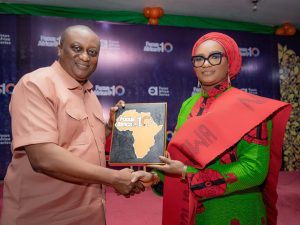
Executive Secretary of NUC, Abdullahi Ribadu
No fewer than 24,000 additional Nigerians are expected to benefit from the next phase of the Sustainable Procurement, Environmental and Social Standards Enhancement (SPESSE) project being implemented by the Federal Government in partnership with the World Bank.
The initiative, which is coordinated by the National Universities Commission (NUC), received fresh funding support of about $65 million following the official launch of the new financing phase in Abuja on Wednesday.
The programme is aimed at strengthening procurement systems, environmental management and social standards across public and private institutions, while promoting transparency, accountability and sustainable development nationwide.
Speaking during the signing of performance contracts for the additional financing, Executive Secretary of the NUC, Abdullahi Ribadu, said the intervention builds on the successes recorded under the initial $80 million SPESSE project introduced in 2021.
According to him, the first phase of the programme significantly improved institutional capacity and produced skilled professionals in procurement, environmental management and social standards.
Ribadu explained that the project was designed to address the shortage of qualified professionals in critical governance sectors within both public and private institutions.
“With the support of the World Bank and under the coordination of the NUC, six centres of excellence were established across the six geopolitical zones to provide sustainable capacity building in these critical sectors,” he said.
He noted that the participating universities emerged through a transparent and competitive selection process based on institutional readiness, quality assurance and sustainability standards.
The NUC boss added that the centres have continued to train professionals capable of promoting transparency, environmental responsibility and inclusive national development.
He described the contract signing ceremony as a renewed commitment to accountability, institutional excellence and sustainability.
Ribadu further disclosed that the centres have introduced specialised academic programmes ranging from short professional courses to undergraduate and postgraduate degrees.
According to him, three of the six centres have already commenced PhD programmes, while the remaining institutions are expected to begin their doctoral programmes by July 2026.
Under the new funding phase, he said the Commission is targeting at least 60 PhD graduates, admission of 60 foreign students, staff internship opportunities and expanded international exchange programmes.
Also speaking, Director-General of the Bureau of Public Procurement, Adebowale Adedokun, revealed that more than 2,700 officers from both public and private organisations had already been trained under the project to improve procurement practices nationwide.
He said the next phase of SPESSE would support the implementation of Nigeria’s electronic procurement system and expand online training programmes for policymakers as well as small and medium-scale enterprises involved in managing public funds.
On his part, the World Bank Task Team Leader for SPESSE, Ishtiak Siddique, said over 40,000 participants had benefited from training under the original project, while more than 4,000 individuals had received professional certification in procurement, environmental and social standards.
The World Bank had earlier approved additional financing for the SPESSE initiative in December 2025, extending the project implementation timeline to June 2029 following what officials described as satisfactory performance by the participating institutions.
Originally launched with an $80 million loan facility, the project received an additional funding boost of approximately $65 million to strengthen the operations of the established Centres of Excellence in Nigerian universities.
The SPESSE initiative operates under a Performance-Based Condition model, where disbursement of funds to the six centres is tied to measurable results and performance targets.