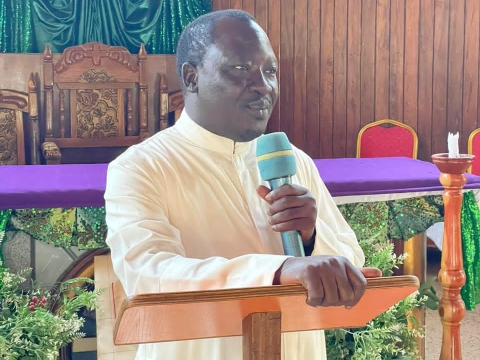
Rector of St. Augustine’s Major Seminary, Rev. Fr .Dr. Peter Hassan
The Catholic Church has raised concerns over the misuse of Artificial Intelligence (AI), warning that deepfakes, voice cloning and digital impersonation now threaten human dignity, identity and public trust.
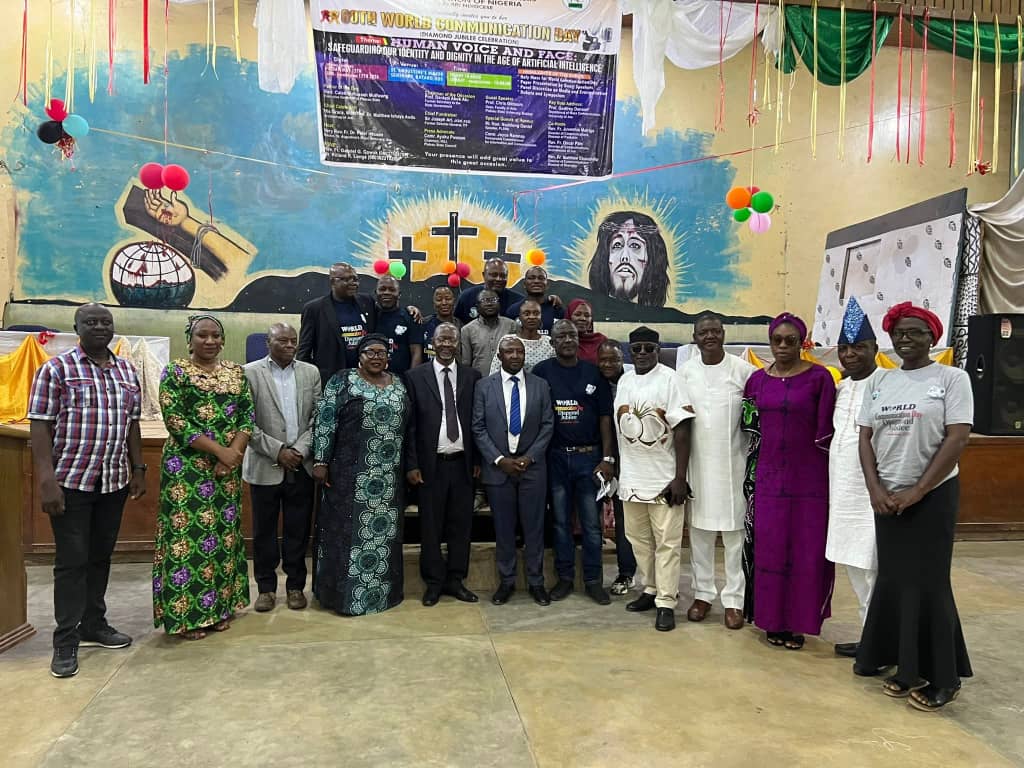
The concerns were raised on Friday during the 60th World Communications Day celebration organised by St. Augustine’s Major Seminary in collaboration with the Catholic Media Practitioners Association of Nigeria (CAMPAN), Jos Archdiocese.
The event brought together communication scholars, clergy, media practitioners and seminarians to reflect on the theme, “Human Voice and Face: Safeguarding Our Identity and Dignity in the Age of Artificial Intelligence.”
Speaking during the event, keynote speaker and Professor of Mass Communication at the University of Jos, Prof. Godfrey Danaan, warned that artificial intelligence had evolved beyond simple convenience tools into systems capable of manipulating reality, reproducing human identities and influencing public perception.

According to him, AI-generated deepfakes, voice cloning and face-swapping technologies now make it increasingly difficult for people to distinguish authentic content from fabricated material, exposing individuals and institutions to fraud, blackmail, misinformation and reputational damage.
“People are no longer safe as AI now reproduces human voices and faces that can hardly be differentiated from their original versions, making everyone vulnerable,” he said.
Danaan said deepfake technologies were increasingly being deployed for financial crimes, political warfare, scams, impersonation, kidnapping and social manipulation, with victims often unable to defend themselves once manipulated content spreads online.
He described AI as one of the most disruptive technologies in human history, noting that its influence had penetrated education, religion, politics, healthcare, commerce and nearly every aspect of human life.
The professor, however, acknowledged the enormous benefits of AI, including faster communication, improved healthcare systems, expanded access to education and enhanced evangelisation, stressing that the technology itself was not evil but required ethical regulation and responsible use.
He cautioned that society was gradually drifting into a dangerous digital culture where truth could easily be distorted and human beings reduced to programmable objects rather than persons created in the image of God.
Danaan called for stronger digital literacy, critical verification of online content and stricter oversight of AI developers and users to safeguard human dignity and public trust.
“People should be cautious about sharing voice recordings and facial data online because such materials can easily be manipulated,” he added.
Earlier in his welcome address, the Rector of St. Augustine’s Major Seminary, Rev. Fr .Dr. Peter Hassan, said while artificial intelligence had created immense opportunities for education, pastoral work, healthcare and communication, its misuse posed serious ethical and spiritual dangers.
He warned that manipulated images, misinformation, cyber exploitation and addictive digital culture were weakening authentic human relationships and distorting reality.
“Particularly concerning is the possibility that AI systems may influence human thought, manipulate public opinion, erode privacy and deepen social divisions,” he said.
Audu added that young people, especially students and seminarians, remained vulnerable to digital cultures capable of weakening reflection, discipline, genuine community life and spiritual depth.
“How do we embrace innovation without losing our humanity? How do we use artificial intelligence without allowing it to redefine truth, conscience and personhood?” he asked.
He maintained that no machine, regardless of its sophistication, could replace human conscience, compassion and moral wisdom.
“No algorithm can substitute for compassion, moral wisdom or the transforming grace of divine encounter,” he added.
In his presentation, Professor Chris Gonsum said concerns were growing globally over the effect of excessive dependence on AI on memory, reasoning and critical thinking, especially among students.
He observed that many students now relied heavily on AI-generated materials for assignments and academic work without properly processing or understanding the information.
“The danger comes when people rely entirely on AI without personal engagement. Instead of reading and thinking critically, many now depend completely on machines. This creates dependency,” he said.
Gonsum maintained that AI should serve as a support tool rather than a replacement for human intelligence and creativity.
“AI should augment human intelligence, not replace it,” he stated.
Participants at the event called for responsible communication practices, improved media literacy and stronger safeguards to protect human identity, truth and dignity in the digital age.