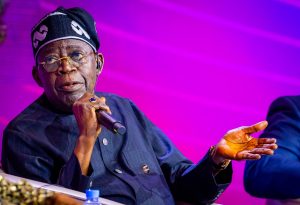
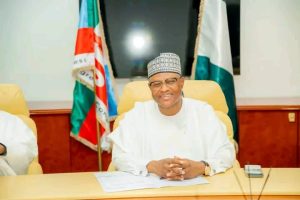
President Bola Tinubu and his media aide, Daniel Bwala
In response to a recent surge of online protests urging the World Bank to stop issuing loans to Nigeria, the Presidency has addressed the concerns raised by Nigerians flooding the international lender’s social media platforms.
The online campaign, marked by widespread appeals from citizens frustrated with government borrowing, called on the World Bank to cut off financial support to Nigeria. However, speaking in a televised interview on Thursday, Daniel Bwala, Special Adviser on Policy Communication to President Bola Tinubu, urged caution in interpreting the protests.
Bwala acknowledged the protests but highlighted the complexity of the situation, especially with elections approaching. He questioned the authenticity of the campaign participants, suggesting that it was difficult to discern whether they were genuine citizens or opposition actors seeking to influence public opinion.
Emphasizing the government’s constitutional responsibilities, Bwala stated that governance cannot be dictated solely by social media sentiment. “While leadership requires listening to the people, policy execution must be guided by law rather than online trends,” he said.
He also pointed out the challenge of conflicting public opinions, asking which voice the government should heed if one group opposes borrowing while another supports it. According to Bwala, effective leadership must be grounded in legal frameworks rather than fluctuating public opinions.
Defending the current administration’s borrowing practices, Bwala noted that international financial institutions, including the World Bank and the International Monetary Fund, along with financial experts, have affirmed that Nigeria’s borrowing remains within acceptable limits.
Recall that a week ago, Nigerians took to the World Bank’s official social media platforms especially Instagram and X (twitter) with comments urging the lender to halt further approving new loans for President Bola Tinubu’s administration, citing rising debt and concerns over how borrowed funds are used.
The outpouring followed reports that the government was seeking a fresh $1.25 billion facility, titled ‘Nigeria Actions for Investment and Jobs Acceleration’, which is set for consideration by the World Bank board on June 26, 2026.
Under the social media posts, many Nigerians accused political leaders of mismanaging public funds while ordinary citizens face rising living costs.
However, the online discourse quickly became polarised. While some users strongly opposed further external loans, others defended borrowing as a standard practice in global economics, especially for developing nations seeking infrastructure financing.
Meanwhile, as at the time of reporting, the World Bank reportedly blocked the comment section of some of its media posts following a wave of criticisms from Nigerian users over the proposed loan.
The Presidency’s response underscores the delicate balance between public sentiment and constitutional governance as Nigeria navigates its economic policies amid political and social pressures.