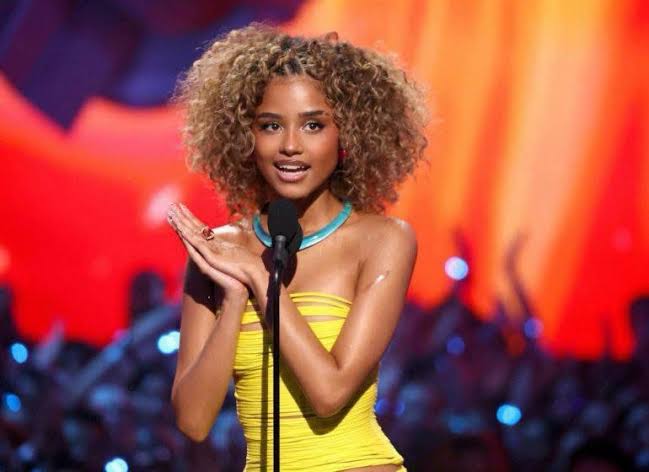
South African Grammy Award winner, Tyla
When South African singer Tyla announced that her A POP World Tour would make a stop in Lagos on December 22, excitement was expected.
After all, the Grammy-winning star has become one of Africa’s biggest music exports, breaking into the global mainstream with her hit single Water and introducing millions of listeners to Amapiano.
Instead, the announcement has reopened a conversation that stretches far beyond music.
While many fans are looking forward to seeing one of Africa’s biggest stars perform in Nigeria, others believe the concert has revived painful memories of xenophobic attacks against Nigerians living in South Africa.
As the debate gathers momentum across social media, one question continues to divide opinion:
Should Nigerians attend Tyla’s Lagos concert?
To understand why opinions have become so divided, it is important to look beyond the concert itself.
Tyla’s Rise to Global Stardom
Tyla Laura Seethal, popularly known as Tyla, has enjoyed one of the fastest rises in African music in recent years.
Her breakout single, Water, became a global sensation, dominating streaming platforms and social media while introducing millions of listeners to her unique fusion of Amapiano and pop music.
The success earned her the first-ever Grammy Award for Best African Music Performance, establishing her as one of Africa’s most recognisable young entertainers.
Since then, she has performed on some of the world’s biggest stages, secured major international endorsements, and continued building a rapidly expanding global fan base.
For many music lovers, her Lagos concert should simply be another celebration of African music.
For others, however, it represents something much deeper.
Why Xenophobia Still Matters
For years, xenophobic attacks in South Africa have strained relations with several African countries, particularly Nigeria.
Major outbreaks in 2008, 2015 and 2019 left several foreign nationals dead, businesses looted and properties destroyed. Nigerians were among those affected, with many losing loved ones, homes, investments and livelihoods.
The violence sparked diplomatic tensions between both countries and triggered protests across Nigeria, where many demanded greater protection for Nigerians living in South Africa.
Although relations between both governments have improved over time, the emotional scars have not completely healed.
That is why every major appearance by a South African entertainer in Nigeria often revives the same conversation.
Have South African Stars Done Enough?
One of the biggest arguments raised by critics is that many influential South African celebrities have not spoken strongly enough against xenophobic attacks.
While some entertainers publicly condemned the violence and appealed for peace, others remained silent or issued statements that many Nigerians considered inadequate.
That perception has continued to shape public opinion whenever South African artistes visit Nigeria.
The entertainment industry has not escaped those tensions either.
In 2019, Burna Boy and the late South African rapper AKA clashed publicly over xenophobic attacks before eventually settling their differences.
Despite those moments, Nigerian and South African artistes have continued to collaborate, perform together and promote African music across the continent.
Today, Tyla has found herself at the centre of that same conversation, despite there being no evidence linking her to the attacks.
Nigerians Remain Divided
Calls for Nigerians to boycott Tyla’s Lagos concert gathered momentum after several public commentators questioned whether the singer should enjoy Nigerian support while many believe justice has not been fully served for victims of xenophobic attacks.
Among the loudest voices is writer and social commentator Solomon Buchi, who argued that Nigerians should reconsider supporting the concert because many South African celebrities have not spoken strongly enough against attacks on Nigerians.
His comments quickly gained traction online, with supporters insisting that attending the concert would send the wrong message.
Media personality Do2dtun also weighed in, taking what many have described as a more nuanced position.
While praising Tyla as “an amazing musician with a great personality,” he argued that the timing of the Lagos concert lacked empathy given the renewed conversations around xenophobic attacks.
Addressing the singer directly on X, he appealed to her to “let us heal in peace,” adding:
> “The truth is anything other than speaking about the xenophobic atrocities is not welcomed… The lives of every African matters.”
In another strongly worded post, Do2dtun wrote:
> “If you stand for anything or not, good for you but if you go for that Tyla’s show then you are a bastard.”
His remarks have generated mixed reactions. While some Nigerians applauded his position as a show of solidarity with victims of xenophobia, others argued that Tyla should not be held responsible for actions she neither committed nor endorsed.
Across X, Instagram and Facebook, opinions remain sharply divided.
Some believe patriotism demands a boycott.
Others argue that artists should not bear the burden of their country’s politics and insist that music should remain a bridge connecting Africans despite political differences.
Another group believes the controversy itself has only increased public interest in Tyla’s December 22 concert in Lagos.
A Debate Bigger Than One Concert
Whichever side people choose, the discussion has become bigger than one artiste or one concert.
It has evolved into a broader conversation about accountability, solidarity, forgiveness, and whether entertainers should carry responsibility for issues created by society and governments.
As Tyla prepares for what could become one of the year’s most talked-about concerts, Nigerians are left with a difficult question.
Should artists bear the burden of their country’s politics, or should music remain a bridge that unites Africa despite its differences?
The debate is far from over.
Which side are you on?