Minister of Education, Dr. Maruf Olatunji Alausa, has announced a major change in Nigeria’s approach to addressing the challenge of out-of-school children, with the adoption of Kaduna State’s household mapping model as the national framework for identifying and returning children to school.
The new approach, which will be implemented across the 36 states of the Federation and the Federal Capital Territory, will replace reliance on broad estimates with accurate household-level data. Working with the National Bureau of Statistics (NBS), the Federal Ministry of Education will undertake a nationwide mapping exercise to identify the exact number of out-of-school children, where they live and the households they belong to, making it easier for governments at all levels to reach them with targeted interventions.
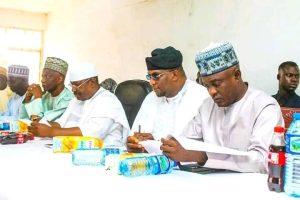
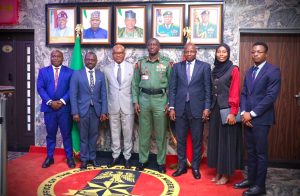
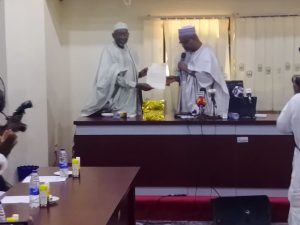
The Minister announced the decision during a meeting with the Governor of Kaduna State, Senator Uba Sani, describing the initiative as a significant step towards solving one of the country’s biggest education challenges.
He explained that for many years, planning was based largely on projections that could not accurately show where out-of-school children were located. The new mapping exercise, he said, changes that by providing verified information that will guide policy decisions and ensure that interventions are directed to the children who need them most.
Using Kaduna State as an example, the Honourable Minister noted that previous estimates put the number of out-of-school children in the state at about 585,000. However, the household mapping exercise conducted by the Kaduna State Government showed that the actual figure is fewer than 200,000.
“With this exercise, we now know where these children are and the households they belong to. That gives us the opportunity to work closely with the Kaduna State Government to bring them back to school,” the Honourable Minister said.
He commended Governor Uba Sani for introducing a model that has provided a clearer picture of the challenge and has shown how accurate data can improve decision-making and service delivery in the education sector.
The Honourable Minister said the Federal Ministry of Education is already working with the National Bureau of Statistics to replicate the same methodology nationwide, expressing confidence that the exercise will provide government with the information needed to plan better, deploy resources more effectively and monitor progress in reducing the number of out-of-school children.
In his speech, Governor Uba Sani commended the Honourable Minister of Education and the Honourable Minister of State for Education for the reforms being implemented in the education sector, describing their leadership as encouraging and inspiring to state governments.
The Governor also appreciated President Bola Ahmed Tinubu, GCFR, for his continued support for education, noting that the Federal Government’s commitment has created the momentum for meaningful reforms across the country.
Governor Uba Sani reaffirmed Kaduna State’s commitment to working closely with the Federal Ministry of Education to ensure that more children have access to quality education. He said education remains one of the most important investments any government can make and expressed satisfaction that Kaduna’s household mapping exercise is now being adopted as a national model.
Dr Tunji Alausa assured Nigerians that no child would be left behind in the ongoing efforts to expand access to education. He said the nationwide household mapping exercise would provide the accurate data needed to support practical solutions, strengthen collaboration with state governments and development partners, and ensure that more out-of-school children are identified, enrolled and retained in school as part of the Renewed Hope Agenda.