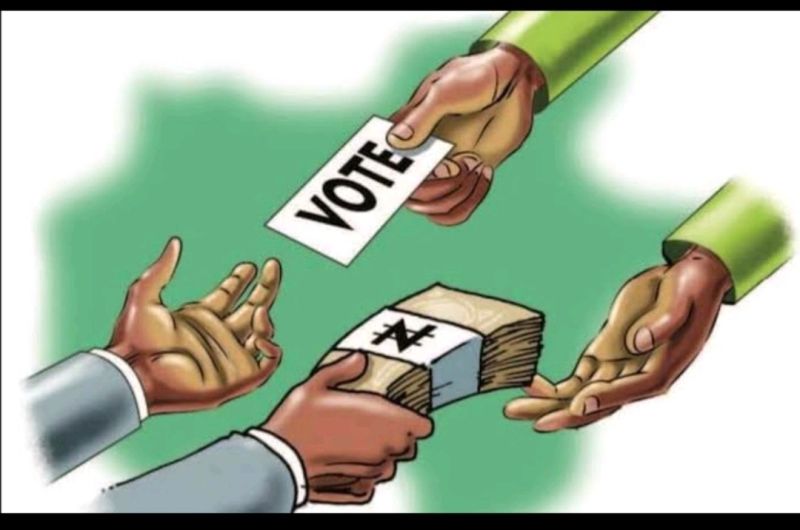
The specter of vote buying remains one of the most corrosive threats to Nigeria’s democratic future, undermining public trust and entrenching a system where political leadership is bought rather than earned. This practice thrives on a nexus of poverty, weak enforcement of electoral laws, and a political culture that prizes personal gain over public service. It is further perpetuated by the unchecked access of politicians to state resources, which they siphon with impunity to finance electoral malpractice.
The by-elections of August 2025 laid this reality bare: in several shocking instances, party agents were arrested with tens of millions of naira in cash earmarked for voter inducement, while at countless polling units, bribery reportedly occurred openly. Ballot snatching, thuggery, and voter intimidation further marred the process, disrupting elections across multiple locations. These events underscore that Nigeria is not merely grappling with isolated cases of electoral malpractice, but with a deeply entrenched, systemic pattern that demands structural reform, cultural reorientation, and uncompromising enforcement.
To address this crisis effectively, Nigeria must embrace a holistic strategy that simultaneously addresses the root causes of vote buying and strengthens the institutional mechanisms that safeguard elections. Central to this effort is the recognition that electoral corruption cannot be separated from the broader issue of financial corruption in governance. Politicians are willing to spend vast sums to buy votes because they are confident in their ability to recover those investments through the diversion of public funds once in office. Breaking this cycle requires far-reaching reforms in campaign finance, public sector accountability, law enforcement, and civic engagement.
A foundational step toward eliminating vote buying is the creation of a legal and institutional framework that treats electoral malpractice as a national security threat rather than a routine infraction. Although the Electoral Act criminalizes voter inducement, prosecutions remain exceedingly rare, and penalties are insufficient to deter offenders. The establishment of a fully empowered Electoral Offences Commission, independent of political interference and equipped with investigative and prosecutorial powers, would mark a decisive shift in Nigeria’s approach to electoral integrity. Such a body should work closely with the Economic and Financial Crimes Commission (EFCC) and the Independent Corrupt Practices and Other Related Offences Commission (ICPC) to track and prosecute cases of vote buying and campaign finance irregularities. Swift, high-profile trials and severe penalties, including asset forfeiture and disqualification from future elections, would signal that electoral corruption carries a real cost.
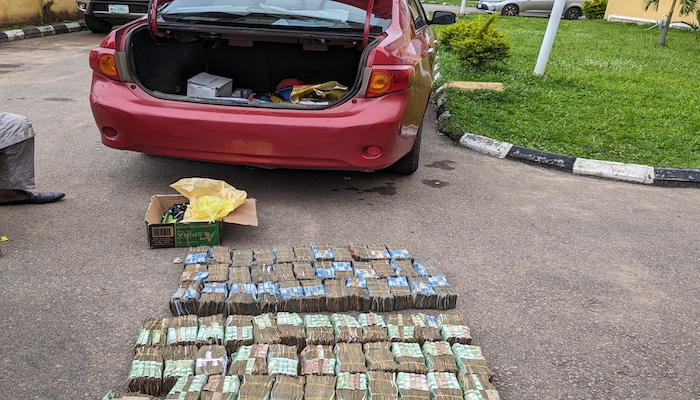
Kaduna Police, DSS arrest suspected Vote Buyer with ₦25.9m cash ahead of Bye-Elections
Moreover, Nigeria must overhaul its campaign finance system to limit the flow of illicit funds into elections. Currently, political campaigns are financed in ways that are opaque and often reliant on diverted public resources, making vote buying both affordable and politically expedient. Instituting strict caps on campaign spending, mandating public disclosure of donations, and requiring real-time auditing of campaign expenditures would introduce transparency into the process. Candidates and political parties should be compelled to submit detailed reports of their financial activities, with severe penalties for noncompliance. Additionally, all significant campaign contributions should pass through traceable banking channels to curtail the use of cash for electoral inducement. Such measures would not only make it harder for politicians to accumulate and deploy slush funds but would also empower anti-corruption agencies to investigate patterns of suspicious financial flows tied to election seasons.
Equally important is the need to strengthen Nigeria’s broader financial regulatory environment. Vote buying persists because politicians have easy access to stolen public wealth. Tackling this issue requires tightening procurement oversight, enhancing public financial management systems, and expanding the role of the Treasury Single Account (TSA) to cover all tiers of government. Every naira allocated for public projects must be traceable from disbursement to implementation. States and local governments, where much of the looting occurs, should be compelled to adopt transparent budgeting practices and undergo routine independent audits. Whistleblower protection laws must be vigorously enforced to encourage civil servants to expose corrupt practices without fear of reprisal. When stealing public funds becomes harder and riskier, politicians will find it more difficult to bankroll vote buying and other forms of electoral malpractice, and fewer people will view politics as a quick path to personal wealth.
The electoral process itself must be redesigned to close off opportunities for corruption. Cash should be strictly prohibited near polling units, with the National Assembly enacting legislation to criminalize possession of more than a certain amount of money within a designated perimeter of voting centers. Collapsible booths and stringent restrictions on the photographing of ballots would make it difficult for vote buyers to verify that payments have translated into desired votes, thereby reducing the incentive to bribe voters. Equally critical is the consistent deployment of technology like the Bimodal Voter Accreditation System (BVAS) and electronic result transmission platforms. However, these tools must be safeguarded against sabotage, with INEC receiving adequate funding, training, and logistical support to ensure flawless operation nationwide. Technology should complement, not replace, robust human oversight, and election observers must be allowed unfettered access to monitor compliance.
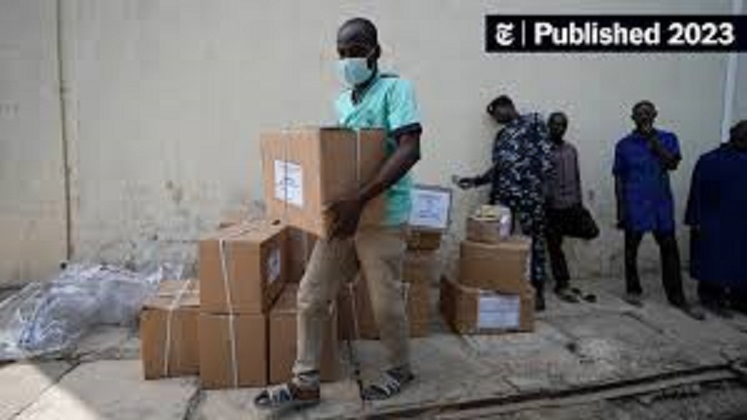
Nigerian politician arrested with Nearly $500,000 on Eve of Election (Photo: NEW YORK TIMES)
Yet even the most sophisticated legal and technical reforms will fall short if Nigeria fails to address the socioeconomic realities that make voters susceptible to bribery. Poverty, unemployment, and the absence of basic social services have created a fertile environment for vote buying. For many citizens, accepting cash or food items in exchange for their vote is not a betrayal of democratic ideals but a pragmatic response to economic hardship. Any serious attempt to eradicate this practice must therefore be paired with policies that improve economic inclusion, expand access to education, and provide social safety nets. Investments in rural infrastructure, job creation programs, and universal healthcare will gradually shift voter behavior, as citizens with stable livelihoods are far less likely to exchange their democratic rights for temporary financial gain.
This cultural transformation must also be reinforced through sustained civic education. The National Orientation Agency, in collaboration with civil society organizations, religious leaders, and traditional rulers, should lead a nationwide campaign that frames vote selling as both morally reprehensible and politically self-destructive. Such campaigns must be grassroots-driven, multilingual, and tailored to local contexts, using Community Theater, radio programs, and social media to convey the message that democracy cannot thrive when votes are for sale. Media houses should be incentivized to investigate and expose electoral malpractice, and civil society must continue to document and publicize cases of vote buying, naming and shaming perpetrators. The goal is to make electoral corruption socially unacceptable, so that voters themselves become enforcers of accountability.
Finally, Nigeria’s political culture must evolve to reward integrity rather than transactional politics. Parties should democratize their candidate selection processes, reducing the influence of moneybags who see political office as a return on investment. Internal party reforms, coupled with transparent primaries and stronger ideological frameworks, will help create a political class that views governance as service rather than self-enrichment. Over time, as citizens witness credible leaders delivering tangible improvements in their lives, the allure of short-term inducements will diminish.
The lessons from the 2025 by-elections are a sobering reminder that the erosion of democratic values is neither abstract nor distant; it is unfolding in real time. If left unchecked, these practices will not only undermine the 2027 general elections but also further alienate Nigerians from their government. Restoring faith in the electoral process requires decisive leadership, robust institutions, and a citizenry determined to reclaim the power of the ballot. Eliminating vote buying is not merely about punishing corrupt politicians; it is about rescuing democracy from the grip of cynicism and ensuring that political power flows from the will of the people rather than the wealth of a few.
A Nigeria where votes cannot be bought is a Nigeria where governance is truly accountable. Achieving this vision demands a multi-pronged approach: rigorous enforcement of electoral laws, systemic financial reforms to choke off illicit funds, aggressive prosecution of offenders to create lasting deterrence, and deep social investments to free citizens from economic desperation. The path is arduous, but the stakes are existential. A democracy built on bribery is not democracy at all; it is a fragile charade. Nigeria stands at a crossroads, and its choice will determine whether the promise of democracy remains an illusion or becomes a reality worthy of its citizens’ aspirations.