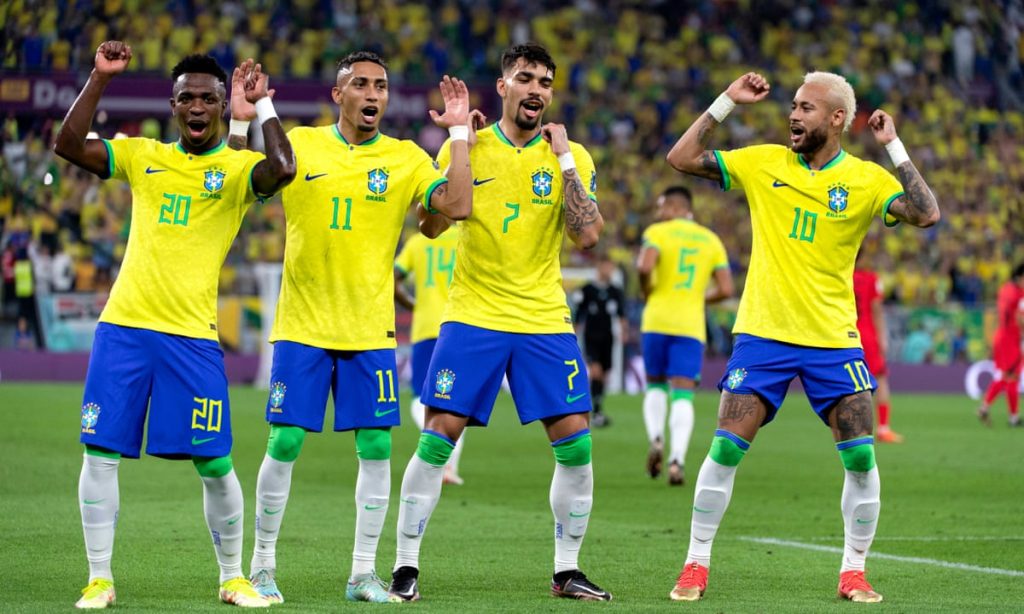
Brazilian football players celebrating their victory
It is hard not to notice.
Brazilian footballers are often criticised not only when they play badly, but sometimes simply for being themselves. Beyond goals, assists, and trophies, their personality, style, and flair are frequently placed under an unforgiving spotlight.
Take Ronaldinho. At the height of his career, he was once mocked for wearing a cardigan. Instead of focusing on his brilliance on the pitch, critics fixated on his fashion choices and even questioned his masculinity. It had nothing to do with football.
Consider Antony. Since arriving in England, he has faced relentless criticism for using tricks and stepovers. Pundits often label his style as “showboating.” Yet flair has always been central to Brazilian football. When other players do the same and succeed, it is called confidence. With Antony, it suddenly becomes a problem.
For Vinícius Júnior, the reaction has gone even further. His goal celebrations, especially his dancing, have sparked heated debates on television and online. Some commentators suggested he should stop. But celebrating has always been part of football culture.
More troubling is the racist abuse he has endured in Spain, where he has been targeted because of his skin colour. At that point, the issue moves beyond sport. It becomes a question of dignity, respect, and basic human decency.
Then there is Neymar. During his time in Spain, he was once booked for repeatedly dribbling past opponents, with officials suggesting he was provoking them. Yet dribbling is the essence of his game.
In a recent match, after scoring a decisive goal, Neymar celebrated with a dance similar to Vinícius’ style. Social media reacted instantly. Some criticised it, as expected. Others interpreted it as a bold and brotherly show of solidarity, especially in light of what Vinícius has faced.
Of course, every top player attracts criticism. That comes with fame and success. But with Brazilian stars, the scrutiny often feels deeper than performance.
If they dance, it is called disrespect.
If they use skills, it is labelled arrogance.
If they show personality, it is seen as excessive.
Yet Brazilian football has always been built on creativity, rhythm, and freedom of expression. From Pelé to Ronaldinho and beyond, flair has been part of its identity. Removing that freedom would strip the game of what makes it uniquely Brazilian.
So perhaps the real question is not whether these players should tone it down.
Perhaps the real issue is why their confidence, culture, and creativity bother people so much in the first place.