Prof Moti
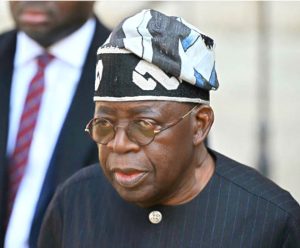
The reported migration arrangement between Nigeria and the United Kingdom is said to have emerged during the recent visit of Bola Ahmed Tinubu to Britain—a trip framed around deepening bilateral cooperation, investment, and strategic engagement.
Yet, beyond the formal diplomatic optics, the agreement has quickly drawn attention for its far-reaching implications, particularly the provision for Nigeria to receive thousands of failed asylum seekers and visa overstayers from the UK.
What might have been presented as a routine element of migration management cooperation instead raises fundamental questions about sovereignty, reciprocity, and national interest.
Coming at a time of domestic economic strain and heightened political sensitivity, the arrangement risks being interpreted not as a mutually beneficial partnership, but as a concession that places Nigeria in a subordinate position within global migration governance.
This perception becomes even more significant when situated against the backdrop of the controversial UK–Rwanda Migration Partnership—a similar initiative that ultimately faltered under legal, political, and ethical pressures.
It is within this context that the present analysis interrogates the implications of the Nigeria–UK understanding, drawing cautionary lessons from the Rwandan experience and examining how such a policy could reverberate through public opinion, elite alignments, and the strategic landscape ahead of the 2027 elections.
The reported decision by Nigeria to receive thousands of failed asylum seekers and visa overstayers from the United Kingdom must be approached with considerable caution, not least because a closely related experiment—the UK–Rwanda Migration Partnership with Rwanda—has already exposed the legal, political, and moral pitfalls of such arrangements.
The Rwanda deal was conceived as a bold innovation in migration control: asylum seekers arriving in the UK would be relocated to Rwanda, where their claims would be processed and, if successful, they would settle—not in Britain, but in Rwanda. Yet what was presented as a model of efficiency quickly unraveled under scrutiny.
The policy became mired in legal challenges, culminating in a landmark ruling by the UK Supreme Court, which found the arrangement unlawful on the grounds that Rwanda could not be considered a sufficiently safe destination for asylum processing.
Concerns about due process, the risk of refoulement, and weak institutional safeguards proved decisive. Beyond the courtroom, the deal attracted sustained criticism from international bodies such as Amnesty International, while also generating deep political divisions within the UK itself.
In effect, the Rwanda model failed on three critical fronts: legality, legitimacy, and practicality. Legally, it could not withstand judicial scrutiny. Politically, it became a liability rather than an asset for its proponents.
Practically, it struggled to move beyond symbolic deterrence into workable implementation. This triad of failure offers a cautionary template for any country considering a similar path.
For Nigeria, the risks may be even more pronounced. Unlike Rwanda, which was positioned as a processing hub for asylum claims, Nigeria—based on current reports—would be receiving individuals whose claims have already failed or who have overstayed visas.
This distinction is crucial. It suggests not a shared responsibility for refugee protection, but a transfer of residual migration burdens. In public perception, this is far more difficult to justify. It invites the interpretation that Nigeria is being asked to absorb populations that another country has already deemed undesirable.
Such a perception would likely resonate strongly within Nigeria’s domestic political space. Public opinion, already strained by economic hardship and governance concerns, may interpret the arrangement as evidence of political concession rather than strategic negotiation.
The narrative of Nigeria as a “destination of last resort” could gain traction quickly, amplified by media and political actors seeking to mobilize discontent. As the Rwanda case demonstrates, once a migration policy is framed as unjust or externally imposed, it becomes extremely difficult to sustain politically.
The implications for the 2027 elections could therefore be significant. Migration, though not traditionally central to Nigerian electoral politics, could emerge as a symbolic issue around which broader grievances coalesce. Opposition figures would have a ready-made line of critique: that the government has compromised national dignity and failed to prioritize its own citizens.
If the policy produces visible social pressures—real or perceived—it could become a potent campaign issue, much like the Rwanda deal became a recurring flashpoint in UK politics.
Political alignments may also shift in response. In Rwanda, the deal was largely a state-driven initiative with limited domestic opposition. This will not be tge case in Nigeria.
Nigeria’s more plural and competitive political environment makes such cohesion unlikely. Instead, the agreement could expose fractures within the ruling coalition, as different actors weigh the benefits of alignment with international partners against the risks of domestic backlash.
Some may defend the deal as a pragmatic engagement with global realities; others may distance themselves to preserve political capital ahead of elections. This divergence could, in turn, reshape alliances and recalibrate the balance of power within and across parties.
More broadly, the failure of the Rwanda model underscores a deeper structural lesson: migration outsourcing is not merely a technical policy tool but a politically volatile strategy with high reputational stakes.
It places the receiving country at the intersection of international expectation and domestic accountability—a position that requires robust legal systems, strong institutions, and clear public consent.
Without these, the arrangement risks collapsing under the weight of its own contradictions.
Nigeria, therefore, stands at a critical juncture. To proceed without fully internalizing the lessons of Rwanda would be to ignore a recent and highly instructive precedent.
The issue is not simply whether such a deal has been signed, but whether it can be sustained—legally, politically, and socially—within Nigeria’s unique context.
If Rwanda’s experience is any guide, the costs of miscalculation could far outweigh any short-term gains, leaving behind not just a failed policy, but a lasting imprint on public trust and political miscalculation.