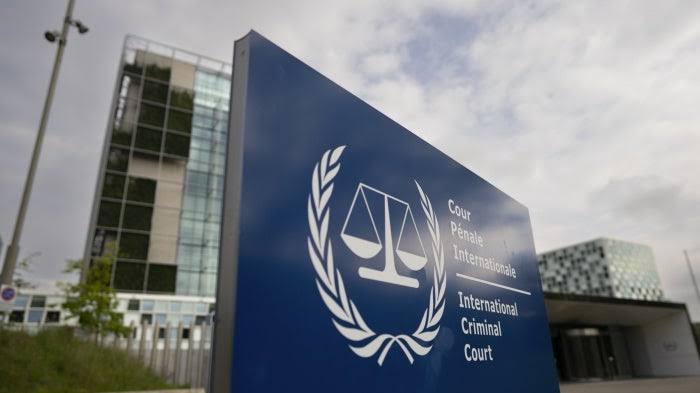
International Criminal Court (ICC) has issued prison sentences to two former leaders of the predominantly Christian Anti-Balaka militia in the Central African Republic (CAR) for war crimes and crimes against humanity committed during the 2013-14 civil war.
In a statement released on Thursday, the ICC announced that Alfred Yekatom was sentenced to 15 years and Patrice-Edouard Ngaïssona to 12 years for their roles in violent attacks targeting civilians, primarily from the Muslim Seleka community. The court found both men guilty “beyond reasonable doubt” of orchestrating and supporting attacks in Bangui, the capital, and in western CAR.
The violence erupted after a 2012 coup by the mainly Muslim Séléka rebel coalition, which triggered sectarian conflict. Thousands died as the Anti-Balaka launched brutal reprisal attacks against Muslim civilians. The ICC’s Trial Chamber V held Yekatom accountable for crimes including murder, torture, forcible transfer, deportation, attacking a religious building, and persecution, committed during assaults in Bangui, at the Yamwara school (where he established a base), and along the PK9-Mbaïki axis. Ngaïssona was convicted for aiding and abetting similar crimes, including persecution, forcible displacement, and cruel treatment.
Both leaders were found to have specifically targeted Muslims, driven by the Anti-Balaka’s belief in their collective responsibility for Séléka’s actions. The sentences account for time already served. However, charges against Ngaïssona for pillaging and attacking a religious site in Bossangoa were dismissed, as were charges against Yekatom for the recruitment and use of child soldiers.
The court noted that while armed groups exploited religious divisions, the conflict was not initially religious, with testimony highlighting prior peaceful coexistence between Muslims and Christians in CAR.
The trial, which began in February 2021, involved 114 prosecution witnesses, 56 defense witnesses, and 1,965 victims represented by legal counsel, marking a significant step in addressing the atrocities of the CAR conflict.