Network for Health Equity and Development (NHED) has been lauded for its outstanding performance and positive interventions in malaria diagnosis and treatment across Borno State.
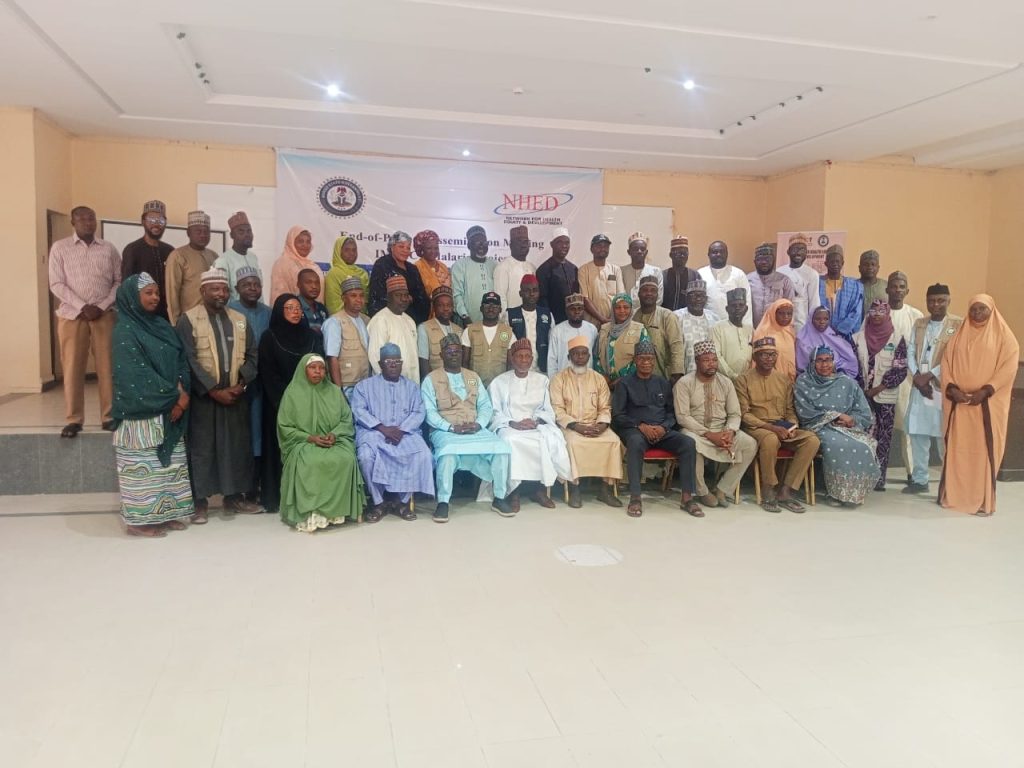
The commendation was given by the state Commissioner for Health and Human Services, Malam Gana, during the 2024–2025 End-of-Year IMPACT Malaria Project Meeting held on Thursday at Pinnacle Hotel and Luxury Suites Maiduguri.
The meeting reviewed the implementation of the World Bank–supported malaria intervention project executed by NHED under the supervision of the Borno State Government and the World Bank.
Prof. Gana praised NHED for its extensive outreach across the state’s 27 local government areas, noting its role in diagnosing and treating malaria patients in hospitals and clinics, training health workers, and distributing essential supplies such as antimalarial drugs and mosquito nets.
He also commended Governor Babagana Zulum for his “support, foresight, commitment, and resilience” in strengthening the health sector through the construction and upgrading of more than 58 hospitals and clinics, provision of equipment, and continuous training of medical personnel.
The commissioner assured that the state government would sustain its partnership with NHED to improve healthcare delivery, particularly in malaria prevention and treatment.
He said the Malaria IMPACT Project had significantly improved the health status of residents in both rural and urban communities and expressed optimism that the initiative would record more positive outcomes even as it nears completion.
Earlier, the IMPACT Project Coordinator, Dr. Mala Waziri, acknowledged the vital role played by the Ministry of Health and other stakeholders in ensuring the success of the programme.
According to him, the meeting was designed to present final deliverables and outcomes of the project while showcasing key milestones, successes, and overall impact recorded between 2024 and 2025.
Goodwill messages were delivered by representatives of partner organisations, including the World Health Organization (WHO), Médecins Sans Frontières, Malaria Consortium, and Lafiya UK, among others.
The NHED State Lead and Project Director, Dr. Abdulmuttallab Musa, presented a detailed report covering the project’s implementation from 2024 to 2025, including achievements, challenges, lessons learned, sustainability plans, and strategies for future interventions.
He stressed the need for stronger synergy and collaboration among implementing partners, government agencies, and host communities to deepen impact and ensure long-term sustainability.
In his vote of thanks, NHED Chairman, Dr. Shehu Sule, appreciated Governor Zulum for his continuous support and thanked partner organisations, NHED staff, the Ministry of Health, and other stakeholders for their contributions to the project’s success.
Highlights of the event included the presentation of certificates to NHED members, testimonials from beneficiaries such as Fatima Barma and Baba Lawan, and group photographs to mark the close of the programme.