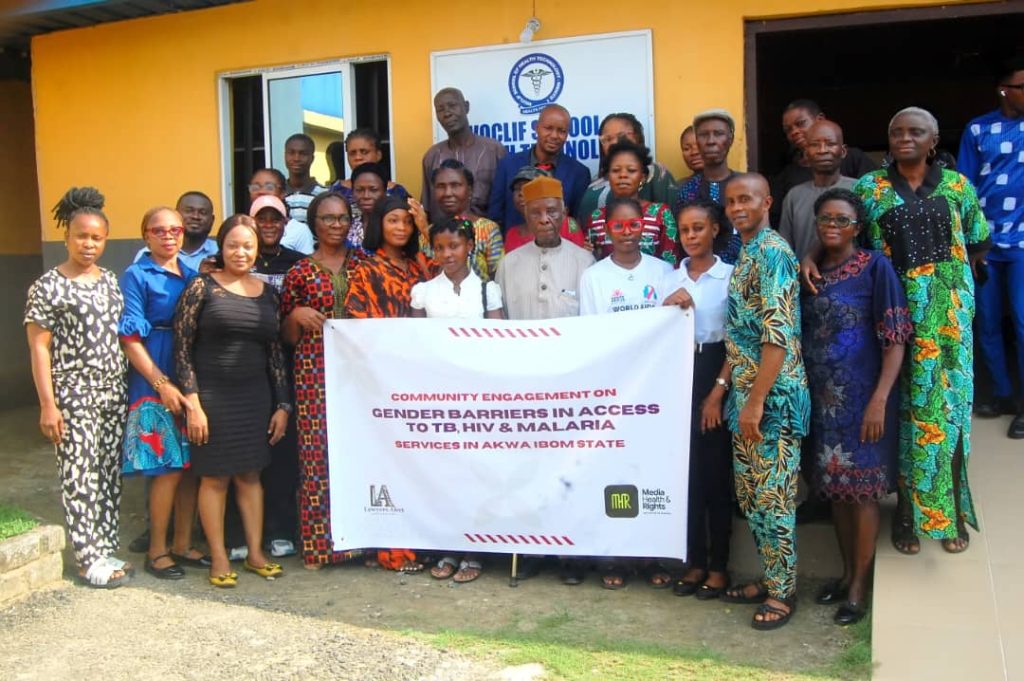
Communities across Akwa Ibom State are stepping up efforts to dismantle long-standing gender barriers that continue to hinder access to essential healthcare services, especially for TB, HIV, and malaria.
In Etim Ekpo and Etinan Local Government Areas, residents, health workers, traditional rulers, youths, and civil society groups gathered in a series of community engagements aimed at identifying the root causes of these barriers and crafting homegrown solutions.
The events were convened by Lawyers Alert in partnership with the Media, Health & Rights Initiative of Nigeria (MHR), alongside grassroots organisations including the Women and Community Livelihood Foundation (WOCLIF), Vitonia Lead Foundation, and the Milestone Initiative for Human Rights and Empowerment.
Across the sessions, participants voiced frustrations over systemic gaps that continue to block residents—particularly women—from accessing treatments that are officially free.
Uduak Umoh, Executive Director of WOCLIF, captured this disparity pointedly. She said although the state provides free TB, HIV, and malaria treatments, many residents still “struggle to access them, particularly where HIV prevalence is high, and TB and malaria remain pervasive.”
In Etinan, the focus shifted to charting practical steps communities can take to counter these obstacles. Edidiong Enang of Vitonia Lead Foundation outlined the gender-specific challenges that hold many women back, including stigma, cultural norms, economic dependence, and limited decision-making power.
For Etim Ekpo’s Supervisor for Health, Etininyene Offongekpe, supporting women is a dual imperative.
“When we came into the office, we saw dilapidated facilities. We are planning to rehabilitate many. We will include training, awareness, and a friendlier medical environment in the budget,” he assured.
Traditional institutions echoed community frustrations. The Village Head of Utu Etim Ekpo, Friday Okon, lamented the poor state of some facilities and the absence of essential medicines.
“Our people get tired of going because there is no treatment,” he said, pledging renewed community sensitisation despite setbacks.
Women’s representatives, including Esther Moses, pointed to transport costs, persistent stigma, distrust of free services, and reliance on traditional remedies as factors discouraging access to care.
Youth advocate Blessing Okoi highlighted the barriers confronting young people—fear of stigma, unfriendly facilities, and low health literacy. She called for youth-friendly centres and peer-support structures to encourage early uptake of services.
Health workers, represented by nurse Ukeme Anselem, emphasised the urgent need for improved infrastructure, better staff attitudes, and adequate supply of medications. She recommended mass recruitment and consistent training to address these gaps.
To dispel myths and misinformation, men’s group representative Godwin Williams, Village Council Secretary of Mbioto Community, urged more community-driven publicity about available treatments, particularly debunking misconceptions around TB transmission and the proper use of insecticide-treated nets.
Victoria Ikpat of the Milestone Initiative for Human Rights and Empowerment noted that the engagements are part of a broader effort across multiple LGAs.
“The communities have told us the barriers. What we hope to achieve is more advocacy and awareness so people know these treatments are free,” she explained, adding that progress will be evaluated in the coming months.
Across both LGAs, participants agreed on priority actions, including:
intensifying house-to-house awareness campaigns,
rehabilitating and equipping primary healthcare centres,
deploying and retraining health workers,
improving confidentiality and youth-friendly service delivery,
involving traditional and religious institutions in health education, and
strengthening monitoring to ensure free treatments remain truly accessible.
Health officials present acknowledged the scale of the challenges and expressed commitment to address them.
The Etim Ekpo Health Supervisor reiterated that rehabilitation of facilities, training, and community outreach had already been factored into the upcoming budget plans.
The engagements are part of the “Law, Rights and Community Empowerment for Social Change in TB, HIV & Malaria Response” project—an initiative designed to eliminate gender-based barriers and amplify community accountability in healthcare delivery across Akwa Ibom.