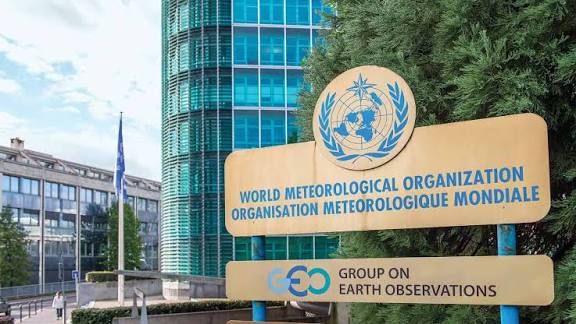
As global temperatures climb relentlessly, the United Nations’ World Meteorological Organization (WMO) has warned that intensifying floods and storms show no signs of abating, with climate change placing unprecedented strain on the planet’s water systems.
In a stark assessment, the WMO highlights how these water-driven crises are increasingly disrupting communities and economies worldwide.
“Water-related hazards continue to cause major devastation this year,” declared WMO Secretary-General Celeste Saulo during a briefing on Thursday.
She pointed to recent tragedies, including the catastrophic monsoon floods in Pakistan, severe inundations in South Sudan, and lethal flash floods on Indonesia’s Bali, adding, “And unfortunately, we see no end to this trend.”
The organization’s latest report on global water, snow, and ice conditions underscores the mounting toll of a disrupted water cycle.
Saulo emphasized the role of soaring atmospheric heat, which boosts the air’s capacity to hold moisture and unleashes heavier downpours:
“The emergencies had been happening amid increasingly warm air temperatures, which allowed more water to be held in the atmosphere leading to heavier rainfall.”
This analysis aligns with the revelation that 2024 marked the hottest year in 175 years of records, with average surface temperatures hitting 1.55°C above the 1850-1900 pre-industrial average.
Glacial melt emerged as a particular alarm bell. “2024 was the third straight year with widespread glacial loss across all regions,” Saulo noted.
The planet shed 450 gigatonnes of ice—equivalent to a colossal cube measuring seven kilometers on each side, or roughly 180 million Olympic-sized swimming pools.
This volume alone contributed about 1.2 millimeters to sea-level rise, heightening flood risks for millions in coastal zones.
The report also calls for urgent enhancements in monitoring, decrying gaps in data on streamflow, groundwater, soil moisture, and water quality.
Wetter-than-average conditions plagued regions like central-western Africa, Lake Victoria basin, Kazakhstan, southern Russia, central Europe, Pakistan, northern India, southern Iran, and northeastern China throughout 2024, illustrating the interconnectedness of global water dynamics.
As Saulo’s team stressed, disruptions in one area ripple outward:
“One of the key messages of the UN agency report was that what happened to the water cycle in one part of the world had a direct bearing on another.”
Recent events in Europe vividly illustrate this volatility. In September 2024, Storm Boris triggered devastating flash floods across central and eastern regions, displacing tens of thousands. In the Czech Republic, rivers swelled to extremes that experts deem “century events”—floods statistically expected once every 100 years.
“A ‘century event’ happened, unfortunately, statistics show that these extreme events might become even more frequent,” observed Stefan Uhlenbrook, WMO Director of Hydrology, Water and Cryosphere Division.
With glaciers vanishing at an alarming pace, the WMO urges global action to safeguard downstream and coastal populations from these existential threats. As Saulo concluded, the path forward demands better data, bolder policies, and a unified push to curb emissions before the deluge worsens.