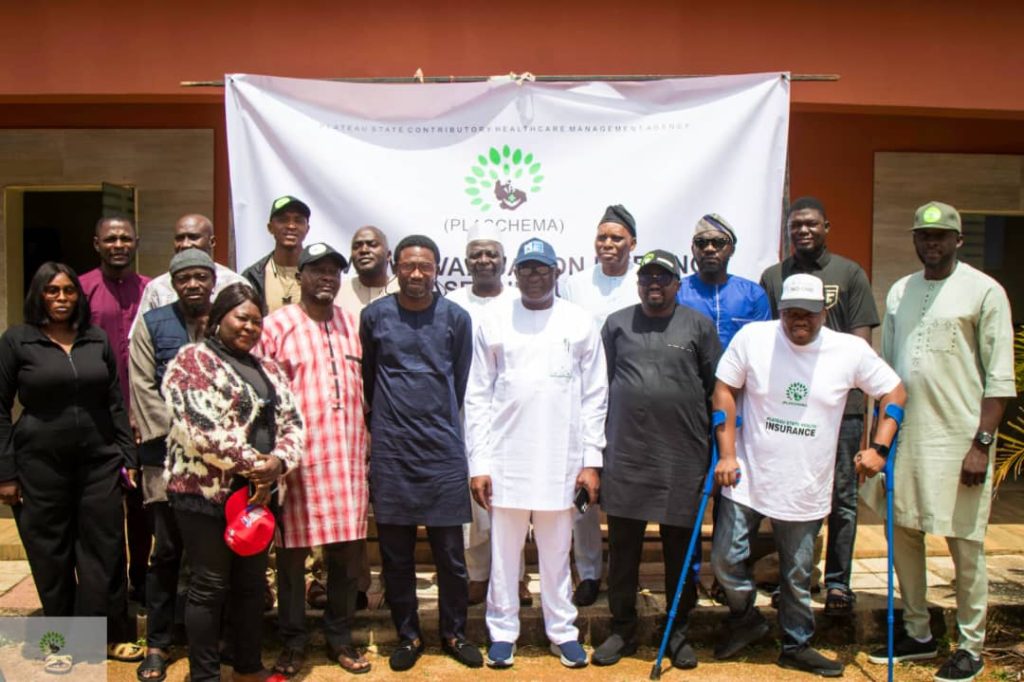
Plateau State Contributory Health Management Agency (PLASCHEMA) has validated a baseline assessment tool designed to support the take-off of a community-based health insurance scheme aimed at expanding access to healthcare across Plateau State.
The two-day validation exercise, held in Jos, brought together stakeholders from the health and digital sectors to review and refine the data collection tool that will guide the pilot phase of the initiative.
Speaking with journalists on the sidelines of the event, the Director-General of PLASCHEMA, Dr Kwande Solomon Dawal, said the tool would be used to gather critical information from communities and health facilities to support the implementation of the new insurance model.
“This meeting was convened to validate the baseline assessment tool that the agency intends to deploy. The objective is to collect data on contextual factors and drivers that will support the rollout of a community-based health insurance scheme in Plateau State,” he stated.
Dr Kwande explained that the validation exercise followed the approval granted by the State Council on Health in August, which endorsed PLASCHEMA’s proposal to introduce a community-based health insurance programme to complement the existing social health scheme.
He noted that despite progress made in achieving universal health coverage through the social health insurance programme, a significant gap remains, with only about five percent of Plateau’s population currently enrolled.
“To bridge this gap, we are introducing a model rooted in community solidarity, where people within their localities take ownership of the programme. This will ensure sustainability and inclusiveness,” he added.
According to him, two sets of questionnaires will be administered — one at selected primary healthcare centres and another at the community level — to identify key drivers such as human resources, existing social networks, and community structures that can enhance implementation.
Dr Kwande disclosed that the pilot phase would cover 34 wards, reaching six communities in each ward, with field data collection expected to commence within one to two weeks. The pilot, he said, would run for about three months, after which the results would inform a comprehensive policy framework for scaling up the programme statewide.
“Once the evidence is analyzed, it will serve as advocacy material for expanding the community-based health insurance model across all wards in Plateau State,” he emphasized.
The PLASCHEMA boss commended the state government for its continued support, noting that Governor Caleb Manasseh Mutfwang’s commitment through timely remittances and sustained funding has strengthened the agency’s capacity to innovate and extend coverage to more residents.
“For our people to continue contributing to the social, economic, and political development of the state, they must remain healthy. Health insurance remains a crucial instrument for ensuring that,” Dr Kwande stressed.
In his remarks, the Commissioner for Health, Dr Nicolas Baamlong, applauded PLASCHEMA’s efforts and described the validation as a critical step toward building an effective community-based insurance framework.
“This exercise is vital. We must scrutinize the tool line by line, make necessary adjustments, and ensure the data generated is accurate and reliable. That data will guide the successful implementation of the community-based health insurance scheme,” he said.
Dr Baamlong also commended the agency’s leadership for sustaining reforms within the health sector, expressing optimism that the scheme would modernize the health insurance system and improve access to affordable care across Plateau State.