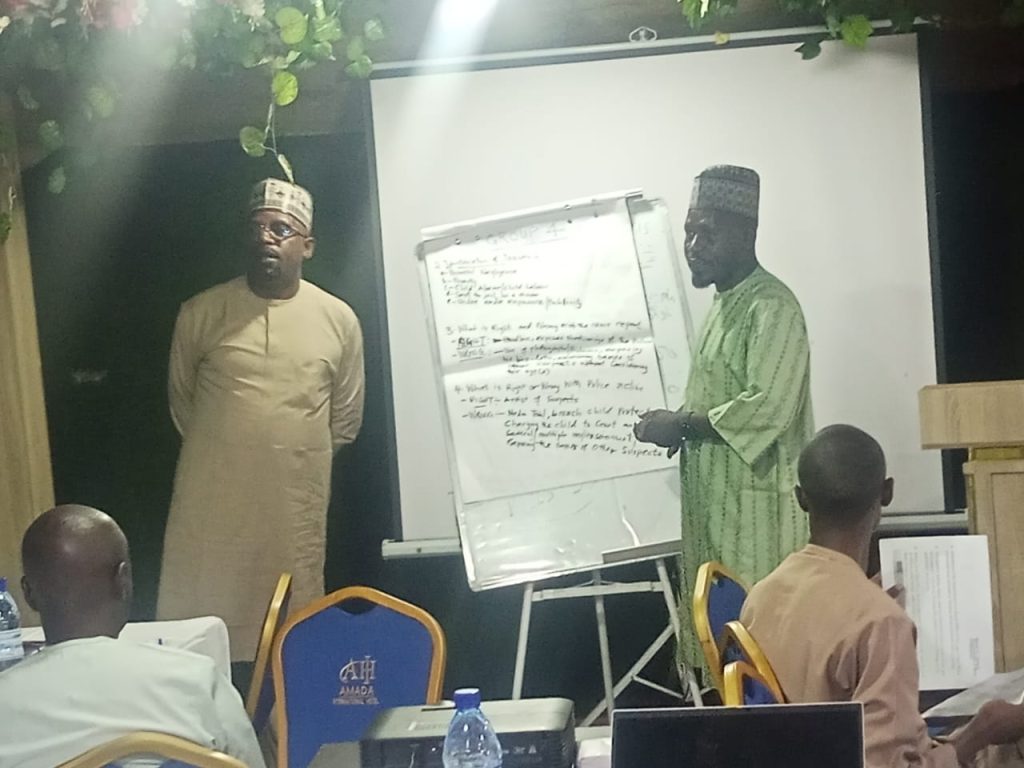
SOS Children’s Villages Nigeria, a humanitarian organization has organized a three-day capacity-building workshop for media professionals with a focus on child rights law, alternative care guidelines, and child protection.
The training whuvh was funded by the European Union (EU) was held at the Amada International Hotel in Maiduguri.
The workshop brought together journalists, editors, broadcasters, and digital media practitioners from across Borno State to strengthen responsible reporting on children’s issues, especially in conflict-affected and humanitarian settings.
Participants were equipped with practical knowledge of national and international child rights frameworks, ethical reporting standards, and safeguarding principles aimed at protecting children from harm, exploitation, and stigma.
In her opening remarks, a Director, Child Development from the Ministry of Women Affairs & Social Development, Hajiya Bawagana Kyari emphasized the critical role of the media in shaping public understanding and policy responses around child welfare.
“Accurate, ethical, and child-sensitive reporting can help safeguard children’s rights and amplify solutions that prioritize their best interests,” she said, noting the unique challenges faced by children in the North East,” she added.
Sessions covered during the training include: key provisions of Nigeria’s Child Rights Act, reporting guidelines on children in emergencies, and the alternative care guidelines that outline standards for family-based care, reintegration, and protection of children without parental care.
Facilitators, Mr. Guda Tyoakura, a representative of European Union Project in Borno State and Mr. Augustine Mamedu, a consultant for the training also addressed practical newsroom dilemmas, including consent, privacy, use of images, and language that avoids re-traumatization or victim-blaming.
The EU representative underscored the importance of media engagement in promoting accountability and awareness.
The EU’s support, he noted, reflects a broader commitment to child protection, rule of law, and resilient communities in the region.
Participants welcomed the training, describing it as timely and relevant. Many highlighted the value of case studies, interactive discussions, and tools that can be immediately applied in their reporting.
“This workshop is timely with the several cases of girl child, child abuse, child labour, out-of-school children, almajiri, street begging and rape cases.
“It has sharpened our understanding of child rights and given us clear guidelines on how to report responsibly, especially in sensitive situations,” said a participant, Abubakar Mala Gajibo.
The workshop concluded with a call for sustained collaboration between media organizations, civil society, and government institutions to ensure children’s rights are respected and protected.
Mohammed of SOS Children’s Villages Nigeria reaffirmed the organization’s ‘commitment to continued capacity building and advocacy, while urging media professionals to use their platforms to promote child-centered policies and practices across Borno State and beyond.