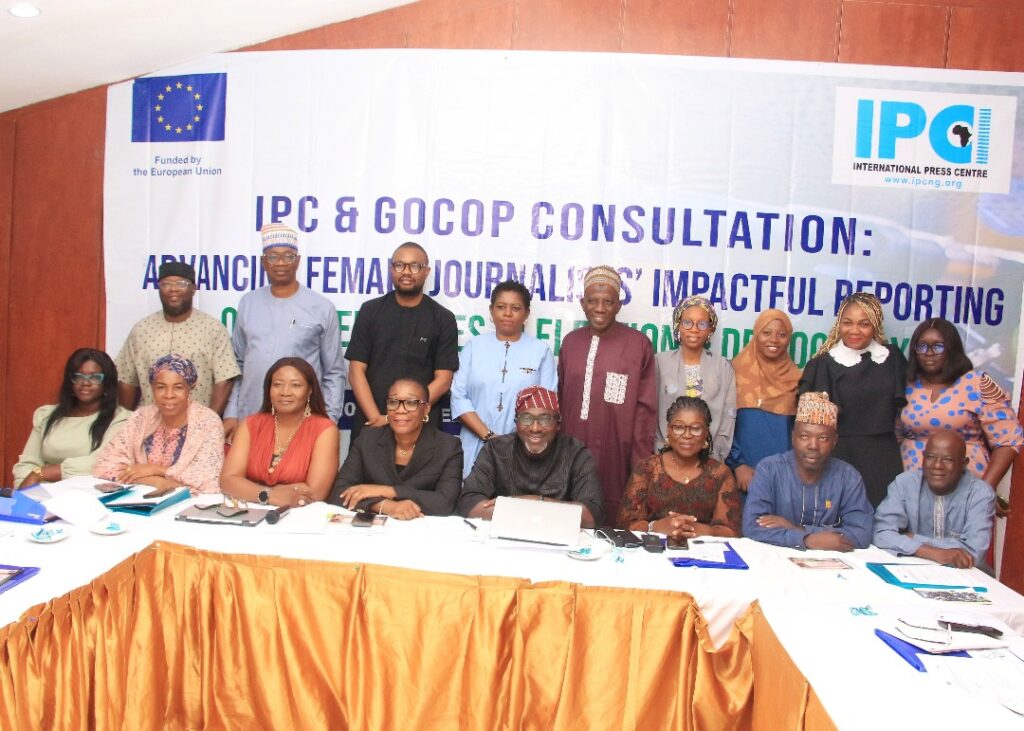
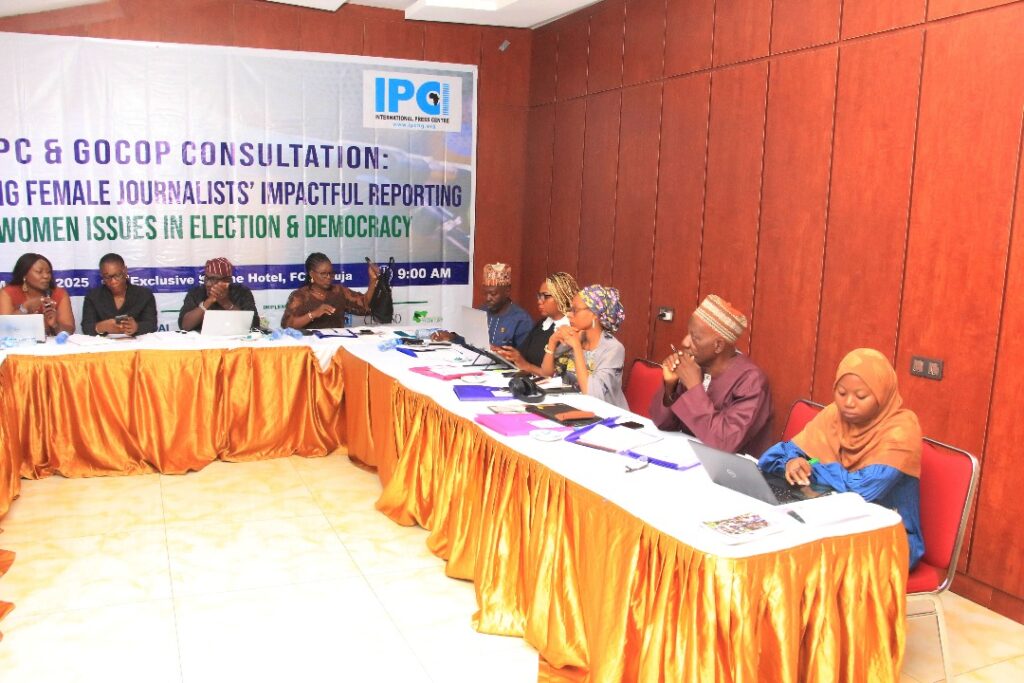
Group photograph of participants at the one-day IPC-GOCOP consultative meeting in Abuja
By JACOB KUBEKA, Abuja –
In a bid to elevate women’s voices in Nigeria’s political discourse and improve their participation in democratic processes, key media stakeholders and advocacy leaders gathered for a one-day consultative meeting in Abuja last week Tuesday.
A communique signed by the Executive Director of the International Press Centre (IPC), Lanre Arogundade, and the President of the Guild of Corporate Online Publishers (GOCOP),Maureen Chigbo, said the event was jointly organized by the IPC and GOCOP, with support from the European Union through the EU-SDGNII programme.
According to the communique, the meeting aimed to strengthen the capacity of women journalists and online media practitioners to advance gender-inclusive political reporting.
GOCOP President Maureen Chigbo, in her opening remarks, called on media professionals to develop concrete strategies to mainstream women’s electoral issues. She emphasized that media platforms must play a proactive role in improving electoral outcomes for female candidates by ensuring fair and consistent representation of women in political coverage.
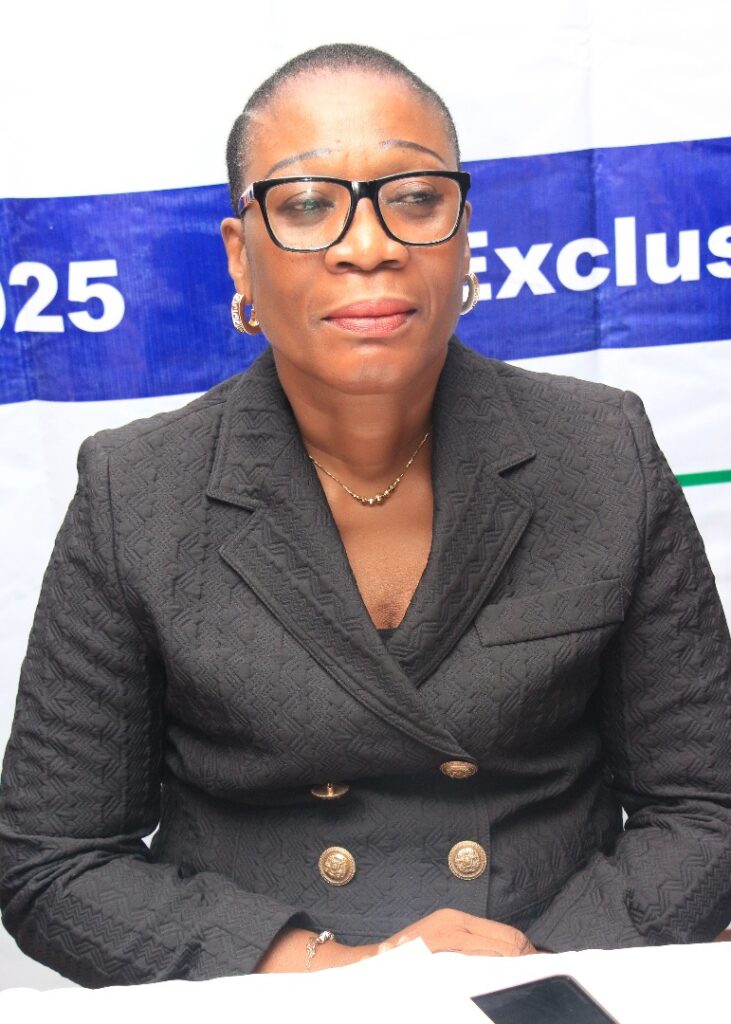
Maureen Chigbo, GOCOP President
On his part, Mr. Arogundade highlighted the IPC’s efforts to promote female political participation through media engagement, expressing hope that GOCOP and its members would intensify their focus on women’s issues. He stressed the importance of creating an enabling environment where journalists are empowered to conduct in-depth reporting on gender and democratic accountability.
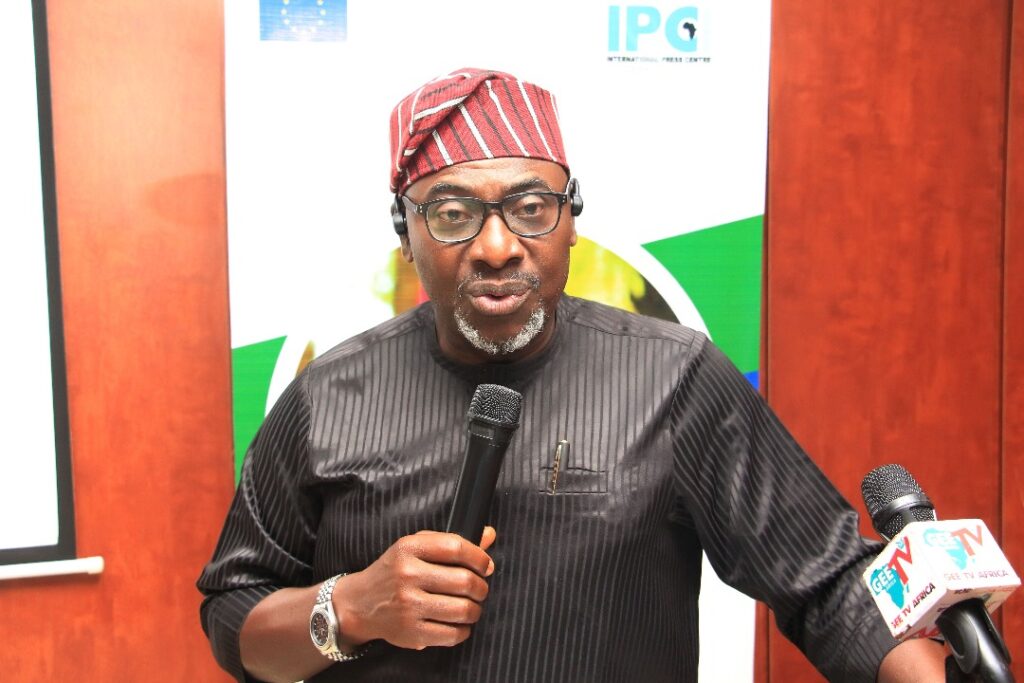
Lanre Arodundade
Delivering the keynote address, Ms. Anikeade Funke-Treasure, Executive Director of Illuminate Nigeria Development Network, urged the media to adopt “positively disruptive” approaches to challenge stereotypes and systemic barriers facing women in politics. She emphasized the media’s responsibility to make women politicians visible and viable, both in appointive and elective contexts, through advocacy and strategic storytelling.
Participants identified several key challenges hindering women’s political participation in Nigeria. These include poor media coverage, high cost of electioneering, cultural and patriarchal norms, and a pervasive lack of support from male-dominated political structures. Alarmingly, women’s representation in the current political cycle has dropped to just 3% in the Senate and 4% in the House of Representatives, despite commendable progress in states like Kwara and Ekiti.
In response, the meeting resolved that GOCOP’s 120 members should create special sections for women-focused political content and collaborate with IPC to generate and disseminate stories highlighting the contributions and challenges of female political actors. It also proposed targeted engagement with elected women legislators starting with Kwara State, as well as community and religious leaders to improve grassroots support for female candidates.
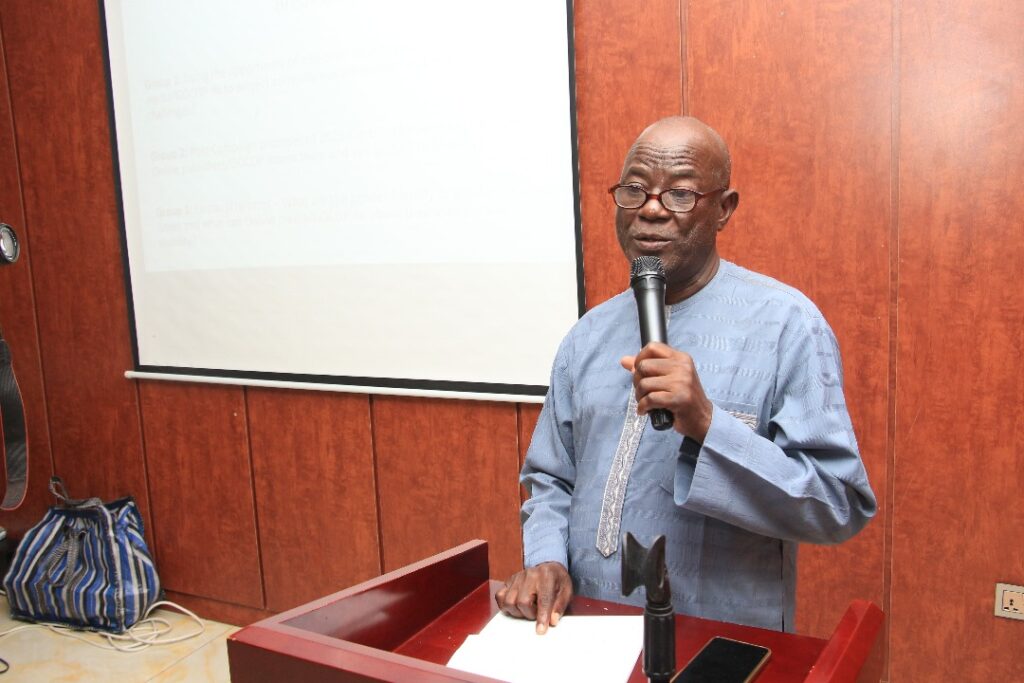
Publisher of NATIONAL ACCORD and GOCOP Vice President (North), Tom Chiahemen, making a contribution during the meeting
Additional resolutions included supporting legislative reforms to reduce campaign costs for women and promoting the 35% affirmative action target for women’s representation in elective and appointive political offices.
IPC, the lead partner for Component 4 of the EU-SDGNII programme (Support to Media) hosted the event in collaboration with the Centre for Media and Society (CEMESO).