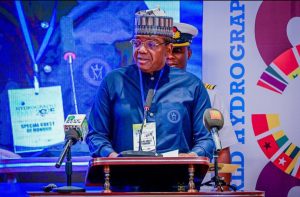
Chairman of the Independent National Electoral Commission (INEC), Prof. Joash Ojo Amupitan, SAN
As the saying goes, “All that glitters is not gold.” The classic phrase means not everything that looks valuable or attractive is actually worth it. Think of it like seeing a fancy car and assuming it’s super expensive, but it turns out it’s just a flashy replica. People, things, and opportunities can be like that, too; they might look great on the surface but lack substance.
This could be likened to the use of professors as returning officers by the Independent National Electoral Commission (INEC) in Nigeria, as it has been a topic of debate.
On one hand, former INEC chairman Attahiru Jega believed that academics would bring integrity and credibility to the electoral process, as they are less susceptible to inducements by politicians.
However, the experience has shown that some professors have compromised the process. Two professors, Ignatius Uduk and Peter Ogban, were convicted of electoral fraud and sentenced to prison for manipulating election results in favour of certain candidates.
Critics argue that using academics as returning officers has not achieved its intended goal, as some have been involved in electoral malpractices. The Economic and Financial Crimes Commission (EFCC) has also investigated some academics for electoral offences.
INEC has since emphasised the importance of nominating lecturers with impeccable integrity and has warned that partisan or convicted lecturers will not be accepted as returning officers.
Overall, the use of professors as returning officers has had mixed results, highlighting the need for careful selection and vetting to ensure the integrity of the electoral process.
INEC is already exploring alternative options to improve the electoral process. Some proposed reforms include:
a. Establishing an Electoral Offences Commission to investigate and prosecute electoral offences
b. Creating a separate agency to oversee the registration and regulation of political parties
c. Mandating electronic transmission of results to enhance transparency and build public trust
d. Introducing early voting* for essential workers and diaspora voting to increase voter participation
f. Strengthening the appointment process for the INEC chairman and commissioners to ensure independence and credibility
However, the above move may be scuttled by the delay in the Electoral Act Amendment.
The Electoral Act is the primary law governing how elections are conducted in Nigeria. It sets the rules for casting and counting votes, outlines procedures for challenging results in court, and prescribes penalties for electoral offences. The Amendment Bill, passed by the House of Representatives in December 2025, seeks to modernise this framework and fix weaknesses identified during the last election cycle. Among its most significant provisions is the explicit legal backing for the electronic transmission of results. This reform is widely seen as critical to reducing fraud, enhancing transparency, and restoring public confidence in the electoral process. The bill also introduces early voting procedures for security personnel and election officials, ensuring that those deployed on election day are not disenfranchised. Stronger sanctions for electoral offences are included to deter malpractice, while adjustments to election calendars and dispute resolution mechanisms aim to ensure that legal challenges are resolved before inauguration, preventing governance paralysis.
Despite the urgency of these reforms, the Senate has stalled. After taking the bill to a second reading, it stepped it down and failed to complete deliberations before going on recess. This delay has created serious uncertainty. The Independent National Electoral Commission (INEC) is required to issue a Notice of Election by February 2026, a deadline that leaves little room for legislative indecision. Without the amended law, INEC would be forced to plan the 2027 elections under the existing 2022 Act, compressing timelines for training, procurement, voter education, and technology deployment. Legal ambiguity compounds the problem, as provisions like electronic transmission of results cannot be implemented without explicit legislative authority.
It will be recalled that a High Court in Akwa Ibom once sentenced Professor Ignatius Uduk to three years in prison for publishing false election results and perjury.
The Independent National Electoral Commission (INEC) brought the charges against Uduk for his actions in the 2019 Akwa Ibom Northwest State House of Assembly election.
Uduk, who served as the collation and returning officer during the election, was acquitted of announcing false results but convicted of publishing fraudulent results and committing perjury.
The legal battle began in December 2020 when Uduk was first arraigned following an arrest warrant issued for his failure to appear in court.
Despite pleading not guilty to the charges, the trial faced numerous delays, including changes in his legal defence and an incident where the professor collapsed during cross-examination.
The case was initiated by the then INEC resident electoral commissioner, Mike Igini.
The court’s ruling marks a significant development in INEC’s ongoing efforts to combat electoral malpractice and uphold the integrity of the electoral process.
Similarly, the Appeal Court upholds the conviction of a professor jailed for rigging the election for Akpabio.
The Court of Appeal, apart from affirming Mr Ogban’s conviction and the three-year jail term, frowned at his role as a university professor in the fraudulent manipulation of election results, a lawyer who participated in the case at the appellate court revealed.
The Court of Appeal in Calabar upheld the conviction of Peter Ogban, a professor jailed in 2021 for rigging a senatorial election for Godswill Akpabio, a senator from Akwa Ibom State.
Mr Akpabio, a member of the ruling All Progressives Congress (APC), is the president of the Nigerian Senate. The rigging happened in an election he lost before he contested again in 2023, won the election, and was elected the Senate president.
Mr Ogban, a professor of soil science at the University of Calabar and a returning officer in the 2019 general elections in Akwa Ibom North-West District, was jailed for three years by a State High Court in Uyo for announcing fake election results in two local government areas—Oruk Anam and Etim Ekpo—in Mr Akpabio’s favour.
A lawyer who participated in the case at the appellate court told newsmen then that the Court of Appeal, apart from affirming Mr Ogban’s conviction and three-year jail term, frowned at his role as a university professor in the fraudulent manipulation of election results.