President Bola Tinubu
President Bola Tinubu has reaffirmed his administration’s commitment to a comprehensive constitutional review aimed at reinforcing Nigeria’s democratic pillars.
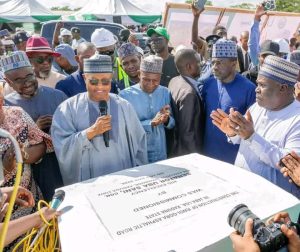
Speaking through the Secretary to the Government of the Federation (SGF), Senator George Akume, Tinubu made this known while declaring open the Public Hearing on the 1999 Constitution Review held in Abuja.
Describing the exercise as a “golden opportunity” to embed good governance, national inclusion, and sustainable development, President Tinubu underscored the dynamic nature of a nation’s constitution.
> “The Constitution is the supreme law of the land. It is not static, but a living document that must continually respond to the realities, aspirations and challenges of our people,” he stated.
The President also praised the House of Representatives Committee on Constitution Review, led by Deputy Speaker Benjamin Kalu, for aligning the process with his administration’s Renewed Hope Agenda and for creating an inclusive platform that welcomes the input of citizens, civil society, political groups, professionals, and traditional institutions.
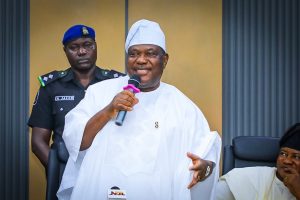
House Speaker Rep. Abbas Tajudeen, speaking at the event, reaffirmed the National Assembly’s dedication to participatory democracy and inclusive governance.
> “This reflects the House of Representatives’ steadfast commitment to participatory governance and inclusive nation-building, affirming that every Nigerian has a meaningful voice in shaping the document that defines our republic,” he said.
He lauded the efforts of the Constitution Review Committee, noting their proactive steps—such as publishing a Summarised Compendium of Bills, setting up online feedback portals, and holding zonal consultations—as a sign of a citizen-led process.
Tajudeen commended Deputy Speaker Kalu and the committee members for executing their duties with “integrity and patriotism.” He also acknowledged the sacrifices of citizens who traveled across the country to engage in the review.
He cautioned against reforms that stall and lose public faith:
> “Reform delayed is reform denied, and Nigerians deserve clarity and closure.”
Touching on the key issues being considered, the Speaker highlighted proposals that address inclusivity, particularly for women and persons with disabilities.
> “Today, women hold less than five percent of seats in the National Assembly,” he said, describing it as unacceptable for a country of Nigeria’s scale and ambition.
He revealed that new amendments would reserve seats for women in both federal and state legislatures, ensuring that each state and senatorial zone has female representation.
> “Inclusiveness of women is not tokenism, but a constitutional mechanism to accelerate gender inclusion until structural barriers are dismantled,” he asserted.
Additional amendments will establish minimum thresholds for female ministerial appointments and mandate representation for persons with disabilities across all levels of government.
Tajudeen also highlighted the need to formally recognise traditional institutions in the Constitution, noting their essential roles as cultural custodians and conflict mediators.
In his remarks, Deputy Speaker Benjamin Kalu emphasized that the reforms reflect the will of the people—not lawmakers.
> “The ultimate authority for this process resides with you, the sovereign people of Nigeria,” Kalu said.
He advocated for the devolution of powers, including proposals for state and community policing as well as local government autonomy to guarantee financial and administrative independence at the grassroots.
Kalu maintained that the suggested reforms were born from public demands, further underlining the legitimacy of the process.