University of Jos (UNIJOS) has reaffirmed its resolve to bridge the gap between academic research and grassroots transformation as it hosted a two-day capacity-building workshop for artisanal and small-scale miners in Plateau State.
Organised in collaboration with the Petroleum Technology Development Fund (PTDF) under its Professorial Chair in Geology and Mineral Science, the workshop held on 24th and 25th September 2025 at the Faculty of Management Sciences, University of Jos.
Themed “Enhancing Safety, Sustainability, and Community Development in Mining,” the event brought together miners, government agencies, academics, and industry stakeholders to promote responsible mining practices.
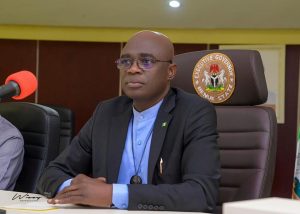
Speaking at the opening ceremony, the Vice Chancellor, Prof. Tanko Ishaya, who was represented by Prof. Samuel Odey, said the programme demonstrated academia’s role in addressing national challenges through collaboration.
“Today’s gathering reflects the power of collaboration between academia, industry, government, and grassroots communities.
“The University of Jos is honored to host this important workshop on sustainable and responsible mining for community empowerment. This initiative strongly aligns with our commitment to knowledge-driven solutions that improve lives and protect our environment,” he stated.
Prof. Ishaya stressed that the Middle Belt region is rich not only in mineral resources but also in human potential, and called for education and research to drive inclusive development and safer mining practices.
In his address, Chairman of the UNIJOS PTDF Professorial Chair in Geology and Mineral Science, Prof. Nuhu Samaila, described the workshop as timely, citing concerns over environmental degradation, unsafe practices, and tensions linked to artisanal mining.
“Mining is not just an occupation; it is a lifeline for thousands of families. Yet, the benefits can only be fully realised when we balance economic gains with environmental stewardship and social responsibility,” he said.
He explained that the training was designed to foster dialogue between miners, scientists, and policymakers, with a focus on health and safety, mercury-free processing, cooperative development, and waste management.
The Executive Secretary of PTDF, Ahmed Galadima, represented by Engr. Paul Ohabuike, Deputy General Manager, Projects, said the programme falls under PTDF’s research and innovation mandate. He noted that measurable outcomes had been defined by the UNIJOS-endowed chair to evaluate impact.
“At the end of this training, we expect miners to adopt safety practices, adhere to standards, improve environmental management, and enhance the ecosystem and livelihoods where mining takes place.
“While security is a broader issue, PTDF’s role is to ensure miners are trained on best practices and safety standards. Once these are followed, many insecurity-related problems linked to mining can be addressed,” he said.
In their goodwill messages, the Miners Association of Nigeria, Plateau State Chapter, represented by Johnson Nwosu, and the Commissioner for Environment, Climate Change, and Minerals, Hon. Peter Gwom, highlighted challenges and policy gaps in the sector.
Nwosu listed miners’ grievances, including harassment, multiple taxes, revoked licenses, and high interest rates. He called for single-window licensing, transparent revenue audits, micro-licensing for artisanal miners, and a dedicated mining security task force.
On his part, Hon. Gwom admitted that regulatory inconsistencies persist but urged miners to operate within the law. He stressed the need to enforce existing regulations rather than create new ones and disclosed that the state government had recently approved the continuation of over 40 abandoned mining projects across local government areas to curb illegal mining and support economic recovery