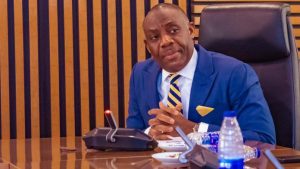
NDC Presidential candidate, Peter Obi
Former presidential candidate, Peter Obi, has strongly condemned the reported abuse of vulnerable children in Cross River State, describing the incident as a damning reflection of Nigeria’s failure to protect its young population.
In a post shared on his X (formerly Twitter) handle, Obi reacted to reports showing young boys allegedly tied up and subjected to degrading treatment under the label “Skolombo boys,” sparking widespread concern across the country.
“These are not merely disturbing images; they are a stark reminder that we have failed the children of our nation.”
Obi stressed that the affected children should not be seen as criminals but as victims of systemic neglect and poverty, urging Nigerians to rethink how society treats its most vulnerable.
“These young people, often labelled ‘Skolombo boys’ and ‘Lakasara girls,’ are not criminals by birth; they are victims of a system that has neglected them.”
He noted that the growing number of out-of-school children in Nigeria remains a critical issue, warning that the country is sitting on a ticking time bomb if urgent action is not taken.
“Children who ought to be in classrooms, learning and building their future, are instead on the streets, struggling to survive.”
“Today, Nigeria has over 20 million out-of-school children, the highest number in the world, which constitutes a national emergency.”
The former Anambra State governor further criticised the apparent brutality in handling such children, describing it as a sign of moral decline.
“A society that ties up and beats its children with machetes is one that has lost its moral direction.”
Obi also pointed out what he described as a contradiction in the nation’s approach to justice and rehabilitation, questioning why vulnerable children face harsh treatment while other groups benefit from reintegration programmes.
“In a country where we speak of rehabilitation and reintegration for ‘repentant’ terrorists, how do we justify brutality against vulnerable children whose only ‘crime’ is poverty and abandonment?”
Calling for a shift in national priorities, he urged authorities at all levels to adopt humane and structured approaches to addressing the issue, focusing on long-term solutions rather than punitive measures.
“We must move from punishment to compassion, from neglect to responsibility.”
“These children must be taken off the streets and given access to education, shelter, and structured rehabilitation.”
Obi emphasised that the Cross River incident should not be treated as an isolated case but as a reflection of broader systemic challenges facing the country.
“This is not just about Cross River; it is about the kind of Nigeria we are choosing to build.”
He concluded with a call for collective responsibility, urging leaders and citizens alike to prioritise the protection of children and the nation’s future.
“We must do better. Our nation must protect the weak and the future of its people.”
“A New Nigeria is Possible.”