Dr. Amarere
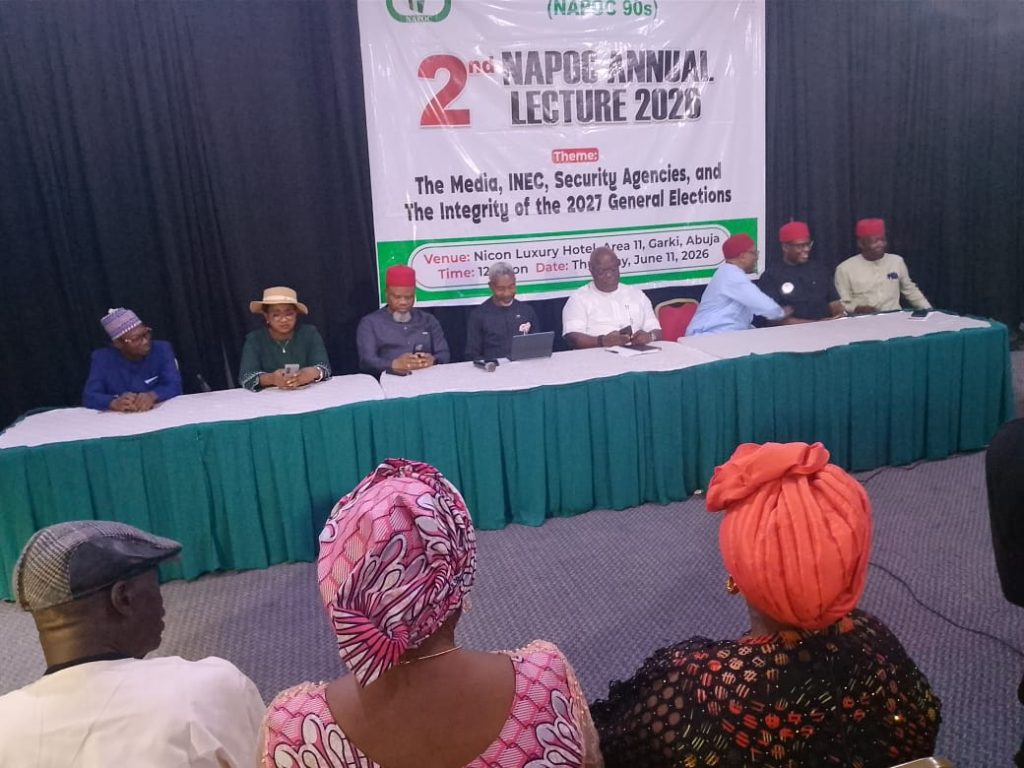
(A contribution at the 2nd NAPOC Annual Lecture, 2026)
In today’s Nigeria, power is no longer exercised only through ballots, budgets, or the barrel of a gun—it is increasingly wielded through control of information.
From traditional newsrooms to encrypted social media groups (WhatsApp, TikTok influencers), to state briefings, a quiet but decisive struggle is unfolding over who shapes national conversation—and to what end. Facts are contested in real time, narratives are manufactured with precision, and public opinion is no longer simply informed; it is actively engineered.
The lines that once separated journalism from propaganda, and information from manipulation, are becoming dangerously blurred. Media institutions face growing pressure, sometimes subtle, sometimes overt, while political actors and their proxies deploy sophisticated digital strategies to dominate perception, not just reality.
The emergence of Artificial Intelligence, AI, has added a huge challenge to professional conduct of the media.
The guest lecturer was right when he said professional ethics are largely being vitiated by operatives of new media, who have no regards for the principles that guide and guard journalism practice. Unfortunately, the traditional media that should be the guiding light is increasingly being infiltrated by the “madness” of the social media. With just smart phone devices and enough data, untrained and unlicensed persons manufacture all sorts of information, that suits their fancy and throw into the media space, without regard for truth, facts and decency. Many atimes, misinformation, disinformation and fake news are deliberately planted with the intention to mislead, distract, cause confusion and create chaos.
At stake is more than reputations or headlines. This is about the integrity of public discourse, the capacity of citizens to make informed choices, and ultimately, the credibility of Nigeria’s democracy itself.
As the country inches toward another electoral cycle, a critical question emerges:
Who really controls what Nigerians see, hear, and believe—and how is that power being used?
There must be a process for the management and regulation of the current convoluted situation, otherwise society and democracy will be the worse for it in the long run. There is absolutely no substitute for balanced, evidence- based and fact driven journalism that is critical, but devoid of speculation and fiction. The time-honoured reformatory role of the media as a change agent must be sharpened and sustained.
Most often than not, the electoral management body, the Independent National Electoral Commission, INEC, has been the burt of criticism for one lapse or the other in the discharge of its constitutional duties and responsibilities. Almost every electoral agency in the history of Nigeria has been blamed for electoral malfeasance, especially by those who lose at the polls.
There is no doubt that there are noticeable gaps in the work of the commission, but it also true that the body is peopled by Nigerians, many of whom circumvent and plan to circumvent the system and processes for different selfish reasons. These set of people, at different levels, are usually more than those who patriotically want to do the right things. However, it is also true that there have been incremental improvements and progress in electoral management processes over the years, especially with the introduction of technology, that have enhanced the integrity of the system. There is still a lot more that can be done to improve Nigeria’s electoral democracy; particularly with the adoption of more technology, but the bigger elephant in the room is human factor. Technology can and should be adapted to work for man and society and not the other way round.
Many Nigerians want their votes to count at elections; but how can this happen when those bent on sabotaging the processes are ever ready to overwhelm the system?
Politicians want votes to count during elections, but do not seek or work for the objective conditions for that to happen. They and their parties are essentially the architects of electoral malpractices because of the desire to win at all cost, without regard for the rules and laws guiding electoral processes. Votes are not even being allowed to count in the political parties. Internal democracy is almost completely absent in the various political parties that usually accuse the electoral umpire of falling short of globally accepted electoral standards. A case in point is the recent shambolic conduct of party primaries. Almost all the parties have been accused of various degrees of malpractices- rigging, impositions, etc. Even worse is the fact that several weeks after those primaries, results are yet to be announced or made public.
Yet, these are the same parties and party chieftains who have been agitating, and mounting street protests for the inclusion of electronic and “real time” transmission of election results in the 2026 Electoral Act, as a pre-condition for the validation and integrity of the 2027 elections. None of the parties, not one, transmitted its primary election results electronically or in real time. Infact some of them spent days collating the results of primaries whose members were less than three million voters from across the country.
Lastly, is the role and place of Civil Society organisations in the improvement and sustenance of Nigeria’s democracy. Civil society groups were very central and key to Nigeria’s return to democratic governance after decades of military rule. Perhaps, more than any other group, they made the most sacrifices for the country’s return to democratic rule in 1999. But they also fell short of what they fought for. They stayed away from the political fray when the gates were opened while allowing the hawks and collaborators with the military to take over and run the show. They have since 1999 confined themselves to the sidelines- by observing and monitoring elections, issuing reports that are hardly paid serious attention to, organising and conducting trainings for politicians and office holders and seeking ways of holding public officials accountable. They may be making some impact but alot more need to be done if we must achieve a service oriented and transparent governance system. Perhaps it is time for civil society actors to step into the ring and practice what they preach.
Integrity is an offshoot of transparent and accountable systems.