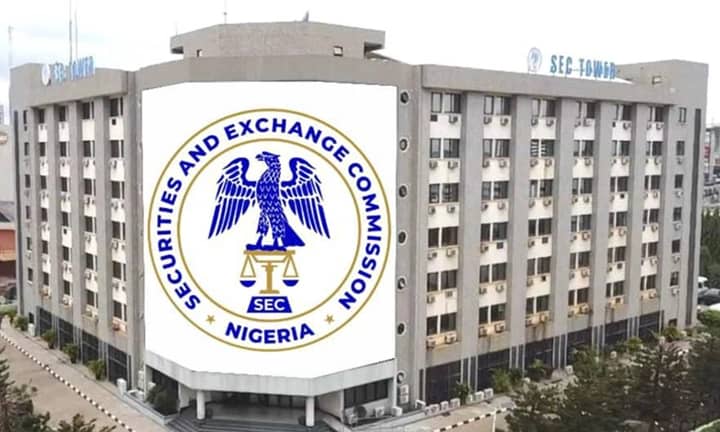
Securities and Exchange Commission (SEC) has directed all capital market-regulated entities (CMREs) to immediately subscribe to the Nigeria Sanctions (NigSac) Alerts system as Nigeria intensifies efforts to combat terrorism financing and money laundering.
The directive followed the designation of six individuals and three entities as terrorist financiers by the Nigeria Sanctions Committee (NSC), as well as fresh international actions against individuals and businesses allegedly linked to the financing of the Islamic State West Africa Province (ISWAP).
In three circulars issued to market operators, the SEC made subscription to NigSac Alerts a mandatory compliance requirement, warning that failure to comply could attract fines, suspension of operations or revocation of registration.
The regulator said the measures were in line with the Terrorism Prevention and Prohibition Act, 2022, the Investments and Securities Act, 2025, and its Anti-Money Laundering/Counter-Terrorist Financing (AML/CFT) rules.
Under the directive, capital market operators are required to immediately identify and freeze, without prior notice, all funds, assets and other economic resources belonging to persons and entities designated on the Nigeria Sanctions List.
They are also required to report frozen assets and other actions taken to the Secretariat of the Nigeria Sanctions Committee and file suspicious transaction reports with the Nigerian Financial Intelligence Unit (NFIU).
The SEC further directed operators to report cases of name matches involving designated persons or entities, whether the matches occur before or after a transaction.
Operators are prohibited from dealing with designated individuals and entities and must continue monitoring their transactions and report any findings to the NSC Secretariat.
The regulator warned that all unusual or suspicious transactions must be promptly reported to the NFIU. The SEC also directed market operators to strengthen monitoring of relationships involving jurisdictions under increased monitoring by the Financial Action Task Force (FATF).
The measures include enhanced due diligence for businesses linked to jurisdictions such as Myanmar, Venezuela, Lebanon, Laos and South Sudan, while transactions involving Iranian financial entities are to be refused. The regulator also directed operators to pay particular attention to the Democratic People’s Republic of Korea (DPRK) and financial institutions operating there.
The latest directives reflect increasing regulatory scrutiny of the Nigerian financial system as authorities seek to prevent illicit funds from moving through formal financial institutions and capital market channels.
For fund managers, brokers and other market operators, the measures will require stronger transaction-monitoring systems, sanctions screening and customer due diligence, particularly for transactions involving complex ownership structures, informal financial networks and high-risk jurisdictions.
The SEC said the directives take immediate effect and that non-compliance constitutes a regulatory violation that could result in sanctions, including fines, suspension of operations or revocation of registration.