By AMOS MATHEW, Kaduna
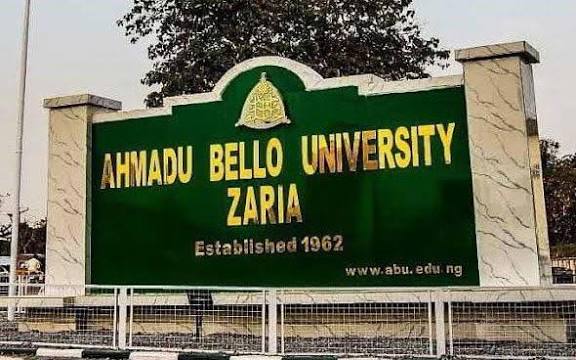
Ahmadu Bello University (ABU), Zaria, has dismissed as false and malicious an AI-generated video circulating on social media, which alleged that the institution was secretly developing a nuclear weapon for Nigeria.
In a statement signed by the Director of Public Affairs, Auwalu Umar, on behalf of the Vice-Chancellor, the university described the content of the video as “a fabrication by unscrupulous individuals” aimed at misleading the public and tarnishing the image of the institution.
The video had claimed that “in the 1980s, Nigerian scientists were secretly enriching weapons-grade uranium hidden in a remote wilderness of Kaduna State,” and that researchers at ABU had “built sophisticated centrifuges obtained from Pakistan’s AQ Khan Network” and were “months away from producing Nigeria’s first nuclear device by 1987.”
Reacting, ABU management said such allegations were not only untrue but also technically impossible, noting that most scientists at the university’s Centre for Energy Research and Training (CERT) were still undergoing training abroad during that period and had not returned to the country until the early 1990s.
“How could trainee scientists enrich uranium when they were not even back in the country?” the statement queried.
The university further clarified that it had no connection whatsoever with the AQ Khan Network from Pakistan and had never received any equipment for uranium enrichment or nuclear weapons development.
Umar explained that by 1987, the only facility available at CERT was a 14 MeV Neutron Generator, which became operational in 1988. The country’s first major nuclear project, the Nigeria Research Reactor-1 (NIRR-1), he said, was not initiated until 1996 under the International Atomic Energy Agency (IAEA) Technical Cooperation Programme and was commissioned in 2004.
He noted that Nigeria’s interest in nuclear science dates back to the 1960s, following France’s atomic bomb test in the Sahara Desert in 1960, which led the Federal Government to establish the Federal Radiation Protection Service (FRPS) at the University of Ibadan.
According to him, Nigeria joined the IAEA in 1964 to signal its commitment to the peaceful use of nuclear science and technology.
He recalled that in 1976, the then Murtala-Obasanjo regime designated ABU Zaria and Obafemi Awolowo University, Ile-Ife, as centres for advancing Nigeria’s nuclear energy programme, strictly for peaceful purposes, in line with the IAEA charter.
The statement stressed that the Centre for Energy Research and Training was established under the ABU Governing Council by Statute 29 of the University Laws, following the promulgation of Decree 46 of 1976 that also created the Nigeria Atomic Energy Commission (NAEC).
Through international collaboration, CERT established modest nuclear facilities, including the 34 kW Nuclear Research Reactor (NIRR-1), acquired in 2004 under a tripartite arrangement between China, Nigeria, and the IAEA.
Umar explained that the reactor, which initially operated with Highly Enriched Uranium (HEU), was converted to Low Enriched Uranium (LEU) in 2018 under the Global Threat Reduction Initiative (GTRI).
“All our nuclear research activities are conducted transparently and under the supervision of international partners, including the United Nations’ nuclear watchdog,” he said. “Nigeria neither owns nor operates a uranium enrichment or fuel fabrication plant anywhere in its territory.”
He reaffirmed that Nigeria remains a signatory to the Nuclear Non-Proliferation Treaty (NPT) of 1968 and the Pelindaba Treaty, which came into force in 2009—both of which prohibit the development or acquisition of nuclear weapons.
He added that ABU’s commitment to peaceful applications of nuclear science was rooted in the vision of its founder, the late Premier of Northern Nigeria, Sir Ahmadu Bello, who visited the Museum of Atomic Energy at Oak Ridge National Laboratory in the United States in 1960, even before establishing the university.
“Ahmadu Bello University was founded to advance knowledge for the development of humanity. The Centre for Energy Research and Training continues to fulfill that vision by providing facilities for peaceful research and national development,” he stated.