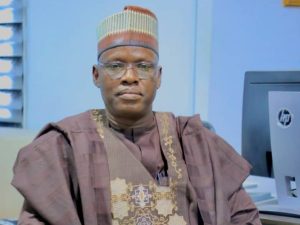
Former House of Representatives member, Danjuma Usman Shiddi
By JOHN MKOM, Jalingo –.
Former House of Representatives member, Danjuma Usman Shiddi, has voiced strong concerns over what he termed unchecked borrowing and poor fiscal accountability in Taraba State.
In an open letter addressed to the Taraba State House of Assembly, traditional rulers, youth organizations, and political stakeholders, Shiddi alleged that the state government has either obtained or initiated loans amounting to over ₦1.2 trillion in the past two years—despite being one of the lowest revenue-generating states in Nigeria.
Shiddi, who represented Wukari/Ibi Federal Constituency in the 8th and 9th National Assembly, provided a detailed breakdown of the debts:
₦206.78 billion from a consortium of banks
₦350 billion proposed bond issuance
$268.63 million (approximately ₦510 billion) loan request from the ECOWAS Bank for Investment and Development
₦50 billion facility reportedly secured on behalf of the 16 local government councils
He stressed that with the state’s Internally Generated Revenue (IGR) standing at just ₦10.87 billion in 2023, the scale of borrowing is alarming.
> “A state earning ₦10.87 billion annually cannot sustain a ₦1.2 trillion debt burden without mortgaging its future,” he warned.
The ex-lawmaker further revealed that between mid-2023 and mid-2025, Taraba State and its local governments received about ₦437.21 billion in federal allocations—excluding loans and grants—yet the state’s level of development does not reflect the inflow.
According to Shiddi, the effects of this mismanagement are evident in:
The deteriorating condition of roads and infrastructure
Poorly equipped healthcare facilities
Crumbling public schools
He also queried the alleged ₦17 billion allocation for school uniforms and learning materials under the state’s free education policy.
> “Announcements cannot take the place of verifiable delivery,” he said.
Calling on the Taraba State House of Assembly to uphold its constitutional oversight role under Sections 128 and 129, Shiddi admonished legislators to move beyond passive approval of executive actions.
> “The House was not elected to clap for the executive,” he stated.
“Oversight is your duty — not routine approval of new debts without accountability.”
He urged the assembly to suspend all new borrowing until a comprehensive public audit of existing loans is completed.
“Taraba Must Shift to Productivity”
Highlighting the state’s vast agricultural potential, mineral wealth, and economic opportunities, Shiddi argued that Taraba’s growth should be driven by productivity rather than debt.
He cited Ogun, Zamfara, and Nasarawa States as examples of regions leveraging internal resources to boost their economies.
> “Taraba must shift from dependence to productivity,” he said.
Shiddi emphasized that his intervention stems from a sense of duty to the people.
> “When people remain silent in the face of financial mismanagement, they become complicit in their own decline,” he cautioned.
“We must speak now, before debt becomes destiny.”