

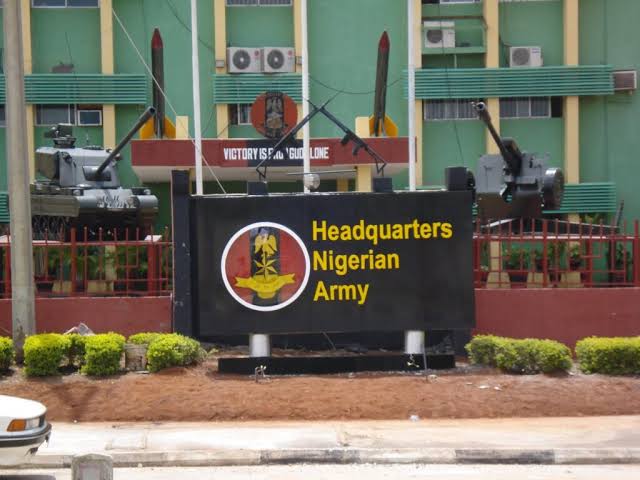
It was in 2016 that Nigeria first lost top army commanders – Lt. Col. K. Yusuf, Col. B.U. Umar, Lt. Col. Mohammed Abu Ali and Lt. Col. O. Umusu in the war against religious terrorists. Yet another heroic Lt. Col. Ibrahim Sakaba was murdered by terrorists in 2018 as would Col. Dahiru Chiroma in 2020. But it was in 2021 that for the first time, a one-star general, Brig. Gen. Dzarma Zirkusu paid the supreme price in the same struggle followed by another one-star general – Brig. Gen. Musa Uba in 2025.
Yes, those are eight prime losses but over a period of sixteen years (2009 to 2025) – hence we cannot talk of a high attrition. But that cannot be said of losses in the first quarter of 2026 alone. Between January and April, five high ranking commanders with Brig. Gen. O. O. Braimah as the most senior, were lost in Nigeria’s counterinsurgency war. Averaging more than one prime casualty monthly, the trend is alarming. There lies justification for this write-up with a view to stemming the rising mortality as none can predict the next victim. In fact, the demise of Brig. Gen. Braimah is particularly devastating because like me, he is Edo State born and into a Muslim setting.
According to my “Distorted Federalism and Pervasive Insecurity” serialized by The Guardian from 17th to 18th March, 2013, Nigeria’s security challenges are fallouts of her unorthodox federalism branded “feeding bottle federalism” by Prof. Itse Sagay. That is where to look for lasting mitigation of security threats bedevilling the country. So, like in the widely publicized 2011 “Boko Haram: Unmasking the Terrorist Next Door” by The Punch and other mass media, the prescriptions here are tactical – to place patient Nigeria on life-support until inevitable surgery.
Generally, the road is the weak link in everyone’s security chain while relatively, the residence and the workplace are expected to be safe owing to terrain familiarity and presence of relevant security measures. Therefore, it’s not irrational to expect a military barrack to be much more safe. Hence the bewilderment that followed the killing of Brigadier-General O. O. Braimah in his own barrack by terrorists. That goes to confirm that non-state actors are beating Nigerian security agencies to intelligence driven operations.
A successful invasion of a military barrack and killing its commander like his earlier nine colleagues, is a natural consequence of insiders collaborating with enemies – terrorists in this case. And owing to apt covers for both status and action, insiders or traitors involved in hostile surveillance or intelligence gathering for enemies, are difficult to detect. Although their domeaneur is the only way to get saboteurs unmasked, suspecting supposed colleagues risks destroying esprit de corps or team spirit crucial for winning battles. There lies the pivot of technology in unmasking traitors masquerading as patriots. Besides, other nations bar their military personnel from active networking on social media.
But in Nigeria, we are told a high ranking officer as a Brigadier was using WhatsApp to summon help – what was supposed to be a need-to-know message was soon awash on social media platforms. Rather with a radio frequency identity (RFID) tag as opposed to a run of the mill cell phone vulnerable to both hostile hacking and tracking, a rescue team could have quickly or easily pin-pointed the exact hideout of missing Brig.Gen. Musa Ubah.
That said, soldiers on frontlines could be issued military grade cell phones and whether or not official lines are in use, combatants’ phones should be tracked both for their own safety and to forestall criminal collusion. And 24/7, a security sweep by an IMEI/IMSI catcher would unmask any intentional switching of SIM cards for criminal ends. Besides shutting the door on fifth columnists to curb sabotage, emphasis on intelligence driven operations would bring about efficiency and effectiveness – using even meagre resources to achieve so much.
Apparently, that must be why the Nigerian Defense Minister, retired General Christopher Musa appealed for lateral inter-agency intelligence sharing as opposed to vertical intelligence silos. That is more than ever an imperative these days with advances in technology, enhancing criminal capacity and reach – making terrorists in particular, highly innovative in strategies and tactics. But merely appealing for an end to desparate intelligence silos is not enough. Instead, a deliberate effort would better result in interoperability of Nigeria’s security agencies.
In particular, synchronizing activities of the separate branches of the Nigerian Army is an imperative for efficiency and effectiveness. For instance, air assets – drones or planes taking to the air real-time, would have made much more impact in the heat of the Benisheikh barrack invasion than some days later. The terrorists could have been forced to retreat immediately without a chance to kill a commander. Also, drones hovering in the sky would proactively spot enemy advances or ambushes especially in a semi-arid terrain as northeastern Nigeria.
As well, drones made popular by former President Barack Obama in decimating terrorists, are comparatively cheaper for eliminating terrorists with neither boots on ground nor war planes in the air. Afterall all, the terrorists themselves have reportedly used a drone to attack an army convoy and killed a commander amongst others. Similarly, robotic guns could be used to attack terrorists without physical troop presence. In fact, Ukraine recently celebrated use of an entirety technology driven operation to recapture a territory from Russia. Also, geofencing – virtual fencing of a barrack would proactively alert on terrorists approaching red lines – thus preempting an invasion.
Towards those ends, the army needs clear sightlines into every operational environment. If terrorists could brag that they centrally monitor every spot on their terrains, the Nigerian Army could do better. The first step would involve harvesting telephone line numbers operational in a war theatre for filtering and tracking of those that are of interest. This could be in cooperation with telcos or the army could surreptitiously deploy by land or air, IMEI/IMSl catcher to gather telephone numbers operational at any place of interest for analysis and tracking as necessary.
All those measures are to acquire electronic footprints of crime suspects for intelligence to preempt attacks. Even where criminals interchange cell phones or lines in an attempt to conceal their location, their already recorded voices alone would alert on when and where they are online calling or receiving calls. Conversely, radio frequency (RF) jammers could be deployed to disrupt hostile communication and coordination between terrorists and fifth columnists or saboteurs during troop movements or operations. Also, RF jammers would mitigate threats posed by remotely detonated IEDs targeting military convoys or personnel movements.
However, despite the promise of technology, human factor remains the weak link in a technology driven security architecture. So, let”s find out if there are any implications in the socio-cultural composition of the military personnel holding forte for Nigeria in the raging war with religious insurgents. On that, as former governor of Borno State – the seat of religious insurgency, Vice President Kashim Shettima in 2018 unbiasly assessed the performance of Nigerian Army commanders thus:
“Some of our greatest recent feats in the conflict were done by non-northerners and non-Muslim officers in the military. Most of the soldiers that sacrificed their lives are not of the Kanuri ethnic group. And what we have recorded in the last six weeks outweighs what was accomplished in the last three years, especially under General Nicholas who is yet another hero of our time.”
Yet, not only that the present overall commander in Nigeria’s counterinsurgency effort is a northerner and a Muslim, nine out of the twelve soldiers killed in the Benisheikh barrack invasion were Muslims and they are about 100% representative of the culture of all the commanders killed till date. And except Brig. Gen. Braimah, they are all northerners. Why does Nigeria attempt reinventing the wheel? Under the command of a southern and non-muslim commander, Nigeria over-ran Sambisa Forest – the insurgents’ stronghold. And in the euphoria, then President Muhammadu Buhari promised to establish an army barrack there.
But surprisingly, elsewhere in Borno State, a military academy was, instead, established – the second in northern Nigeria where concentration of the nation’s military establishments including a naval school in landlocked Kano State, is the strategic motivation for religious insurgents. They reasonably believe that once they over-run their part of Nigeria, the rest of the country would come under their control. In fact, the day they capture a major armoury, their dream could be realized.
Therefore, those who kicked against President Bola Ahmed Tinubu decentralizing Nigerian Civil Aviation Training Centre should better have a rethink. Concentrating a nation’s military establishments in one region makes them vulnerable by just one fell swoop. And perhaps the chickens are already coming home to roost.
Right now the army is bemoaning a region not meeting their quota in enlistment into the army. It’s doubtful if any responsible parent would send a child for training in a high risk environment where even army commanders are killed like targets of opportunity. And if the reason for localizing almost all military assets in the north is because of fear of the south, the raging religious insurgency has proved that an enemy could spring from any part of a country.
Terrorism festers only within a supportive culture especially religion. Hence in a Nigeria divided along religious lines, consensus is difficult on how to wield out terrorism in the country. While a segment of the Nigerian population root for a kinetic approach because kid gloves have never worked elsewhere, those supportive of non-kinetic approach go to an extreme, ultimately paying dearly for their naivety. Alhaji Aminu Masari, immediate past governor of Katsina State, would vow never to trust terrorists again after they swore to the Koran thrice and broke their own oath thrice.
Similarly, after nothing to show for expending over N7 billion on deradicalization of terrorists, as governor of Borno State, Prof. Babagana Zulum appealed to his fellow indegenes to leave their fate to God by prayers. And this time, within days of Nigeria’s Chief of Defense Staff – General O. O. Oluyede offering terrorists an amnesty on a platter of gold – unsolicited, they trampled on the olive branch by killing a one-star general among other casualties. Apparently, religious terrorism is an ill-wind that blows no one any good. Hence any reasoning that army commanders of terrorists’ professed religion would soften their radicalism for peace talks, is forlorn. Peace is not achieved that way.
That is why the late President Buhari under the guise of ambassadorial posting, deployed retired General Tukur Buratai, a Kanuri and not a Yoruba man to ambush a separatist agitator – Mr. Sunday Igboho – successfully detaining the target in Benin Republic until Buhari finished his tenure. Similarly, retired General Abayomi G. Olonisakin, a Yoruba and not an Igbo man, was despatched to Cameron to ambush IPOB separatists. And right now, most army commanders deployed in southern Nigeria are non-southerners.
By the way did Igbo speaking troops fight alongside Nigerian army during the civil war? So, why go against common sense this time and be drawn into Armageddon by ragtag non-state actors whom as publicly admitted by Alhaji Buba Galadima – an erstwhile President Buhari loyalist, within two weeks, President Goodluck Jonathan used mercenaries to defeat terrorists for general elections to hold across Nigeria in 2015?
The raging counterinsurgency war is neither an intra-regional nor intra-religion war. Rather it is a national challenge and if for national pride, mercenaries are no longer welcome, Nigerians reserve the right to determine the socio-cultural composition of those at the front lines. All we want is swift and sweet victory and not the tribe or religion of the eventful war heros. The siege on the country since 2009 must be broken to end firearms proliferation fueling kidnappings and armed banditry.
For the avoidance of doubt, the battle plan for defeating terrorism in Nigeria is not in the hands of two hundred apiece military trainers from the USA and Turkey respectively – a step that could soon deepen and worsen our religious divide. For instance, some Nigerians who complained about deployment of American Christian soldiers in the north might soon insist that Islamic Turk soldiers should be similarly deployed to the south of Nigeria whether or not there’s need.
On the whole, the only way Nigeria can win the raging counterterrorism war is by resorting to the two non-muslim generals that Vice President Shettima eulogized to high heavens. You don’t change a winning team and it matters nothing who wins the war for Nigeria. Both or either of the two erstwhile commanders could again take up the command themselves or with their privileged knowledge, recommend somebody from within the Nigerian Army.
John Uwaya
Former Representative of Texas Armoring Corp., USA (2008 to 2015)


