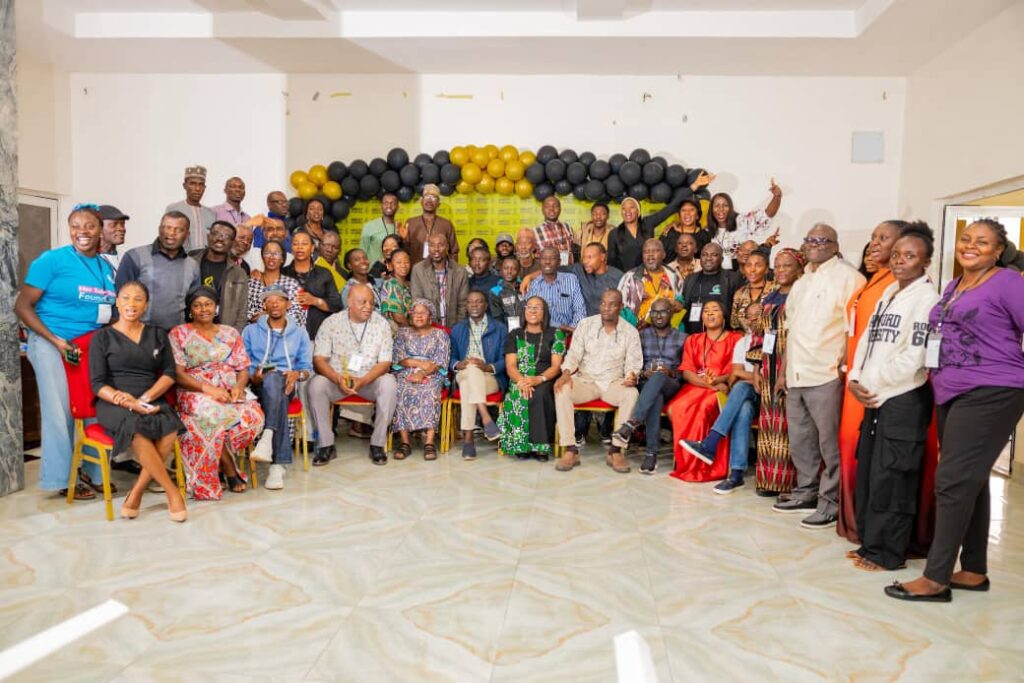
Cross section of journalists who attended the workshop in jos
By CHRISTIANA LOT, Jos –
Amnesty International has trained journalists in Plateau State on ethical, conflict-sensitive, and human rights-centered journalism, urging them to adopt safer and more inclusive storytelling practices in the face of Nigeria’s growing human rights concerns.
The two-day training, held in Jos for members of the Correspondents’ Chapel of the Nigeria Union of Journalists (NUJ), Plateau State Council, brought together reporters from local and international media. The initiative aimed to improve ethical standards in reporting, especially in contexts of conflict, recurring violence, and gender-based issues.
In her opening remarks, Babara Magaji, Programme Manager at Amnesty International Nigeria, emphasized the critical role of the media in shaping public understanding and defending human rights.
“The media is not just a messenger but a frontline defender of human rights. When violations occur—whether through killings, forced evictions, or protests how they are reported matters greatly. Reports must be sensitive to survivors, avoid worsening tensions, and never re-traumatize victims,” she said.
Magaji highlighted Amnesty’s global footprint, with over 10 million members across more than 150 countries, and reaffirmed the organization’s continued campaign against rights violations in Nigeria, including arbitrary arrests, sexual violence, and the suppression of free speech.
She called on journalists to prioritize safety while adopting a human rights lens in their work, especially when reporting from volatile areas.
Presenting on the ethics of conflict reporting, Dr. Kabiru Danladi of the Department of Mass Communication, Ahmadu Bello University Zaria, cautioned against the use of stereotypes that link crime with ethnicity or religion.
“When we label criminals by ethnicity or religion—‘ Fulani herdsman,’ ‘Kanuri Boko Haram ’we don’t just describe an incident; we stigmatize entire communities. The ripple effects of such reporting can be devastating,” he said.
He encouraged journalists to shift focus from symptoms to structural causes of conflict such as marginalization, inequality, and manipulation. Speed, he warned, must never override accuracy.
On the topic of journalist safety, Dr. Gad Peter Shamaki, a public analyst and conflict expert, emphasized that personal safety is a deliberate responsibility, not an afterthought.
“Many journalists have become casualties not just of bullets but of burnout, trauma, and institutional neglect. A journalist who dies chasing a story becomes the story. Safety is not a prayer point; it’s a plan built on preparedness, situational awareness, and institutional support,” he stated.
He advised reporters to assess threats, coordinate with trusted local contacts, and maintain communication with both civil society and security agencies before covering high-risk areas. He also urged media organizations and NUJ chapters to provide insurance, safety training, and emergency response systems.
In a session on gender-sensitive reporting, Dr. Plangsat Dayil, Associate Professor at the University of Jos, challenged newsrooms to address the poor visibility and stereotypical portrayal of women in media.
“Women are often quoted as victims, not experts. This reflects a broader systemic issue. How we report women matters—do we celebrate their competence or reduce them to emotion, appearance, or family roles?” she asked.
She advocated for the use of inclusive language, balanced sourcing, and intersectional analysis that considers how gender overlaps with class, ethnicity, and disability in news narratives.
Speaking on behalf of the Correspondents’ Chapel, Chairman Mr. Polycarp Auta described the training as timely and essential for improving journalism standards in Plateau State and beyond.
“Journalists are often the first to witness and report on human rights abuses. We are essential gatekeepers, ensuring accurate and just information reaches the public. Our work shines a spotlight on injustice, helping mobilize awareness and political will for accountability,” he emphasized.
He thanked Amnesty International for its commitment and expressed hope for continued collaboration with the Chapel.
The training also featured a session titled “The Journalist as a Human Rights Advocate,” which explored the role of fact-based storytelling in exposing injustice, amplifying marginalized voices, and promoting democratic accountability.