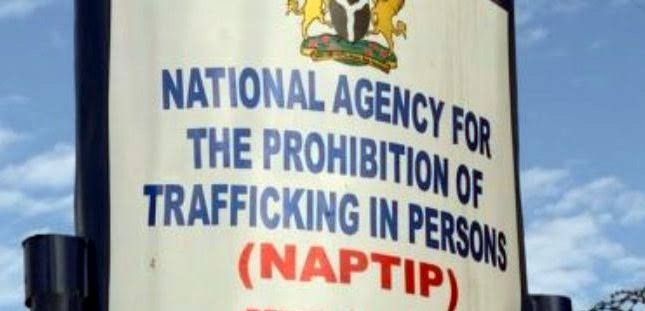
National Agency for the Prohibition of Trafficking in Persons (NAPTIP) has revealed that Benue State now holds the unenviable record for the highest number of human trafficking cases in Nigeria.
This was disclosed by NAPTIP Director-General, Mrs. Binta Bello, during a two-day workshop in Makurdi, where she was represented by Mr. Josiah Emerole, the Director of Intelligence.
According to Bello, Benue has surpassed Edo State, previously the epicenter of human trafficking in Nigeria.
“Recent data on rescued victims and arrested suspects shows that Benue indigenes, both within the state and across Nigeria, are disproportionately affected,” she stated.
She attributed this spike to heightened insecurity, which has left children vulnerable after losing their parents.
“Orphans are often exploited, sold, or taken to other states to work in quarries, with their earnings pocketed by traffickers,” Bello explained.
To combat this growing menace, NAPTIP has launched initiatives like the School Anti-Trafficking Education and Advocacy Project (STEAP), in partnership with the International Centre for Migration Policy Development (ICMPD).
The workshop aimed to equip school principals and anti-trafficking club members with tools to identify and prevent trafficking.
“Our goal is to educate young students about the warning signs of trafficking so they can protect themselves,” Bello emphasized, noting that clubs have been established in 10 of the 50 schools targeted under the STEAP initiative.
Dr. Emmanuel Zakaa, Principal of Tilley Gyado College in Makurdi and a workshop participant, praised NAPTIP’s efforts.
“This program has opened our students’ eyes to the dangers of human trafficking through their school clubs,” he said.
He added that the training has empowered principals to guide students against accepting job offers or aid from strangers or even relatives without scrutiny.
“It’s a vital step in safeguarding our children,” Zakaa remarked.
The workshop, organized under the STEAP framework, underscores NAPTIP’s commitment to curbing human trafficking through education and community engagement.