Prof Ukertor Moti
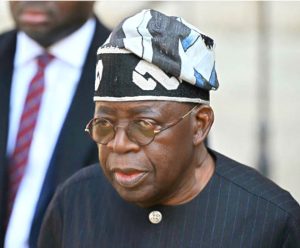
The historical and contemporary trajectories of Nigerian politics reveal a striking and cautionary continuity: the persistent orchestration of popular consent through elite-driven mobilization, often at the expense of genuine democratic plurality. The parallel between the “Nigerian Youths Earnestly Ask for Abacha” (YEAA) campaign of the 1990s under Sani Abacha and the more recent “City Boys Movement” aligned with Bola Ahmed Tinubu offers a powerful lens through which to interrogate the evolving—but not entirely transformed—nature of political legitimacy in Nigeria.
At first glance, these two moments appear fundamentally different. One unfolded under an overt military dictatorship; the other operates within a constitutional democracy. Yet beneath these institutional differences lies a deeper structural similarity: the strategic deployment of youth identity and political convergence to manufacture legitimacy and project an image of overwhelming popular support.
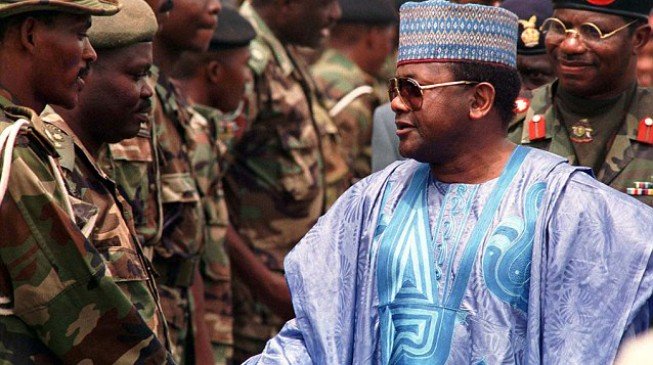
During the Abacha era, the YEAA movement emerged as a visible symbol of supposed youth endorsement for the regime. However, its significance extended far beyond youth mobilization. It coincided with an extraordinary political development—virtually all registered political parties at the time endorsed Abacha as their sole presidential candidate. What should have been a competitive multiparty system effectively collapsed into a one-directional political order. This convergence was widely understood not as a reflection of organic consensus, but as the product of coercion, inducement, and a repressive political climate that left little room for dissent. In that context, youth participation became performative rather than participatory, while legitimacy was constructed through propaganda rather than earned through accountability.

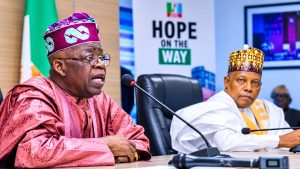
Fast forward to contemporary Nigeria, and the methods have evolved, but the underlying logic shows unsettling continuity. The City Boys Movement presents itself as a vibrant, youth-driven support base for the current administration. Amplified through digital platforms and public political events, it projects an image Nigeriaof widespread youth enthusiasm. Yet, much like its historical counterpart, it is often perceived as embedded within broader networks of patronage, loyalty, and elite influence.
More significantly, this contemporary moment is marked by a pattern that echoes the Abacha years: a growing convergence of political actors around the incumbent. Governors, legislators, and influential figures from opposition parties have increasingly defected or publicly endorsed the President. This trend has created the perception of an emerging single dominant political force, raising a fundamental democratic dilemma—are these alignments the result of genuine ideological realignment and policy agreement, or are they driven by systemic pressures within Nigeria’s patronage-based political economy?
This question is not merely academic; it strikes at the heart of democratic governance. Where political convergence is voluntary and programmatic, it may signal stability and coherence. But where it is induced—through incentives, pressures, or calculations of political survival—it undermines the integrity of democratic competition. The boundary between consensus and compulsion becomes blurred, and citizens are left navigating a political landscape in which the appearance of unity may conceal the erosion of choice.
The implications of this pattern are profound. First, it highlights the fragility of participatory democracy in Nigeria. When youth engagement is instrumentalized as a tool of political validation, it ceases to be a vehicle for meaningful civic participation. Instead, it becomes a form of symbolic politics—highly visible, yet substantively shallow. This weakens the deliberative foundations of democracy, where policy debate, accountability, and informed choice should take precedence over spectacle and loyalty.
Second, it reflects a deeper crisis of political socialization. Both the YEAA movement and the City Boys phenomenon risk normalizing a culture in which political alignment is driven less by conviction and more by access to power and resources. Over time, this erodes the development of a politically conscious citizenry and entrenches a system where opportunism outweighs principle.
Third, and most critically, these developments reveal how democratic forms can coexist with undemocratic practices. Nigeria’s transition from military to civilian rule did not entirely dismantle the mechanisms of manufactured consent; it merely adapted them to new institutional and technological contexts. The shift from state-controlled media to digital amplification has changed the tools, but not necessarily the intent.
As Nigeria looks toward the 2027 presidential elections, the stakes of this continuity become even clearer. The current trajectory—marked by elite convergence, defections from opposition parties, and the projection of overwhelming support for the incumbent—raises concerns about the future of electoral competitiveness. If this pattern persists, Nigeria risks drifting toward a dominant-party system in which elections remain periodic but lose much of their substantive meaning. In such a scenario, electoral outcomes may be shaped less by voter choice and more by pre-election alignments among political elites.
Yet, history does not have to repeat itself. Unlike the Abacha era, contemporary Nigeria possesses countervailing forces: a more politically aware youth population, a relatively open media environment, and the mobilizing potential of digital communication. These factors create space for resistance, contestation, and the reassertion of democratic pluralism.
The critical question, therefore, is whether Nigerian democracy will continue along a path of convergence without contestation, or whether citizens and institutions will reclaim the space for genuine political competition. The answer will determine whether 2027 becomes a reaffirmation of democratic choice or a subtle reenactment of a past in which uniformity replaced plurality.
In Nigeria’s political history, the parallel between YEAA and the City Boys Movement serves as both a warning and a call to action. It warns of the enduring tendency of political elites to substitute performance for participation and consensus for coercion. At the same time, it calls for a reimagining of youth political agency—one that is independent, issue-driven, and resistant to co-optation.
Ultimately, democracy cannot thrive where agreement is manufactured and opposition is weakened. Its strength lies not in the appearance of unity, but in the reality of choice.