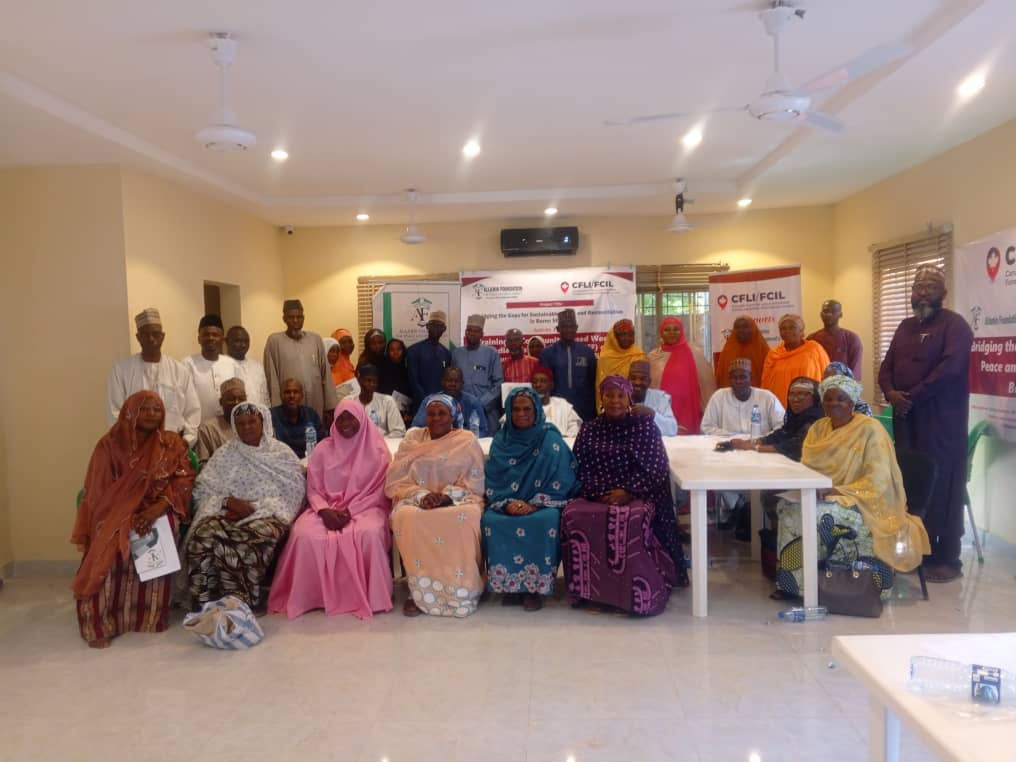
Canada Fund for Local Initiatives (CFLI) has partnered with the Allamin Foundation for Peace and Development (ALFOPED) to train 30 women mediators and community advocates on dialogue, peacebuilding, transitional justice and reintegration in Borno State.
The one-day capacity-building session, held over the weekend at the Hajja Mangal Memorial Conference Hall in Maiduguri, brought together women leaders from Maiduguri Metropolitan Council (MMC) and Jere Local Government Area. Participants were drawn from Abbaganararm, Moromti, Bulunkutu and Fulatari wards in MMC, as well as Old Maiduguri and Goni Kachallari wards in Jere.
The training marks the launch of a new CFLI-supported project titled “ _Bridging the Gaps for Sustainable Peace and Reconciliation in Borno State,”_ scheduled to run from August 2025 to September 2026.
Executive Director of ALFOPED, Hajiya Hamsatu Allamin, said the project seeks to confront the deep social and psychological wounds left by the Boko Haram insurgency, especially among radicalized minors and women.
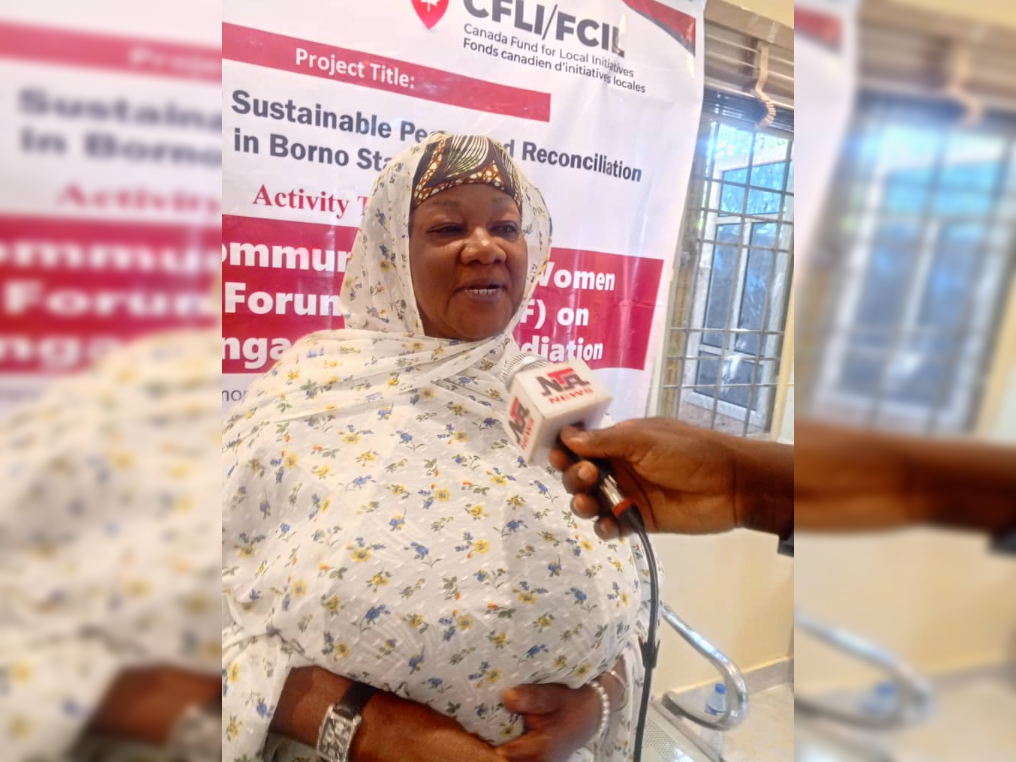
According to her, communities still struggle with stigma, fear, and limited structures for psychosocial recovery, education and reintegration.
“These gaps informed the design of the project,” she noted, adding that the initiative aims to support healing and resilience among affected groups.
Allamin explained that the foundation has previously carried out similar interventions in MMC, Jere and Bama LGAs, with significant progress recorded in women’s empowerment, transitional justice, peacebuilding and grassroots reconciliation.
She described the participants as women mobilizers, humanitarian actors, political influencers, mediators and advocates whose involvement is crucial in strengthening community peace efforts.
Programme Manager, Hamza Maigari, presented an overview of the initiative, which aims to rehabilitate and reintegrate 15 radicalized minors—eight boys and seven girls—between the ages of 12 and 17.
The project seeks to:
Support de-radicalization and psychosocial stabilization of the minors
Facilitate their educational and vocational reintegration
Strengthen trust and acceptance within their communities
Promote women’s leadership in peace and reconciliation
Advocate for inclusive education policies within Borno’s education system
Maigari said the direct beneficiaries include the 15 minors, 10 women leaders, 20 Community Advocates on Transitional Justice (CATJ), their families and the wider community in Jere and MMC.
Expected outcomes include improved psychological well-being, increased resilience against extremist ideologies, enrollment of the minors into schools, and reduced stigma through dialogue-led community engagement.
The project will also establish and train the Community Women Mediators Forum (COWOMF) to lead reconciliation efforts, while working with the state’s Ministry of Education and SUBEB to adopt inclusive education approaches.
According to the project outline, activities will include identification and enrollment of the minors, baseline assessments, training for community mediators and advocates, counseling and medical support, advocacy visits, monitoring and evaluation, and continuous community engagement.
Communication and visibility will be strengthened through radio, social media platforms, documentaries and community dialogue forums.
Maigari emphasized adherence to ethical guidelines and community-centered approaches, ensuring reliability in data collection and meaningful participation from local stakeholders.
Another facilitator, Dr. Mohammed Abdullahi of the University of Maiduguri, delivered a presentation on mediation, reintegration and peacebuilding. He highlighted the challenges facing post-conflict communities and stressed the need for structured reconciliation efforts to rebuild trust, unity and stability.
The training featured presentations, group discussions and interactive sessions, providing participants with practical tools for conflict resolution, community mobilization and peace advocacy.