Corruption continues to be Africa’s most significant governance hurdle, according to former Ghanaian President Nana Akufo-Addo.
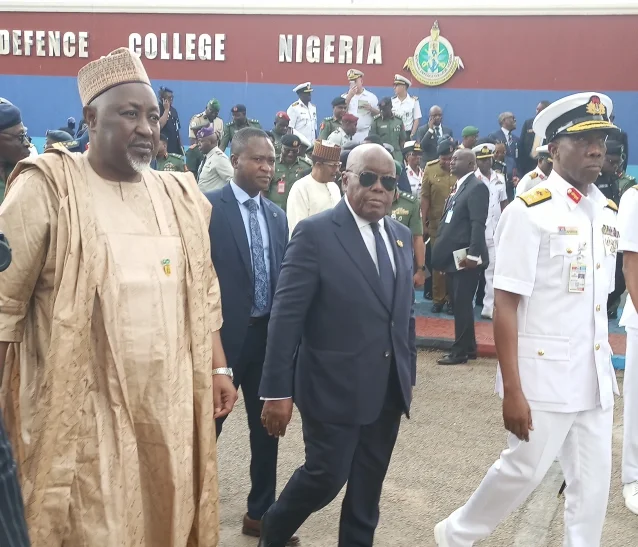
Speaking at the National Defence College (NDC) in Abuja on Monday, Akufo-Addo delivered the graduation lecture for Course 33 participants, themed: “ _Enhancing Institutions for Effective Governance in Africa.”_
He highlighted that, despite the establishment of anti-corruption bodies in many African countries, their effectiveness is often undermined by political meddling, inadequate funding, and limited autonomy.
“In 2023, over two-thirds of African nations scored below 50 on Transparency International’s Corruption Perceptions Index,” he noted, citing Rwanda and Botswana as examples where well-funded, independent agencies have proven effective.
Akufo-Addo stressed that corruption not only violates ethical standards but also hampers development by eroding trust, misallocating resources, and weakening public services.
He advocated for robust political commitment, stringent laws, active citizen participation, and technological advancements to enhance transparency in public finance and procurement systems.
“Tools like open contracting platforms and blockchain can bolster accountability and deter fraud. Citizens must also play a role as vigilant overseers of governance,” he said.
He further noted that tackling corruption is critical to closing Africa’s governance gap, which is compounded by issues like insecurity, fragile democratic practices, and reliance on foreign aid.
Akufo-Addo called for truly independent institutions—judiciaries, parliaments, electoral bodies, civil services, and civil society—to ensure sustainable democracy and progress in Africa.
“The challenge is pressing. Let us build institutions that reflect our people’s ambitions and are strong enough to safeguard Africa’s future,” he urged.
The News Agency of Nigeria (NAN) reports that the lecture was part of the graduation events for NDC Course 33, attended by 99 senior officers from the Nigerian military, government agencies, and allied nations.
The event was graced by Defence Minister Mohammed Badaru, Chief of Defence Staff Gen. Christopher Musa, and other dignitaries, including diplomatic and defence representatives from Nigeria and across Africa.