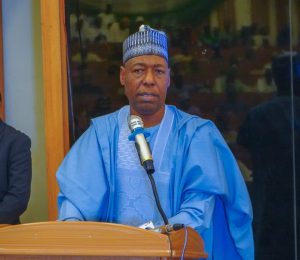
Former Chiefs of Army Staff, retired Lt.-Gen. Tukur Buratai and retired Lt.-Gen. Faruk Yahaya
Two former Chiefs of Army Staff, retired Lt.-Gen. Tukur Buratai and retired Lt.-Gen. Faruk Yahaya, have jointly dismissed as false and malicious recent claims linking them to terrorism financing. Both officers have threatened legal action against Sahara Reporters and retired Maj.-Gen. Danjuma Ali-Keffi, whose allegations they described as baseless and defamatory.
Buratai, who also served as Nigeria’s Ambassador to Benin Republic, said in a statement issued on his behalf by retired Brig.-Gen. Sani Usman on Saturday in Abuja that the report was “fabricated, unfounded and mischievous.”
He insisted the allegations aimed to tarnish his hard-earned reputation and noted that no security agency, intelligence outfit, or judicial panel had ever investigated or indicted him for terrorism financing.
“The insinuation that Buratai was connected, directly or indirectly, to terrorism financing is entirely fabricated and inconsistent with facts. It is a clear misrepresentation borne out of malice,” the retired general said.
Similarly, Yahaya rejected the claims as “spurious, baseless and entirely untrue,” stressing that at no point in his career—before, during, or after serving as Chief of Army Staff—did he have any association with individuals involved in terrorism financing or activities undermining national security.
Both officers accused Ali-Keffi of personal vendettas and highlighted Sahara Reporters’ role in publishing the allegations without verification. Buratai emphasized his over 40 years of military service, “defined by courage, professionalism and commitment to defeating Boko Haram and ISWAP,” while Yahaya reaffirmed his dedication to Nigeria’s fight against terrorism, calling for “responsibility, patriotism, and truth, not propaganda driven by personal grudges.”
The former generals demanded immediate retractions and public apologies, warning that failure to comply would prompt legal action to safeguard their reputations. Buratai added that he remained focused on academic work, policy engagement, peace advocacy, and philanthropy, noting that his legacy “could not be diminished by deliberate misinformation.”