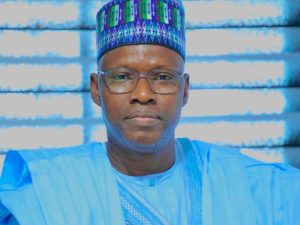
Chairman of the Independent National Electoral Commission (INEC), Prof. Joash Ojo Amupitan, SAN
For years, Nigeria’s electoral process has been weighed down by an avalanche of election-related litigations, many of them arising before votes are cast and extending long after winners have been declared. The burden has not only strained the judicial system but has also undermined public confidence in elections.
Before the appointment of Professor Joash Amupitan as Chairman of the Independent National Electoral Commission (INEC), the Commission was reportedly contending with over 1,000 pre-election cases nationwide. A significant number of these litigations stemmed from internal party disputes, leadership crises and nomination tussles, accounting for nearly 75 per cent of the cases in which INEC was joined.
Determined to reverse the trend, Amupitan has made electoral justice a central pillar of his leadership agenda. His goal, according to insiders, is to drastically reduce frivolous court cases by strengthening the legal framework governing elections and discouraging baseless petitions through appropriate sanctions.
The INEC Chairman has consistently argued that elections should be decided by voters at polling units, not by judges in courtrooms. To achieve this, he is pushing for far-reaching reforms, including amendments to the Electoral Act, aimed at curbing unnecessary litigations and restoring the sanctity of the ballot.
Amupitan is also engaging the National Assembly in what he describes as a collaborative effort to develop enduring electoral laws that promote integrity, inclusivity and transparency in the democratic process.
Among the strategies being considered by the INEC leadership are:
Promoting Electoral Justice: Encouraging candidates who lose elections to accept the outcome rather than resort to litigation
Strengthening Electoral Laws: Working with the National Assembly to enact robust legislation that discourages electoral malpractice
Enhancing Transparency: Improving INEC’s internal processes to minimise disputes and rebuild public trust
Addressing Pre-Election Litigations: Resolving party and nomination disputes ahead of elections to prevent post-election legal battles
Speaking shortly after assuming office, Professor Amupitan, SAN, warned that Nigeria could no longer afford a situation where courts routinely determine election outcomes.
“The country cannot continue like this. Elections must be won and lost at the polling units,” he said.
He maintained that “the court could not continue to determine elections,” adding that with the right legal framework in place, electoral disputes would significantly reduce.
Reaffirming his commitment to integrity, fairness and transparency, the INEC Chairman promised to confront the growing tide of pre-election litigations, which he described as a long-standing burden on Nigeria’s electoral process.
According to him, meaningful reforms would ensure that losers in elections would have the confidence to congratulate winners without hesitation.
Amupitan also underscored the importance of law as a tool for national development, stressing that sustainable democracy and economic growth are impossible without strong legal foundations.
“Law is not merely a set of rules but the foundation upon which societies build progress. It guides ethical governance, fosters economic opportunities, and upholds citizens’ rights,” he explained.
While acknowledging the progress already made by the National Assembly in amending the Electoral Act, the INEC boss insisted that more work was required.
“There is little INEC can do by way of policy if the law does not support us. I will work closely with the legislature to ensure we have enduring electoral laws that all Nigerians can be proud of,” he said.
Shortly before the end of his tenure, the immediate past INEC Chairman, Professor Mahmood Yakubu, also identified multiple litigations, conflicting court orders, electoral violence and vote buying as some of the major challenges confronting election management in Nigeria.
In the foreword to his book, “Election Management in Nigeria: 2015 to 2025,” Yakubu further highlighted technical glitches, equipment failures and network connectivity problems as recurring obstacles during elections.
The 220-page book, divided into 11 chapters, was released on Yakubu’s final day in office and documents his two-term stewardship of the Commission.
Despite the challenges, Yakubu noted that INEC recorded notable achievements between 2015 and 2025, many of which he said should be sustained to strengthen public trust and improve the credibility of future elections.
“The decade between 2015 and 2025 has been one of the most momentous in the history of election management in Nigeria. There have been several milestones, many challenges, and useful lessons in the conduct and administration of elections during this period,” he said.
Records show that during Yakubu’s tenure, INEC was involved in over 1,134 court cases, including instances of conflicting judgments from different courts on electoral matters—a situation that continues to underscore the urgent need for reform.