Nigerian College of Aviation Technology (NCAT), Zaria, has upgraded key facilities, expanded its training capacity and secured major international accreditations despite facing persistent funding challenges, according to its Rector, Dr. Danjuma Adamu Ismaila.
Speaking during a media briefing in Zaria, Dr. Ismaila said the institution inherited ageing infrastructure but had embarked on wide-ranging reforms to restore the college to international standards, stressing, “We inherited a system that required significant reforms and upgrades. Since coming on board, we have focused on improving our infrastructure and strengthening our academic programmes to align with international best practices.”
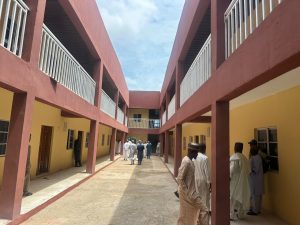
He said the college has rehabilitated students’ hostels, classrooms and other critical facilities, retained its Platinum Membership and Centre of Excellence status, secured Aviation Accreditation Board International (AABI) accreditation, restored its International Air Transport Association (IATA) affiliation and gained membership of the National Council for Management Development (NCMD).
The Rector also disclosed that NCAT became eligible for Tertiary Education Trust Fund (TETFund) support after obtaining accreditation from the National Board for Technical Education (NBTE), describing the development as a major boost for infrastructure and training.
Dr. Ismaila revealed that the college is pursuing European Union Aviation Safety Agency (EASA) certification, saying, “When we achieve EASA certification, our graduates, including pilots and air traffic controllers, will receive dual certification, making them employable across the world without undergoing additional licensing requirements in many countries.”
He added that NCAT is close to certifying its Boeing 737 Next Generation (B737-NG) full-flight simulator for commercial operations, a move expected to improve pilot training and generate additional revenue for the institution.
Despite the progress, the Rector identified inadequate funding as a major obstacle, disclosing that one of the college’s TBM training aircraft remains grounded because there are insufficient funds for its maintenance and reactivation.
He further lamented the shortage of training capacity, stating, “We can only admit about 25 pilot trainees every six months, which is inadequate for a country of over 200 million people. The demand is overwhelming,” while explaining that admissions are conducted on a first-come, first-served basis due to limited slots.
Dr. Ismaila called for more investment in training aircraft and infrastructure to meet Nigeria’s aviation manpower needs, expressing confidence that sustained government support would strengthen NCAT’s position as West Africa’s leading aviation training institution.