A Professor of Geography and Environmental Management, Nankap Binbol, has raised concerns that intensifying drought conditions across Nigeria could seriously undermine food security, livelihoods, and overall economic stability.
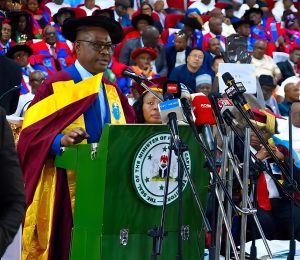
Speaking at the 122nd inaugural lecture at the University of Jos, titled “ _Understanding Droughts: A Panacea for National Food Security,”_ Binbol said the frequency of drought in Nigeria has risen steadily over the years. He attributed this trend to climate variability, increasing temperatures, and human activities such as deforestation and carbon emissions.
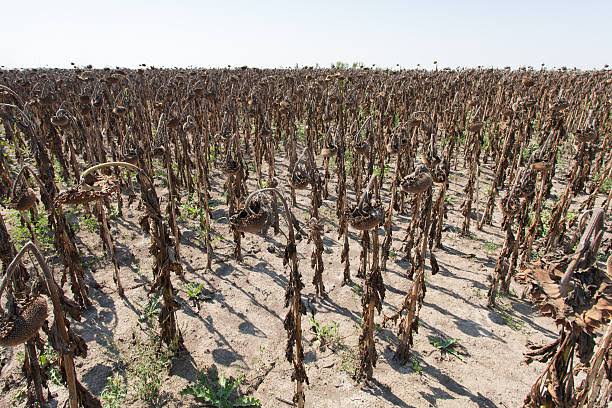
He explained that drought does not occur suddenly but unfolds in stages. It often begins as meteorological drought caused by insufficient rainfall. If the situation persists, it develops into agricultural drought that affects crops, followed by hydrological drought impacting rivers and groundwater, and eventually socio-economic drought, which disrupts livelihoods and economic productivity.
“Drought is a silent phenomenon. Unlike floods or earthquakes, its impact is not immediately visible, but it ranks first among natural hazards in terms of long-term impact. Its effects are cumulative, spread over large geographical areas, and can severely affect food production and water availability,” he said.
Binbol noted that regions north of latitude 9° tend to experience more severe drought conditions than southern areas. According to him, rainfall generally declines with increasing latitude due to the shifting position of the Inter-Tropical Discontinuity.
He also warned that climate projections point to rising temperatures on the Jos Plateau, a development that could accelerate evaporation, deplete soil moisture, and ultimately reduce crop yields.
“Climate change is expected to increase both the frequency and severity of drought. When rainfall falls below long-term averages and temperatures keep rising, we begin to see reduced crop yields, declining livestock productivity, and mounting pressure on water resources,” he added.
The professor cautioned that prolonged drought could trigger a range of challenges, including food shortages, reduced hydropower generation, higher irrigation costs, and even conflicts over limited water resources. He added that such pressures may also drive increased rural-to-urban migration.
He further revealed that hydrological studies show declining water tables in parts of Plateau State, forcing many communities to dig deeper wells to access water.
To address these challenges, Binbol recommended adopting climate-smart agriculture, promoting rainwater harvesting, restoring degraded land, strengthening early warning systems, and improving climate monitoring institutions.
Also speaking at the event, the Vice-Chancellor of the University of Jos, Tanko Ishaya, described the lecture as timely, stressing the urgency of tackling food security amid rapid population growth.
“The world is not expanding, but our population is. We must find ways of utilising our land and resources efficiently to ensure that we produce enough food to feed our growing population,” he said.
Ishaya warned that unsustainable practices such as deforestation and poor resource management continue to threaten environmental stability and food production. He called for stronger, research-driven policies to confront the challenges posed by climate change.
He added that institutions like the National Institute for Policy and Strategic Studies have a vital role to play in translating academic research into practical policy frameworks.
In his remarks, the Director-General of the institute, Ayo Omotayo, said the lecture highlighted the close link between climate understanding and food production, warning that inaction could deepen food insecurity.
“It is clear that if we do not understand the climate very well, we will certainly have problems with food production. And once production is affected, food insecurity becomes inevitable,” he said.
He stressed that while drought cannot be entirely prevented, its impact can be reduced through informed planning and coordinated policy responses, urging stakeholders to act on research findings before the situation worsens.