By MBAFAN ADE –
After almost 10 years of stultification as a result of administrative and political bottlenecks, Nigeria took a major step forward early this month in the quest to keep the nation’s promise to itself and to the world. That promise was the unveiling in 2014 of a vision to create a smart city of the future in Abuja, along the lines of Dubai, Monaco and Singapore.
The official engagement of construction giant, Julius Berger Nigeria Plc to provide critical infrastructure to the Centenary City, located along the busy airport road in Abuja, has already elicited great hopes and expectations.
The Phase 1 Primary Infrastructure which is to cost N750 billion, will be executed in lots, Lot 1 includes the Plot Access Road of 4.3 km and the Secondary Infrastructure of The Grove Residences, The Safari Park Residences and The Ridge Villas.
Besides Julius Berger, Messers Dar Al-Handasah Consultants (DAR), which coordinated the master plan of the city, was retained to execute the Detailed Engineering Design of the entire project.
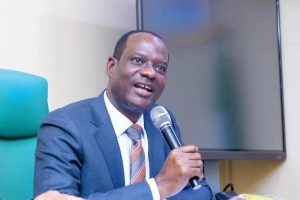
Managing Director of Centenary City Plc, Dr. Odenigwe Ike Michaels Jnr, who broke the cheering news to journalists in Abuja two weeks ago, disclosed that the project, originally envisaged to cost about $1.6billion, when completed, would create over 300,000 direct job opportunities to Nigerians.

MD Centenary city Plc Dr. Odenigwe Ike Michaels
The Abuja Centenary City is no doubt one project that is envisioned not only to shape skylines to redefine the destiny of a people of Africa’s most populous nation. It was conceived under the administration of President Goodluck Jonathan in 2014 to commemorate a century of nationhood.
Beaming with the smiles of confidence, Dr. Odenigwe, who regretted that For a decade the project lingered in the air, radiant yet unrealized, like a grand symphony awaiting its conductor, expressed happiness that under the renewed impetus provided by the Federal Government and the resolute intervention of the Minister of the Federal Capital Territory (FCT), Nyesom Wike, the symphony was set begun to play again.

As bulldozers move across the virgin expanse southwest of Abuja, as plans unfold with Julius Berger Nigeria Plc providing critical infrastructure and Dar Al-Handasah Consultants (DAR) refining engineering designs, the long-dormant Centenary City Project is not only airborne but gathering altitude. Its promise is immense: the creation of over 300,000 jobs, an influx of foreign direct investment worth billions of dollars, and a rebranding of Abuja — and by extension Nigeria — as a global beacon of urban excellence.
The protagonists of the Abuja Centenary City were very clear about the economic and cultural goal of the project, which was to create a self-contained smart city that would not only serve as a monument to Nigeria’s journey but also as a springboard for its future.
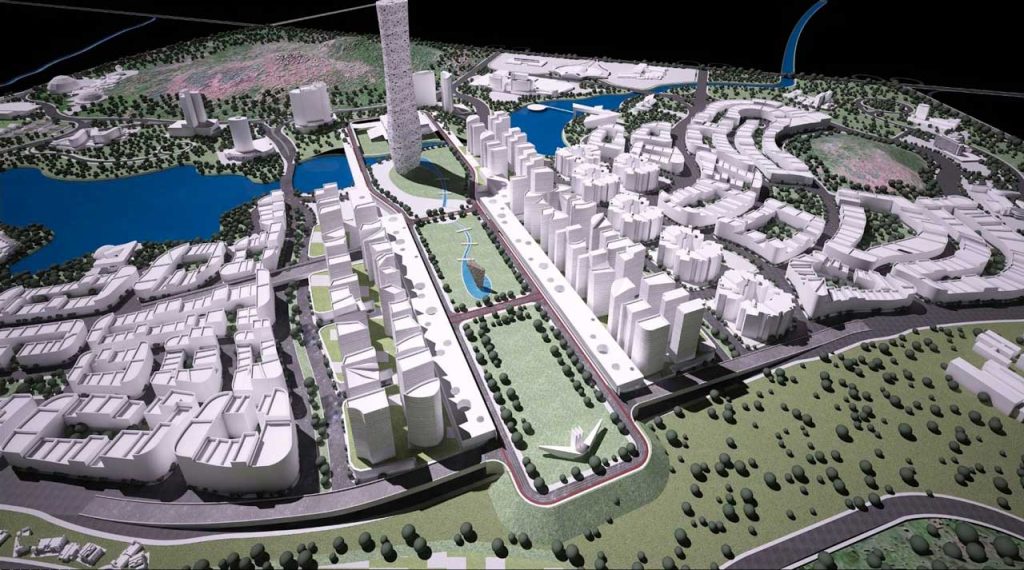
Patterned after global exemplars such as Dubai in the United Arab Emirates, Songdo in South Korea, and Shenzhen in China, the project was envisioned as a multi-functional development, seamlessly blending business, tourism, culture, and modern living. Spread across 1,260 hectares near Nnamdi Azikiwe International Airport, the city was conceived as a mixed-use metropolis with a central business district, an international commerce centre, luxury residences, iconic landmarks, and vibrant cultural amenities.
During the recent media briefing, the MD of Centenary City Plc, while publicly acknowledging the Wike factor in unlocking a stalled dream, noted that the FCT Minister’s political will and pragmatic interventions had breathed new life into the project. According to him, Wike’s tenure had been marked by the decisiveness often lacking in Nigeria’s governance. With the Centenary City Project, Wike played the role of mediator, reconciler, and enforcer, ensuring that long-standing disputes between Centenary City Plc (CCPLC), the Federal Capital Development Authority (FCDA), and the FCT Administration were resolved once and for all.
The Centenary City can be regarded as a future metropolis. It is not just a development; it is an ecosystem. It is designed to be Nigeria’s foremost smart city, a self-sustaining, multifunctional hub that harmonizes with nature while offering its residents and visitors a complete cosmopolitan lifestyle. With its iconic Commercial and Cultural Landmarks, the smart city is going to have a towering International Commerce Centre, a Centenary International Convention Center, and the Mall of Africa promise to make Abuja a premier business and shopping destination in West Africa.
In terms of luxury and leisure, the Centenary city has provision for five-star hotels, luxury serviced apartments, golf and polo estates, and safari parks will attract both global elites and middle-class aspirants. This is in addition to its tourism and arts orientation where the Nigerian Park, African Arts Museum, and entertainment districts will celebrate heritage while providing cutting-edge experiences.
Other sectors like Health and Education, as well as industrial and economic powerhouse are represented in the modern hospitals, schools, and research facilities will anchor the city’s human capital development, in addition to the Free Trade Zone (FTZ) status approved by the Nigerian Export Processing Zones Authority (NEPZA), which will adequately prepare the city to host industrial parks that will drive manufacturing, exports, and foreign investment.
As one commentator rightly pointed out, few projects in Nigeria’s recent history carry the economic promise of the Centenary City. The numbers speak for themselves: 300,000 Direct Jobs: At a time of high unemployment, this project alone could transform the livelihoods of hundreds of thousands of families. Indirect jobs — in supply chains, services, and tourism — will multiply this effect exponentially.
Over $18 Billion in FDI Potential: Earlier investors once saw the Centenary City as the single largest foreign direct investment opportunity in Nigeria’s history. With the return of confidence, the city is poised once again to attract massive capital inflows.
$1.6 Billion in Initial Construction Value: With inflation and global cost escalations, the entire project now exceeds ₦2.4 trillion, representing a monumental injection into Nigeria’s economy.
Tourism and Real Estate Boom: By positioning Abuja as a tourism and investment hub, the project will diversify Nigeria’s economy away from oil and align it with global trends.
Global Branding: Just as Dubai leveraged iconic developments to transform its identity, Abuja too stands to gain a redefined global profile through Centenary City.

On completion, the Centenary City is certain to raise Abuja’s profile from administrative capital to global city. With its upscale residential, commercial, and cultural elements, the City will fill a gap in Abuja’s evolution, providing the amenities and aesthetics befitting a world-class capital. Besides this, the City will go a long way in enhancing Nigeria’s standing within Africa. Where Johannesburg boasts Sandton, Nairobi dreams of Konza Techno City, and Kigali positions itself as a conference hub, Abuja will now have Centenary City as its unique global signature. All these will shift Abuja from being simply the seat of power to becoming a symbol of modern Africa’s aspirations.
From what Dr. Odenigwe said, the renewed momentum behind Centenary City would not have been possible without the synergy of leadership at multiple levels. “The visionary encouragement of the Honourable Minister of Housing and Urban Development, Arc. Ahmed Musa Dangiwa, has been invaluable. The steadfast determination of the management team at Centenary City Plc, led by Dr. Odenigwe Ike Michaels Jnr, deserves recognition. And above all, the resolute interventions of FCT Minister Nyesom Wike must be commended as the pivotal force that turned stalemate into progress,” he told the media recently.
For in Centenary City lies more than bricks and mortar; there lies a testament to Nigeria’s place in the 21st century. It is a declaration that Africa’s most populous nation will not merely watch as others build shining cities, but will join them — proudly, boldly, and enduringly.
It is hoped that Nigerians in Diaspora will heed the call by the government and invest in the project by buying shares in the Centenary City Plc and helping to build the new smart city.
It would be recalled that former President Jonathan had in 2013, made an appeal to Disapora Nigerians to be agents of change, development and proponents of the national economic emancipation and unity, by investing in the new city. Jonathan, who was declaring open the 6th Nigeria Disapora Day celebration in Abujja, was quoted by VANGUARD to have urged them to “respond positively to the invitation to return and contribute to the development of Nigeria.”